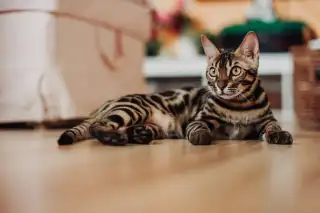
If you’ve ever looked at a Bengal and thought, “Wait — is that actually a wild animal?” — you’re not alone. That reaction is practically a rite of passage. There’s something almost theatrical about the way a Bengal moves through a room: low-shouldered, fluid, and utterly convinced that everything in your home belongs to them. They’re domestic cats wearing leopard costumes, and somehow, they pull it off completely.
But here’s the thing — owning a Bengal isn’t quite like owning any other cat. They’re not the kind of pet that’ll sit politely on your lap while you watch Netflix. They’re the kind of cat that will join you, but only after they’ve figured out how to open the cabinet under the TV, knocked your remote off the table twice, and decided your water glass is more interesting than their bowl. If that sounds exhausting, it kind of is. If it sounds thrilling, then welcome — you’re probably a Bengal person.
This guide covers everything: the breed’s wild backstory, that iconic spotted coat, their surprisingly dog-like personality, what it actually takes to keep one happy, and what you’ll realistically spend to bring one home.
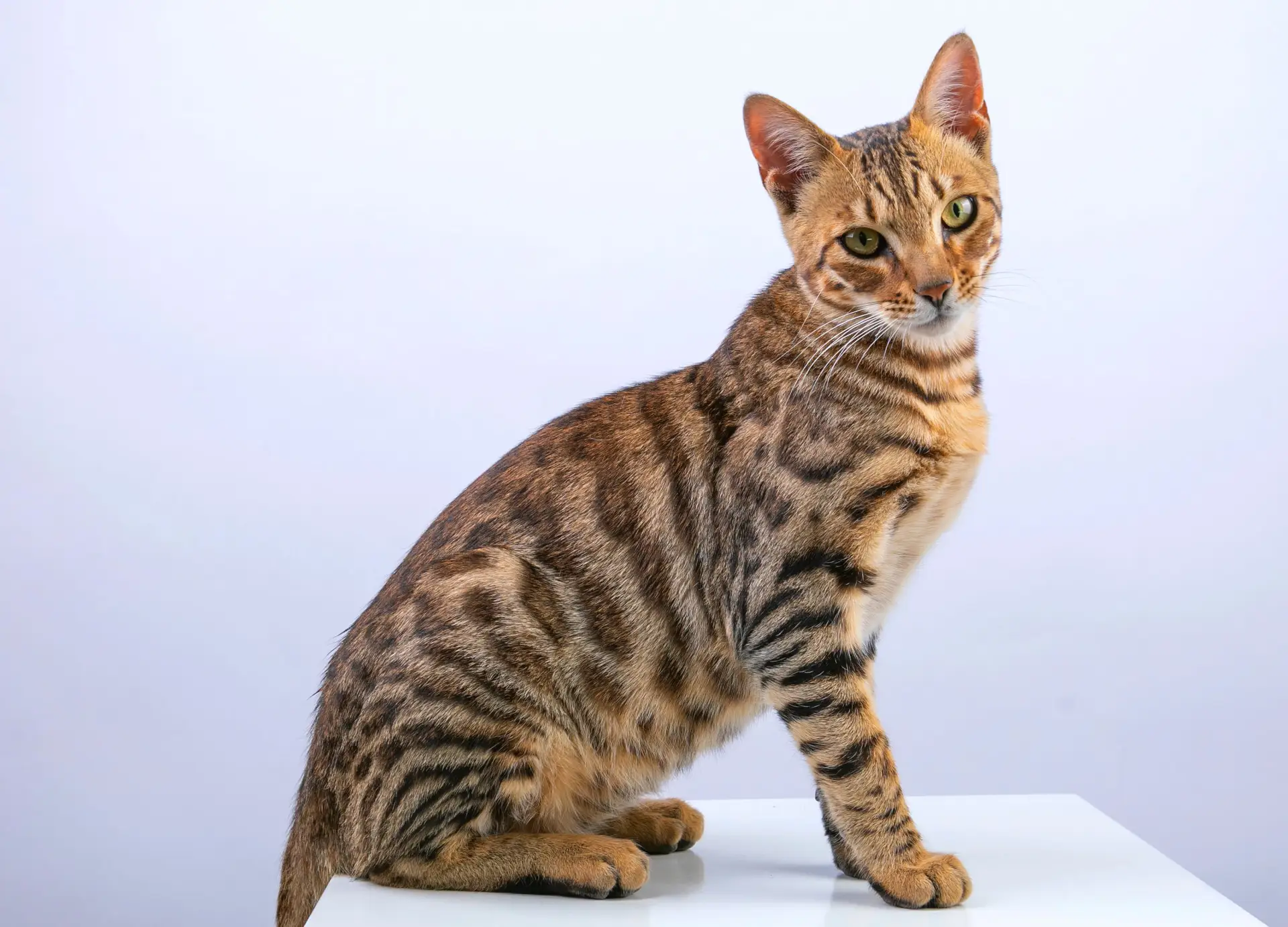 The Bengal’s wild gaze is no accident — it traces directly back to its Asian Leopard Cat ancestry.
Key Takeaways
- Bengals are a hybrid breed — descended from crosses between domestic cats and the Asian Leopard Cat — which gives them that genuinely wild appearance.
- They are one of the most intelligent and active cat breeds on the planet. Mental stimulation isn’t optional; it’s survival (for your furniture, mostly).
- Their coats are remarkably low-maintenance compared to their dramatic looks — short, dense, and that famous glittery sheen doesn’t require much brushing at all.
- Bengals thrive on interaction. A bored Bengal is a destructive Bengal. They bond intensely with their families and don’t do well as solo homebodies.
- They’re water-curious in a way that will genuinely surprise you — don’t be shocked when yours tries to join you in the shower.
- Price reflects their pedigree and generation — a well-bred Bengal from a reputable breeder in the US can range from $1,500 to $5,000+.
Quick Overview
| Trait | Detail |
|---|---|
| Origin | United States, developed in the 1960s–1980s through crosses between domestic cats and the Asian Leopard Cat |
| Size | Medium to large |
| Weight | 8–15 lbs (males typically larger than females) |
| Lifespan | 12–16 years |
| Coat | Short, dense, incredibly soft, often with a distinctive “glitter” effect |
| Color | Brown tabby, snow, silver, charcoal, and blue are the most recognized; spotted or marbled patterning |
| Temperament | Highly intelligent, energetic, curious, affectionate, vocal, and intensely interactive |
| Grooming | Low maintenance — weekly brushing is usually sufficient |
| Price | $1,500–$5,000+ from reputable US breeders; occasionally available through rescue |
Origins & History: Where the Wild Things Were
The Bengal’s story starts with a woman named Jean Mill, a cat breeder from California who, in the early 1960s, had an idea that most people probably told her was either brilliant or absolutely insane. She crossed a domestic cat with an Asian Leopard Cat (Prionailurus bengalensis) — a small, shy wild cat found across South and East Asia. The goal wasn’t to create a trendy designer pet. Jean was actually motivated by a real-world conservation concern: she hoped that if people could own a cat that looked like a leopard, they’d be less interested in buying real wild cat fur.
The early hybrids — called F1s, F2s, and F3s (the “F” standing for filial generation) — were essentially semi-wild animals. They were beautiful, but they weren’t pets by any practical definition. It took several more generations of careful, selective breeding back to domestic cats before the Bengal we know today emerged: a cat with a wild look but a genuinely domestic temperament.
By the mid-1980s, Jean Mill had collaborated with Dr. Willard Centerwall, a geneticist who had been studying Asian Leopard Cats for their natural immunity to feline leukemia. The two breeding programs merged, and the Bengal breed began taking real shape. The International Cat Association (TICA) officially recognized the Bengal in 1983, and the breed’s popularity has been climbing ever since.
Today, a Bengal sold as a pet is typically four or more generations removed from its wild ancestor — designated SBT (Stud Book Tradition) by TICA. These cats are fully domestic in behavior, though you’d be forgiven for forgetting that when you watch one stalk a toy mouse across the kitchen floor.
Appearance & Unique Physical Traits
Here’s the thing about Bengals: photos don’t do them justice. You can look at a hundred pictures online and still be completely unprepared for what it’s like to see one in person. That coat doesn’t just look spotted — it glows. Seriously. Many Bengals carry a gene that causes their fur to have a metallic sheen, as though each hair has been lightly dusted with gold or pearl. Breeders call it “glitter,” and it’s exactly as dramatic as it sounds.
Physically, Bengals are built for movement. They’re medium to large cats, but the proportions feel different — longer, lower to the ground, more muscular through the hindquarters than you’d expect. They walk with a distinctive rolling gait that’s reminiscent of a big cat pacing in a zoo, and their back legs are slightly longer than their front, which gives them that characteristic arch when they stand still.
The face is another story entirely. Bengals have broad, rounded heads with small ears set wide apart, strong jawlines, and eyes that tend toward green, gold, or hazel — though snow Bengals can have striking blue eyes. The nose is large and puffy. The whisker pads are pronounced. Everything about the face says “wild animal” even when the cat is sitting in your lap demanding chin scratches.
The tail is thick and tapering, usually marked with dark rings and a solid dark tip. In a well-bred Bengal, every marking has contrast and definition — you’re not looking at faint tabby stripes but bold, high-contrast spots or rosettes (more on that below) that look like they were painted on deliberately.
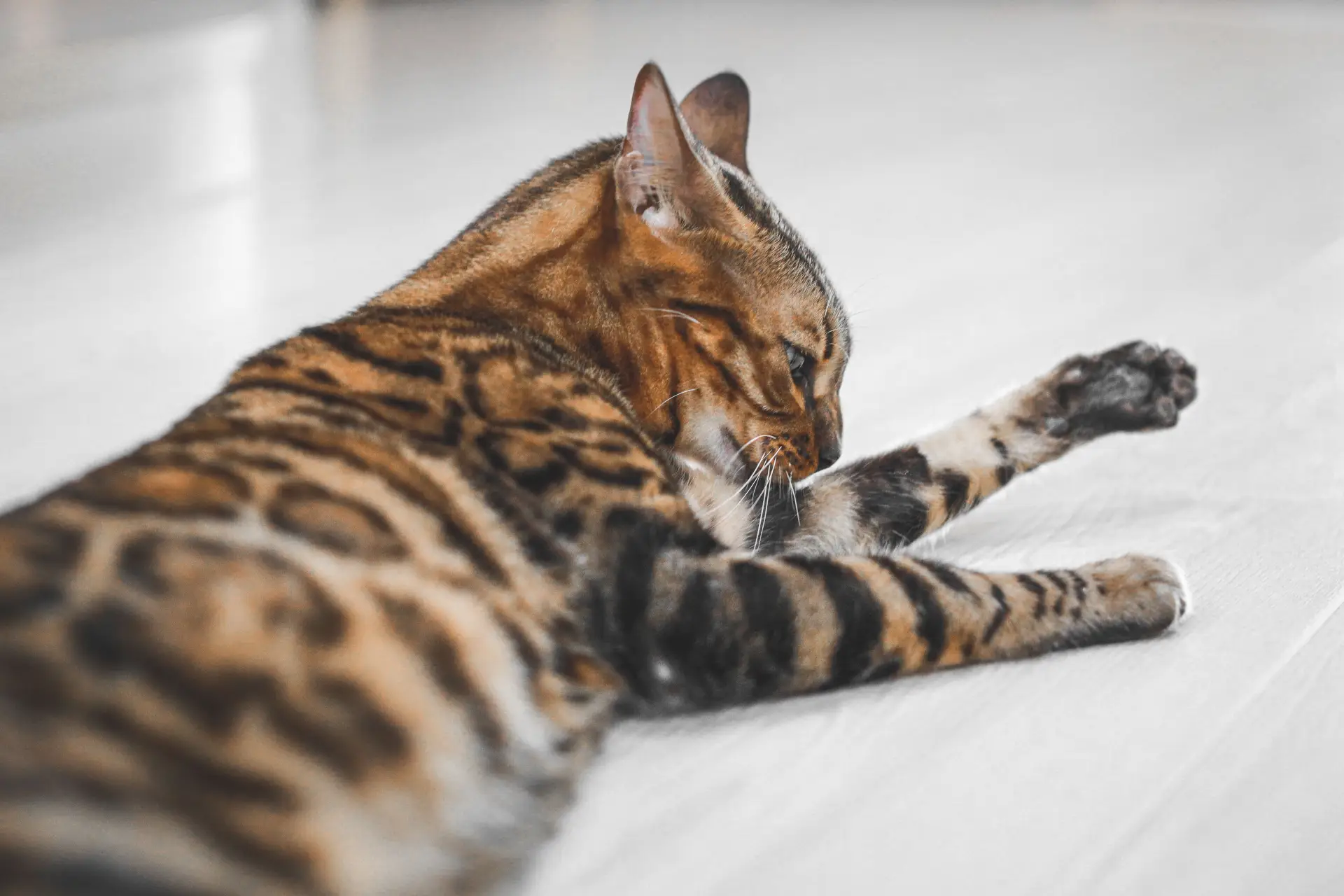 The rosette markings on a Bengal’s coat are one of the most distinctive features in the domestic cat world — no two patterns are exactly alike.
Coat Colors, Variations & Genetics
This is where things get genuinely interesting, especially if you’re the kind of person who goes down Wikipedia rabbit holes at 1am. Bengal coat genetics are complex, and breeders have developed an impressive vocabulary to describe what’s happening.
The Pattern Types:
- Spotted: The most recognized pattern. Spots can be arrowhead-shaped (pointing toward the tail), round, or the holy grail — rosettes. Rosettes are two-toned spots that form partial or full circles, and they’re what gives high-quality Bengals that authentic leopard appearance.
- Marbled: Instead of spots, the pattern flows in swirling, horizontal streaks — think marble countertop meets wild cat. A well-done marble pattern is breathtaking, though it’s less common than spotted.
The Color Bases:
- Brown (Black) Tabby: The most common base, ranging from cool gray-brown to rich golden-orange. This is what most people picture when they think “Bengal.”
- Snow: A lighter base caused by the colorpoint gene. There are three types — Seal Lynx Point (the palest, with blue eyes), Seal Mink (a medium tone, usually aqua eyes), and Seal Sepia (the darkest of the snows, gold or green eyes). Snow Bengals have an almost ghostly elegance.
- Silver: A relatively newer color class, silver Bengals have a cold, metallic base coat with very dark markings. They look like photographs — high contrast, almost monochrome.
- Charcoal: Caused by the agouti gene interaction, charcoal Bengals have a distinctively dark “mask” on the face and a dramatic “cape” of darker fur across the back.
- Blue: The rarest of the recognized colors — a cool, dove-gray base with subtle dark markings. Blue Bengals are relatively uncommon and command higher prices.
What makes coat genetics even more interesting is that these color and pattern genes can combine. You can have a Snow Charcoal Spotted Bengal, for instance, or a Silver Marble. Each combination is essentially its own visual experience.
True Temperament: What Nobody Warns You About
Let’s be honest about something the glossy breed brochures often skip: Bengals are a lot. They’re not a cat for someone who wants a calm, low-key companion who’ll mostly ignore them. They are deeply, almost aggressively, present in your life.
What does that actually look like day-to-day? It looks like your Bengal greeting you at the door — not like a dog who’s been waiting patiently, but like a CEO who has urgent business to discuss. It’s the cat who follows you to the bathroom, who monitors your cooking, who sits on your keyboard specifically while you’re working, and who has apparently made it their personal mission to understand every object in your home by touching it, moving it, or occasionally destroying it.
Bengals are vocal, but not in the Siamese “endless wailing” way. They chirp, trill, chatter at birds through the window, and have this particular low “brrrow?” sound they make when they’re curious about something you’re doing. Once you hear it, you’ll understand why people say Bengals feel more like dogs than cats.
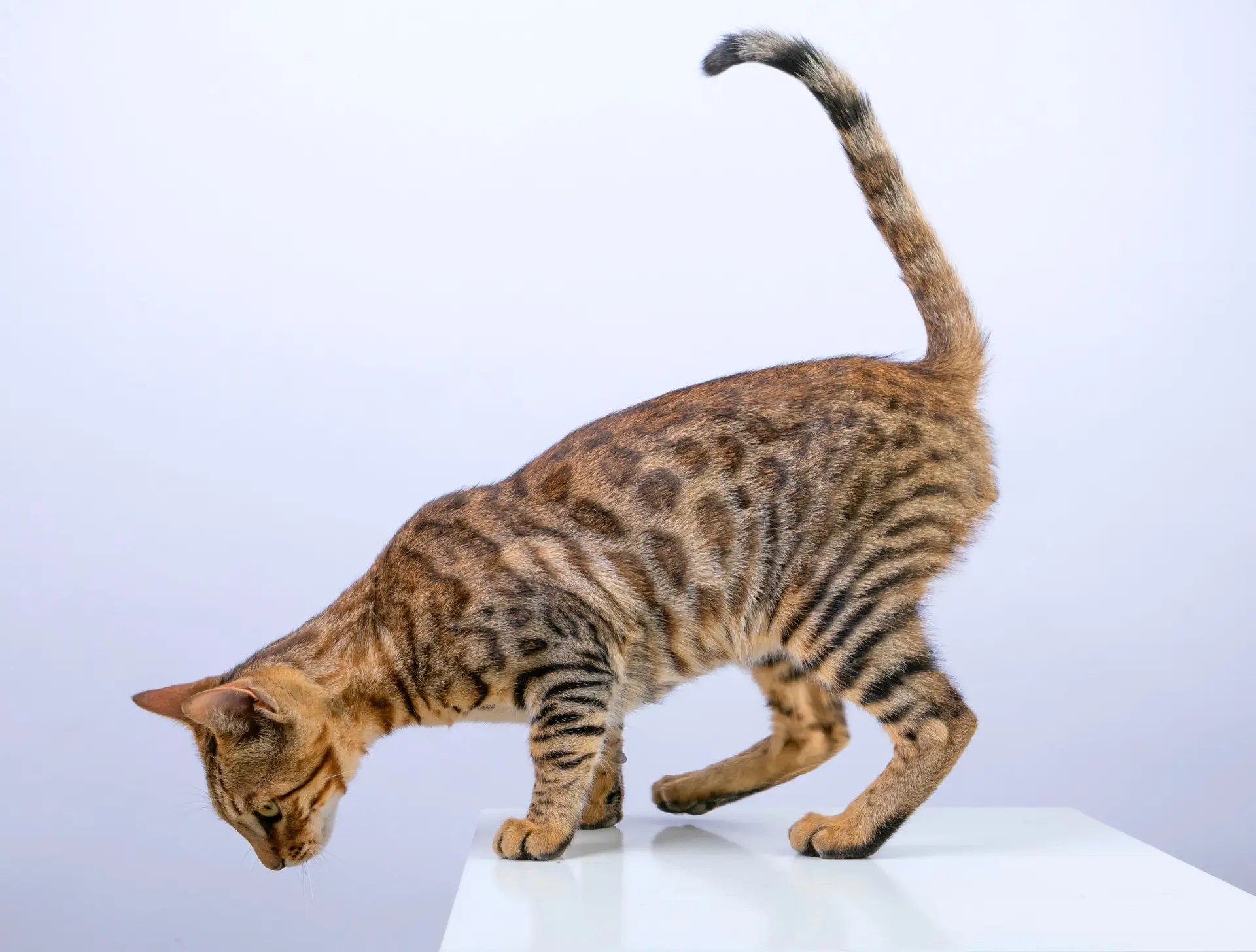 Bengals approach playtime with the kind of focus and athleticism that makes feather wands genuinely challenging to use.
The Water Thing Is Real
This is one of those quirks that sounds like an exaggeration until you’re fishing your Bengal out of the bathroom sink for the fourth time in a week. Many Bengals are genuinely fascinated by water — they’ll splash in their bowls, follow you to the shower, play in dripping faucets, and some will even hop into a running bath. Get a cat water fountain. Not because they need it, but because it’ll keep them entertained and away from your sink.
The Intelligence Tax
Smart cats are wonderful until they’re bored. A bored Bengal is a Bengal who has decided your window blinds are a climbing structure, your couch corner is a scratching post, and your 3am is an excellent time for zoomies. Mental stimulation is non-negotiable. Puzzle feeders, rotating toys, clicker training (yes, you can absolutely train a Bengal), interactive play sessions — these aren’t luxuries, they’re the price of keeping the peace.
With Kids and Other Pets
Generally, Bengals do well with children who know how to interact with animals — they’re robust, playful, and they enjoy the energy. They can coexist with dogs, especially if introduced young, and they’ll often take the dominant role without much drama. With other cats, it depends on personality, but Bengals often do better with another active cat than alone.
Daily Care & Grooming
The good news: Bengals are genuinely low-maintenance in the grooming department, which feels almost unfair given how stunning they look. That short, dense coat doesn’t mat or tangle, and that glitter effect is self-maintaining — no special shampoos or treatments required. A weekly brush-through keeps loose hair under control and gives your cat some quality hands-on time with you. They’re moderate shedders, not heavy ones.
Diet
Bengals benefit from a high-protein diet. Their wild ancestry means they’re obligate carnivores in a very direct way — cheap, grain-heavy kibble doesn’t serve them well long-term. Many Bengal owners feed a combination of high-quality wet food and a limited amount of dry kibble, or raw/freeze-dried diets. Fresh water availability is important too, hence the fountain recommendation.
Exercise & Enrichment
This is where the real “care” investment happens. Plan for at least two dedicated interactive play sessions per day — not just leaving toys on the floor (they’ll get bored of those within minutes), but actual feather wand, laser pointer, or puzzle toy sessions. Cat trees are essential, and the taller the better. Floor-to-ceiling climbing structures aren’t overkill for a Bengal; they’re appropriate.
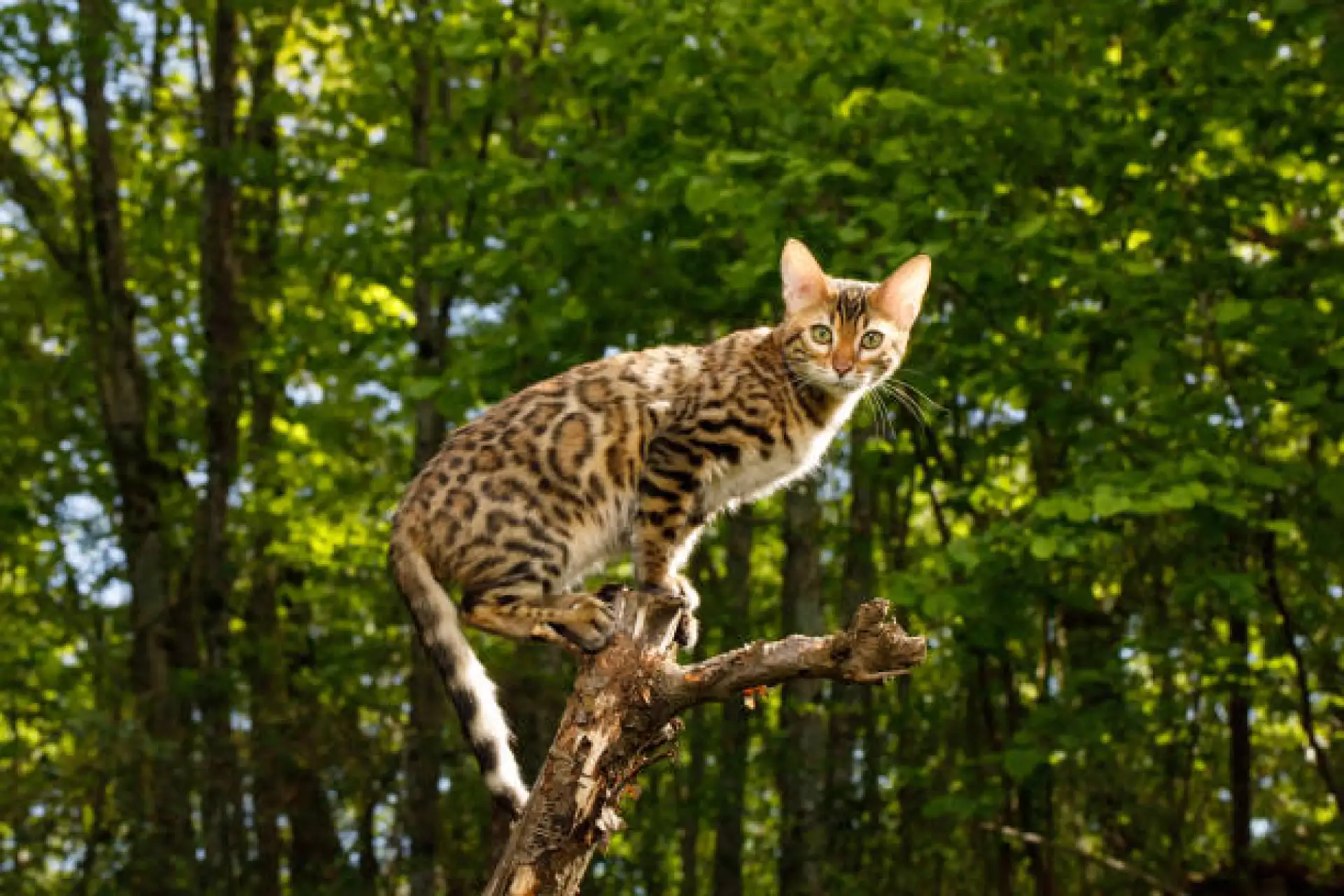 A tall cat tree near a window is practically mandatory Bengal furniture — they want height and a view.
Litter Box
Bengals are fastidious. A dirty litter box is one of the most common reasons Bengals start eliminating outside the box. Keep it scooped daily — honestly, every day — and have one more box than you have cats. This isn’t specific Bengal advice, but Bengals enforce it more strictly than most.
Leash Training
More Bengal owners walk their cats on leash than you’d think. Bengals are curious about the outdoor world and, unlike many cats, can be leash-trained with patience. A well-fitted H-harness (not a collar) and short outdoor exploration sessions can be a fantastic enrichment tool, provided your neighborhood is safe.
Health Profile & Lifespan
Note: This section discusses health considerations. Please consult your veterinarian for personalized advice.
Bengals are generally a hardy breed, but there are a few health conditions that appear with enough frequency in the breed that any responsible owner should know about them.
Hypertrophic Cardiomyopathy (HCM) is the most significant concern — it’s the most common heart disease in cats generally, but Bengals have a higher predisposition than average. Responsible breeders screen breeding cats for HCM with echocardiograms. Ask your breeder for current heart screening certificates. Annual vet checkups should include cardiac auscultation.
Progressive Retinal Atrophy (PRA-b) is a genetic eye condition that causes progressive vision loss. The good news is there’s a DNA test for it, and responsible breeders screen their cats. When you’re evaluating breeders, PRA-b testing should be a non-negotiable ask.
Pyruvate Kinase Deficiency (PK-def) is an inherited enzyme deficiency that can cause hemolytic anemia. Again, DNA testing exists and reputable breeders test for it.
Tritrichomonas foetus is a gut parasite more commonly associated with Bengals than other breeds — it causes chronic, intermittent diarrhea and can be tricky to diagnose. If your Bengal has persistent digestive issues, ask your vet to test specifically for this.
With proper care, regular vet visits, and a good-quality diet, Bengals typically live 12 to 16 years, with many healthy individuals reaching their mid-teens. Their wild ancestry doesn’t make them fragile — if anything, they’re generally more robust than some highly inbred pedigreed breeds.
⚠️ Health Disclaimer: This information is for educational purposes only and is not a substitute for professional veterinary advice. Always consult a licensed veterinarian for diagnosis, treatment, and health decisions regarding your cat.
Rarity & Pricing in the US
Bengals are one of the most popular pedigreed cat breeds in the United States right now — TICA consistently ranks them among the top registered breeds — but “popular” doesn’t mean “easy to find.” A well-bred Bengal from a health-testing, TICA-registered breeder with properly socialized kittens involves a waiting list. Sometimes a long one.
What You’ll Pay
Expect to pay $1,500–$3,000 for a pet-quality Bengal kitten from a reputable US breeder. Show-quality cats or those with exceptional color genetics (rare colors like blue, or high-quality rosette patterns) can easily push $3,500–$5,000 or beyond. If you’re seeing Bengals advertised for $400–$600, something is wrong — either the health testing hasn’t been done, the cat isn’t truly a Bengal (just a tabby), or the breeding conditions aren’t humane. It’s not snobbishness to be skeptical of bargain Bengals; it’s self-protection.
What You’re Paying For
A reputable breeder’s price includes: health testing on both parents (HCM echo, PRA-b DNA, PK-def DNA), vet exams and vaccinations for the kitten, early socialization, TICA registration paperwork, and usually a health guarantee. They’ll also interview you — expect questions about your home setup, other pets, and lifestyle. Good breeders are picky about where their kittens go.
Rescue & Adoption
Yes, Bengal rescues exist, and they’re genuinely worth checking out — especially if you’re open to an adult cat. Bengal Rescue Network and SaveABengal are two US-based organizations. Rehomed Bengals often end up in rescue because well-meaning owners underestimated the breed’s energy and needs (see: everything above about stimulation). A rescue Bengal can be a wonderful option, often available for $100–$400 in adoption fees.
Frequently Asked Questions About Bengal Cat
Are Bengal cats good pets for first-time cat owners?
Honestly? Bengals are better suited to people who’ve owned cats before and have a realistic picture of what active, demanding breeds require. They need more daily interaction, enrichment, and patience than the average cat. That said, if a first-time owner goes in fully informed, has the time and energy to commit, and genuinely wants an interactive, dog-like companion, they can absolutely thrive with a Bengal. Just don’t expect a low-maintenance introductory pet.
Do Bengal cats get along with dogs?
Often, yes — surprisingly well, in fact. Bengals are confident enough not to be intimidated by most dogs, and their high energy level means they can match a playful dog’s enthusiasm. The key is a proper, gradual introduction. Keep the initial meetings controlled, let both animals set the pace, and don’t force interaction. Bengals introduced to dogs as kittens usually adapt seamlessly.
How much exercise does a Bengal cat need?
More than you think. Plan for at least two 15–20 minute active play sessions daily, plus environmental enrichment like cat trees, puzzle feeders, and window perches. Bengals that don’t get enough physical and mental stimulation will redirect that energy into behaviors you’d rather avoid — counter surfing, opening cabinets, waking you up at 4am, redecorating your bookshelf (from the floor up).
Are Bengal cats hypoallergenic?
No cat is truly hypoallergenic, but Bengals are sometimes better tolerated by people with mild cat allergies. Their short, dense coat produces less dander than long-haired breeds, and they tend to groom themselves less obsessively than some breeds, which means less saliva spread on fur. If allergies are a concern, spend time with a Bengal before committing — individual reactions vary widely.
Can Bengal cats be left alone during the day?
A Bengal can handle a normal workday alone if their environment is adequately enriched — think multiple climbing structures, interactive toys, window access for bird-watching, and puzzle feeders. Many Bengal owners recommend keeping two cats so they entertain each other. What a Bengal cannot handle is chronic isolation day after day with nothing to do and no one to interact with. That’s a recipe for behavioral problems.
Are Bengal cats aggressive?
Bengals are not inherently aggressive, but they are assertive and communicative — they’ll tell you clearly when they’re done being handled. They have sharp play instincts and can play rough if not redirected properly, especially as kittens. Proper socialization from kittenhood and learning to read their body language prevents the vast majority of bite-and-scratch issues. An adult Bengal from a poorly socialized background can be more challenging, which is worth knowing if you’re adopting a rescue.
What generation Bengal is best as a pet?
SBT (Stud Book Tradition) Bengals are the gold standard for pet ownership — these are cats at least four generations removed from their Asian Leopard Cat ancestors. F1–F3 Bengals (first through third generation from the wild cat) are significantly more challenging: more unpredictable, harder to handle, often illegal to own depending on your state. Unless you have professional experience with wild-hybrid animals, stick with SBT. Your lifestyle and your sanity will thank you.
Do Bengal cats shed a lot?
Moderate shedding, not heavy. Their short coat means loose hairs are less dramatic than you’d see with a Maine Coon or a Ragdoll. Weekly brushing during normal periods and slightly more frequent brushing during seasonal shedding transitions (spring and fall) keeps things manageable. They’re not a zero-shed breed, but they’re far from the worst offenders.
Why does my Bengal cat love water so much?
It’s believed to be a behavioral trait inherited from the Asian Leopard Cat, which in the wild often hunts near rivers and streams and is comfortable in water. Not every Bengal has this trait — it varies between individuals — but water fascination is common enough in the breed that it’s considered a signature quirk. Embrace it. Get that fountain. Accept that your bathroom will occasionally be a source of entertainment.
How do I find a reputable Bengal cat breeder in the US?
Start with TICA’s breeder registry at tica.org — it lists registered catteries by breed and location. Look for breeders who health-test both parents for HCM, PRA-b, and PK-def, who keep kittens with their mothers until at least 12–14 weeks, and who will answer your questions thoroughly (and ask plenty of their own). Red flags include kittens available immediately with no waitlist, no health testing documentation, reluctance to show you where kittens are raised, and prices that seem too good to be true. The Bengal Cat Club and The International Bengal Cat Society are also good resources for breeder referrals.
The Bengal is, without question, one of the most captivating cats you’ll ever meet. That wild aesthetic combined with a genuinely affectionate, people-focused personality creates something that’s hard to describe until you’ve experienced it. They’re not easy, and they’re not for everyone — but for the right person, in the right home, they’re also kind of incomparable. There’s a reason people who own one Bengal often end up with two.