There’s a moment every Siamese cat owner knows well — you’re on a work call, trying to sound professional, and your cat walks across your keyboard, sits directly in front of your webcam, and starts talking. Not meowing. Talking. That low, insistent, almost human-sounding voice that says, in no uncertain terms, “You have been ignoring me for forty-five minutes and I need you to account for yourself.”
If that scenario sounds exhausting, the Siamese cat is probably not your match. If it sounds like exactly the kind of chaos you’d sign up for? Welcome home.
The Siamese is one of the oldest and most recognizable cat breeds on the planet — a sleek, vocal, emotionally complex creature that has been charming (and occasionally terrorizing) humans for centuries. They are not background cats. They are not low-maintenance. But they are, without question, one of the most rewarding breeds you’ll ever share your life with.
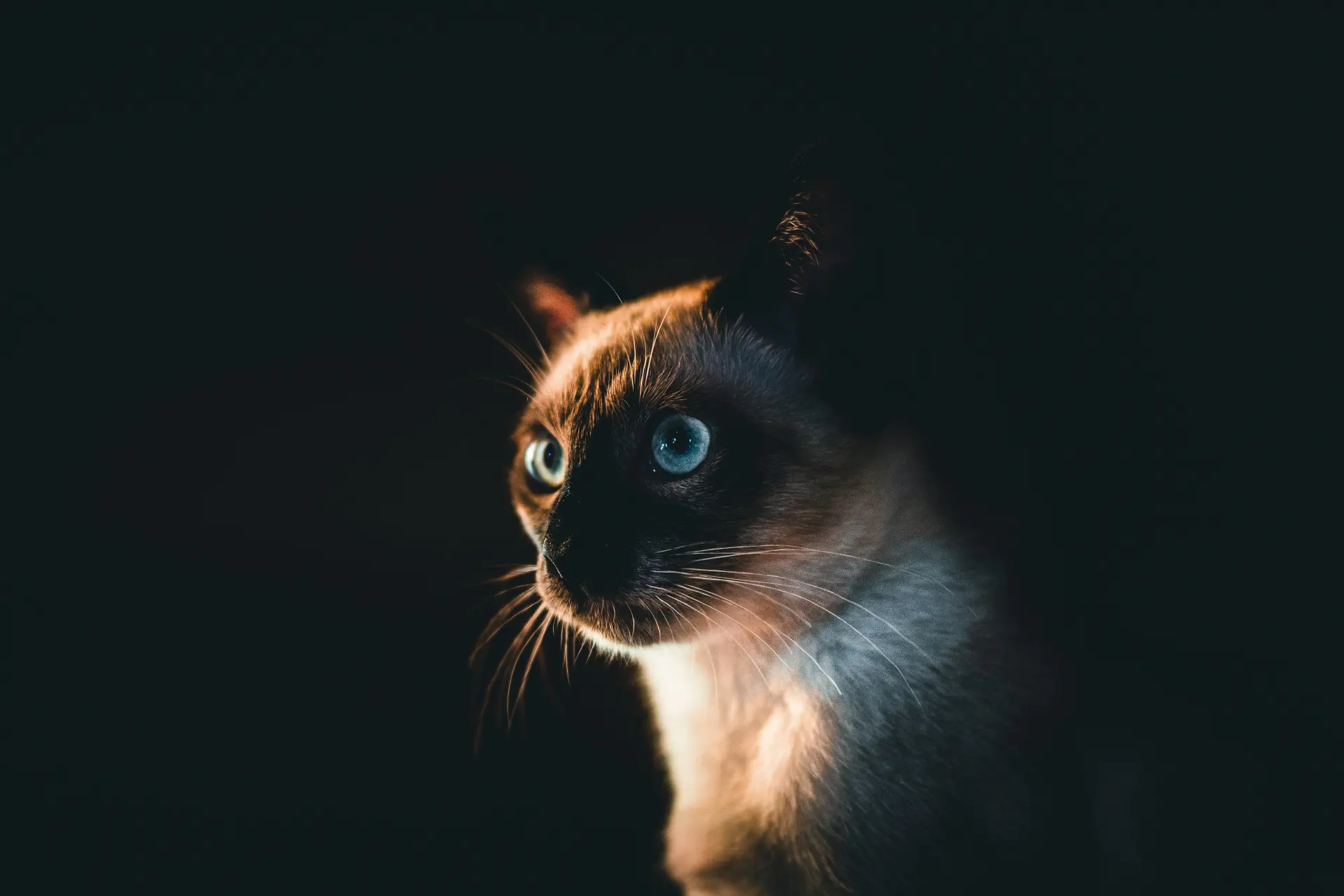
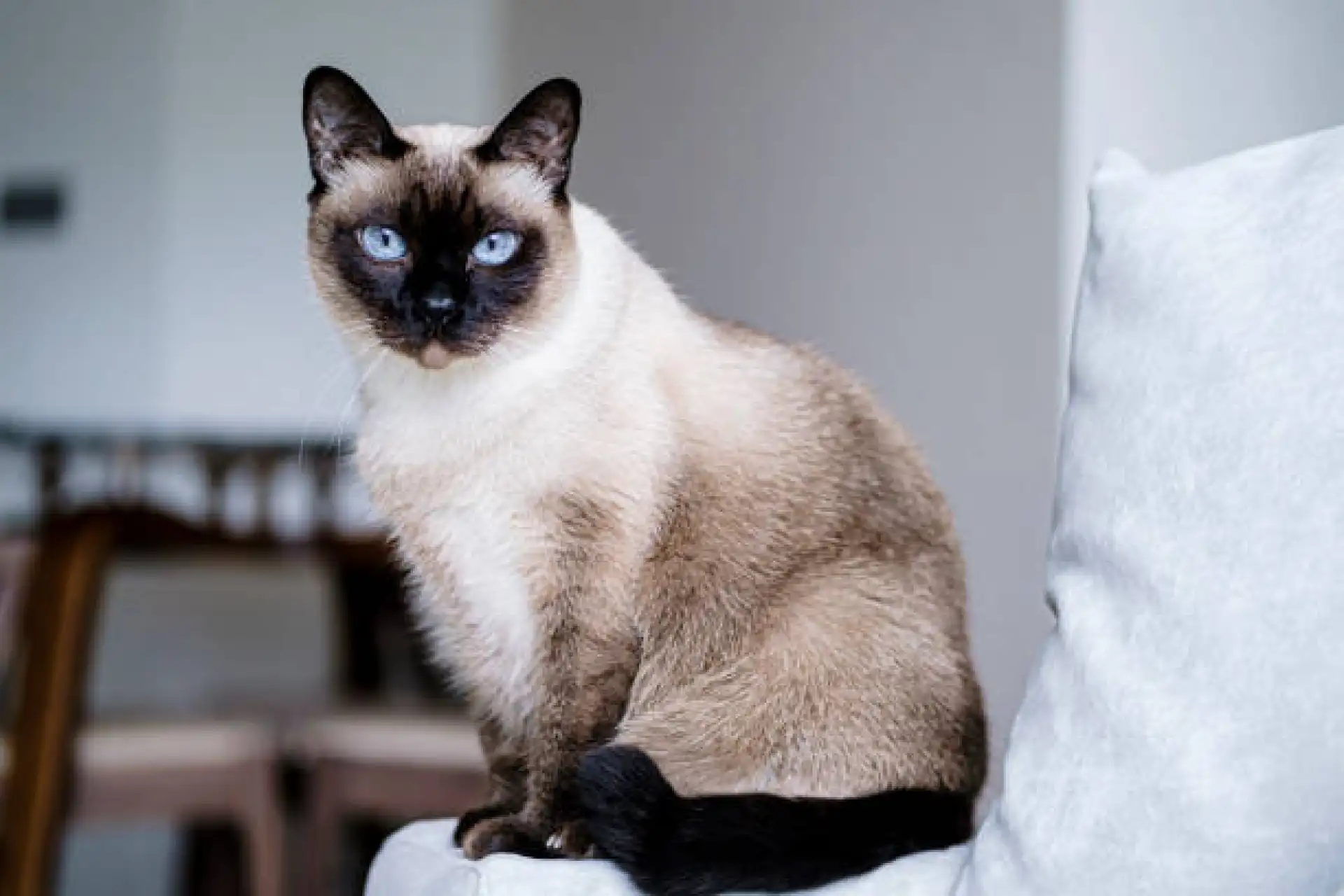 A classic Siamese showing off those signature sapphire eyes and cream-pointed coat.
Key Takeaways
- Siamese cats are profoundly social — they bond deeply with their people and genuinely struggle with loneliness. This is not a cat you leave alone for 10-hour workdays without consequences.
- That voice is real, and it is loud. The Siamese “meezer” (their affectionate nickname) is known for a distinctive, raspy, operatic meow that they will deploy freely and often.
- Their coat is a genetic marvel. The pointed coloring — darker ears, face, paws, and tail against a lighter body — is caused by a temperature-sensitive enzyme that affects pigmentation in cooler body parts.
- Intelligence cuts both ways. Siamese cats can learn tricks, open doors, and solve puzzles. They can also figure out how to unzip your bag and steal your lunch.
- They’re one of the healthiest purebreds when responsibly bred, but do carry some genetic predispositions worth knowing about.
- Modern Siamese come in two distinct body types — the traditional “apple-head” and the sleek show-standard “wedge-head” — and picking between them is a bigger decision than most people realize.
Quick Overview
| Trait | Detail |
|---|---|
| Origin | Thailand (formerly Siam), one of the oldest naturally occurring cat breeds in Asia |
| Size | Medium-sized, but lean and surprisingly long-bodied |
| Weight | Males typically 8–12 lbs; females 6–8 lbs |
| Lifespan | 12–20 years, with many Siamese comfortably reaching their late teens |
| Coat | Short, fine, and glossy — lies close to the body with minimal undercoat |
| Color | Seal point, chocolate point, blue point, lilac point, and several modern variations |
| Temperament | Vocal, affectionate, intensely social, curious, and occasionally dramatic |
| Grooming | Low-maintenance coat, but they need mental and social stimulation as much as any physical grooming |
| Price | $400–$2,500 from reputable breeders; adoption fees typically $75–$200 |
From Palace Cats to Internet Celebrities: The Siamese Origin Story
The Siamese cat’s history reads like a royal decree. Manuscripts from the Ayutthaya Kingdom of Thailand — dating back as far as the 14th century — describe a pale cat with dark points as a sacred animal kept exclusively by royalty and Buddhist monks. These cats weren’t pets in the casual sense; they were guardians of the spirit, believed to carry the souls of the deceased into the afterlife.
When a member of the royal family died, it was said that their Siamese cat would receive their soul, and from that point forward, the cat would live in a temple and be waited on by priests for the rest of its days. Honestly? That tracks. Every Siamese I’ve ever met has carried themselves like someone who expects to be attended to.
The breed made its Western debut in the 1870s when the American Consul in Bangkok brought a pair to the United States as a gift for President Rutherford B. Hayes’ wife, Lucy. By the 1890s, they were appearing in British cat shows, and the Western world was thoroughly bewitched.
 The Siamese has been associated with royalty and spirituality for centuries in Southeast Asian culture.
What happened next is where the Siamese story splits. In the mid-20th century, show breeders began selectively breeding for an increasingly extreme look — longer muzzles, larger ears, a narrower wedge-shaped skull. The “modern” or “show-type” Siamese we see in competition rings today looks quite different from the rounder, more robust cats that originally stepped off the ships from Siam.
Meanwhile, breeders and enthusiasts who loved the original look began preserving what’s now called the “Traditional” or “Applehead” Siamese. Both lines are very much alive today, and the debate between fans of each type can get surprisingly passionate on cat forums.
Built Like a Work of Art: The Siamese Physical Profile
A Siamese cat in motion is something worth watching. They have a long, tubular body, a whip-thin tail, and legs that seem almost too long and elegant for a domestic cat. When they stretch out on the couch, they look like someone assembled a cat from the most graceful spare parts available.
The defining physical feature, of course, is the pointed coloration — a creamy or white base coat with distinctly darker coloring on the “points”: ears, face mask, paws, and tail. The contrast is sharp and striking, even from across a room.
Then there are the eyes.
Siamese cats have almond-shaped, vivid blue eyes — and not the pale, washed-out blue you sometimes see in other breeds. We’re talking a deep, saturated sapphire that catches light in a way that makes them look perpetually alert, slightly suspicious, and entirely too intelligent. When a Siamese fixes its gaze on you, you feel it.
Show-type (Wedgehead) Siamese:
- Extremely triangular skull with large, flared ears set at an angle
- Long, narrow muzzle with a straight profile
- Lean and angular throughout
- Often described as “extreme” or “modern” in breed standards
Traditional (Applehead) Siamese:
- Rounder, more robust head shape
- Smaller, more naturally placed ears
- Stockier build overall
- Closer to what the original Thai cats looked like
Neither is “more correct” — it’s genuinely a matter of personal preference. If you want a cat that looks like a striking sculpture, the modern Wedgehead is extraordinary. If you prefer a cat that looks a bit more approachable and classic, the Applehead delivers.
The Color Code: Understanding Siamese Points and Variations
Here’s where things get genuinely interesting from a science perspective. The Siamese coat pattern isn’t painted on — it’s the result of a temperature-sensitive mutation in the enzyme that produces melanin.
The enzyme is active (producing dark pigment) only in the cooler areas of the body — the extremities, ears, nose, and tail. The warmer core of the body stays light. This is why kittens are born almost completely white; they’ve been incubating in the warm womb, so their pigment hasn’t developed yet. As they age and their points are exposed to cooler air, the color deepens.
It also means your Siamese will get slightly darker as they age, and cats living in colder climates often develop darker coats overall. The biology is quietly fascinating.
The four “classic” point colors recognized by most major registries:
- Seal Point — The OG. Deep, almost black-brown points against a cream or fawn body. The most common and arguably most recognizable.
- Chocolate Point — Warmer, milk-chocolate brown points on a paler ivory body. Like seal, but softer.
- Blue Point — Cool, slate-gray points on a bluish-white body. Elegant and less common than seal.
- Lilac Point — The palest of the four. Pinkish-gray, almost lavender points on a nearly white body. Delicate and distinctive.
Beyond these four, you’ll encounter terms like flame point (red-orange), lynx point (tabby-striped markings within the points), and tortie point (tortoiseshell mottling in the points). Some registries recognize these; others classify them differently or under related breeds like the Colorpoint Shorthair.
If genetics and color heredity interest you, Siamese breeding is a genuinely deep rabbit hole. The interactions between the cs (colorpoint) gene, tabby agouti genes, and dilution factors can produce a stunning range of combinations.
What It’s Actually Like to Live With a Siamese Cat
Let me be honest with you here, because the Siamese breed description has a way of being either undersold or romanticized.
They are described as “dog-like.” That’s accurate — they’ll often follow you from room to room, greet you at the door, and play fetch more reliably than some retrievers. What’s less often mentioned is that this also means they experience separation anxiety in a way most cats don’t. A Siamese left alone for long hours regularly will often become destructive, depressed, or develop anxiety behaviors like over-grooming.
The voice. Oh, the voice. The Siamese “meow” is legendary for a reason. It’s not dainty. It is a full-throated, sometimes alarmingly human-sounding yowl that they use to express hunger, loneliness, displeasure, excitement, and sometimes — as far as anyone can tell — pure philosophical observation. If you live in an apartment with thin walls, this is a real consideration.
But here’s the flip side of all that intensity: a Siamese that trusts you is one of the most openly affectionate animals you’ll ever encounter. They’ll sleep pressed against your legs, drape themselves across your shoulders, and headbutt you with genuine enthusiasm. The emotional depth cuts in both directions.
They’re also whip-smart in ways that consistently surprise people. Siamese cats have been clicker-trained to perform complex behaviors, and they problem-solve in real time. The downside of that intelligence? Boredom is their enemy. A bored Siamese will find stimulation somewhere — your cable cords, your bookshelf, your 2 a.m. peace and quiet.
The Siamese household dynamic works best when:
- There’s a second cat (ideally another Siamese or a similarly active breed) for company
- There’s a consistent human presence for most of the day
- The environment has vertical space — cat trees, shelves, window perches
- Mental enrichment is built into daily routine (puzzle feeders, interactive play sessions, even leash walks if introduced early)
They’re also intensely curious about strangers and will often investigate new people rather than hiding under the bed. This makes them surprisingly good family cats, assuming children understand the basics of respectful interaction. A Siamese will generally not tolerate being cornered or handled roughly, and they’ll communicate that boundary vocally and clearly before resorting to claws.
Keeping a Siamese Happy and Healthy Day-to-Day
Note: This section discusses health considerations. Please consult your veterinarian for personalized advice.
The good news: Siamese cats are not high-maintenance in the grooming department. That short, fine coat requires nothing more than a weekly brush-through to remove loose hair and distribute skin oils. They don’t mat, they don’t need professional grooming, and shedding is moderate compared to longer-haired breeds.
What they do need — and need consistently — is time and engagement.
Feeding: Siamese cats have efficient metabolisms and can be prone to both obesity (in less active, indoor-only cats) and being underweight if they’re burning calories through stress or anxiety. High-quality protein-forward food — wet food as at least part of the diet — is strongly recommended. Many Siamese do well on a scheduled feeding routine rather than free-feeding, because portion control is easier to manage.
Exercise and enrichment: Twenty minutes of active, interactive play per day is a baseline, not a maximum. Think feather wands, laser pointers with a physical toy finish (important — always end laser play with something the cat can actually catch), puzzle feeders that make them work for meals. Siamese cats who don’t get enough mental stimulation will create their own entertainment, which is rarely in your best interest.
Dental health: Siamese cats have a slightly elevated predisposition to periodontal disease. Starting dental care early — ideally with toothbrushing, or at minimum dental chews and water additives — is genuinely worthwhile and can prevent expensive veterinary procedures down the line.
Litter box: Clean is a non-negotiable for Siamese cats. They’re fastidious and will protest a dirty box with misplaced bathroom behavior faster than almost any other breed. The standard rule of one box per cat plus one extra applies here, and daily scooping is the baseline.
Temperature awareness: Remember that coat color genetics? Because of the temperature sensitivity of their pigmentation enzyme, Siamese cats are also somewhat more sensitive to cold than average. They gravitate toward warm spots and often appreciate a heated bed or a warm corner in winter.
⚠️ Health Disclaimer: This information is for educational purposes only and is not a substitute for professional veterinary advice. Always consult a licensed veterinarian for diagnosis, treatment, and health decisions regarding your cat.
What the Vet Will Tell You: Siamese Health and Longevity
The Siamese is, broadly speaking, a robust and long-lived cat. It’s not unusual for Siamese to reach 15, 17, even 20 years with good care. The long lifespan is one of the breed’s most appealing traits — though it also means you’re making a serious long-term commitment.
That said, there are some health considerations specific to the breed that any responsible prospective owner should understand:
Amyloidosis: A condition in which abnormal protein deposits form in organs, particularly the liver. It can cause liver disease and is more prevalent in Siamese than in the general cat population.
Respiratory conditions: The more extreme wedge-head type sometimes experiences breathing issues related to their narrow facial structure, though this is significantly less common in Siamese than in flat-faced breeds like Persians.
Strabismus (crossed eyes): A classic, benign Siamese trait caused by the same gene that affects coat color. The neural wiring between eyes and brain is slightly altered, which historically caused a compensatory eye-crossing. Modern breeding has reduced this significantly, but you still see it occasionally. It doesn’t affect vision meaningfully.
Progressive Retinal Atrophy (PRA): A genetic condition that can cause gradual vision loss. Responsible breeders test for this.
Megaesophagus: A condition where the esophagus loses normal motility, making it difficult to swallow properly. More common in Siamese than many other breeds.
Dental disease: As mentioned above — worth monitoring closely.
Heart conditions: Hypertrophic cardiomyopathy (HCM) occurs across many cat breeds, and Siamese have a moderate predisposition.
Buying from a breeder who health-tests their breeding cats — and asking to see documentation — is the single most effective way to stack the odds in your favor. A reputable breeder will welcome these questions. Anyone who deflects them is a red flag.
Finding a Siamese in the US: Cost, Rarity, and Where to Look
Siamese cats are one of the more accessible purebreds in the United States — they’re not rare, but finding a truly well-bred Siamese from a health-conscious breeder is a different matter than finding a Siamese.
From reputable breeders: Expect to pay between $800 and $2,500 for a pet-quality Siamese kitten from a reputable cattery. Show-quality cats can go higher. Breeders registered with the Cat Fanciers’ Association (CFA) or The International Cat Association (TICA) are generally a safer bet, as membership involves at minimum some level of ethical accountability. Be cautious of kittens priced under $400 — responsible breeding, health testing, early socialization, and veterinary care for a litter has real costs.
Traditional/Applehead Siamese are slightly harder to find from dedicated breeders and may require a waitlist, but they do exist.
Adoption: Siamese cats and Siamese mixes turn up in shelters more often than people expect — often surrendered by owners who underestimated the vocal and social demands. Organizations like Siamese Rescue operate nationally and specialize in rehoming purebred and mixed Siamese. Adoption fees typically run $75–$200 and often include spay/neuter, vaccinations, and microchipping.
If you’re open to a senior Siamese — which I’d genuinely encourage you to consider — you often get a cat whose personality is fully established, who is calmer than a kitten, and who needs a home with urgency. A 7-year-old Siamese still has a very good chance of giving you 10+ more years.
Red flags when purchasing:
- Kittens available immediately with no waitlist from any high-volume seller
- Refusal to let you see where kittens are raised or meet the mother
- No health guarantee or vaccination records
- Multiple breeds available simultaneously (often a sign of a kitten mill operation)
Frequently Asked Questions About Siamese Cats
Are Siamese cats good for first-time cat owners?
Honestly, it depends on the first-time owner. If you’re expecting a self-sufficient, low-interaction cat, a Siamese will surprise you in ways you’re not prepared for. But if you’re someone who wanted a dog-level companion and loves the idea of an interactive, communicative cat, a Siamese can be an incredible first cat. The key is going in with accurate expectations.
Why do Siamese cats meow so much?
It’s genetic and behavioral — Siamese have a vocal anatomy that produces their distinctive sound, and the breed has been selectively reinforced for communication over centuries of close human contact. They meow because they genuinely have things to say and they expect you to engage. It’s not a problem to fix; it’s a feature of the breed. If excessive vocalization bothers you, a Siamese is genuinely not the right match.
Do Siamese cats get along with dogs?
Often surprisingly well, actually. Siamese cats tend to have the confidence and social curiosity to hold their own with dogs, and their interactive personalities often translate well into cross-species friendships. A proper introduction matters — don’t just toss them together — but Siamese are generally among the better candidates for dog-cat households.
Can Siamese cats be left alone during the day?
They can physically survive it, but they don’t thrive with long-term isolation. If you work standard office hours, the strong recommendation is to get two cats — ideally both Siamese or at least a similarly active, friendly breed — so they keep each other company. A single Siamese alone for 8–10 hours daily will often develop anxiety-related behaviors over time.
How long do Siamese cats live?
Siamese are among the longest-lived domestic cat breeds. The typical range is 12–20 years, and many reach their late teens with good care. This longevity is one of the breed’s real selling points, but make sure you’re ready for that level of commitment.
Do Siamese cats shed a lot?
Compared to most cats, no. Their short, fine single-layer coat sheds moderately — you’ll notice it, but it’s not the kind of situation where you need to lint-roll every surface of your home. A weekly brush keeps it well under control.
Are Siamese cats hypoallergenic?
No cat is truly hypoallergenic — the allergen is a protein called Fel d 1 in cat saliva and skin secretions, not the hair itself. Siamese cats produce less Fel d 1 than some breeds, and their low-shedding coat means less airborne distribution, so some allergy sufferers do better with them. But if you have significant cat allergies, spend time with a Siamese before committing.
What’s the difference between a traditional and a modern Siamese?
Traditional (Applehead) Siamese have a rounder head, smaller ears, and a stockier build — closer to the original cats from Thailand. Modern (Wedgehead) Siamese have the elongated, triangular skull and large, flared ears seen in show rings. Temperamentally they’re very similar. It’s mostly an aesthetic choice, though some people find Traditional Siamese slightly mellower in personality.
Do Siamese cats need a companion?
It’s not required, but it is strongly recommended. Siamese cats are social at a level most breeds aren’t, and a companion — particularly another cat — significantly improves their quality of life when humans are unavailable. If you can only have one cat and you’re home a lot, a Siamese can absolutely thrive. But if you’re regularly away for long hours, a paired household is genuinely kinder.
Are Siamese cats indoor or outdoor cats?
Siamese are best kept as indoor cats, ideally with a safe outdoor enclosure (a “catio”) or supervised leash time if you want to give them outside access. Their high social trust means they’re less street-savvy than more independent breeds, and their curiosity can get them into trouble outdoors. The good news is they adapt beautifully to enriched indoor environments and don’t pace the walls pining for the wild the way some breeds do.
A Siamese cat will demand more of you than a lot of breeds. More attention, more conversation, more presence. In return, they give you a relationship that genuinely feels reciprocal — a creature that chooses you, knows you, and makes sure you know exactly how they feel about everything.
For the right person, there’s no better cat. You’ll just never have a quiet phone call again.