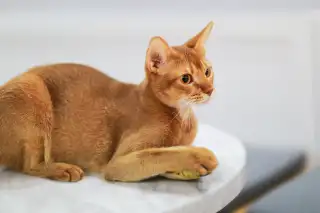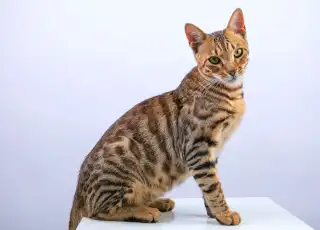
There’s a moment every Toyger owner knows well — you’re sitting on the couch, minding your business, and your cat slinks across the floor with that low, deliberate, stalking walk. Your instinct says tiger. Your brain knows it’s a house cat. That cognitive dissonance? That’s the Toyger experience in a nutshell, and honestly, it never gets old.
Toygers aren’t just cats with stripes. They’re the result of decades of intentional, passionate breeding aimed at capturing the visual majesty of a wild tiger and packaging it into a gentle, affectionate companion. If you’ve landed here, you’re probably either already obsessed or on the verge of becoming so. Either way, you’re in the right place.
This guide covers everything — their wild backstory, what those gorgeous stripes are actually about genetically, what it’s really like to live with one, and the practical stuff like health risks, grooming, and what you’ll actually pay to bring one home.
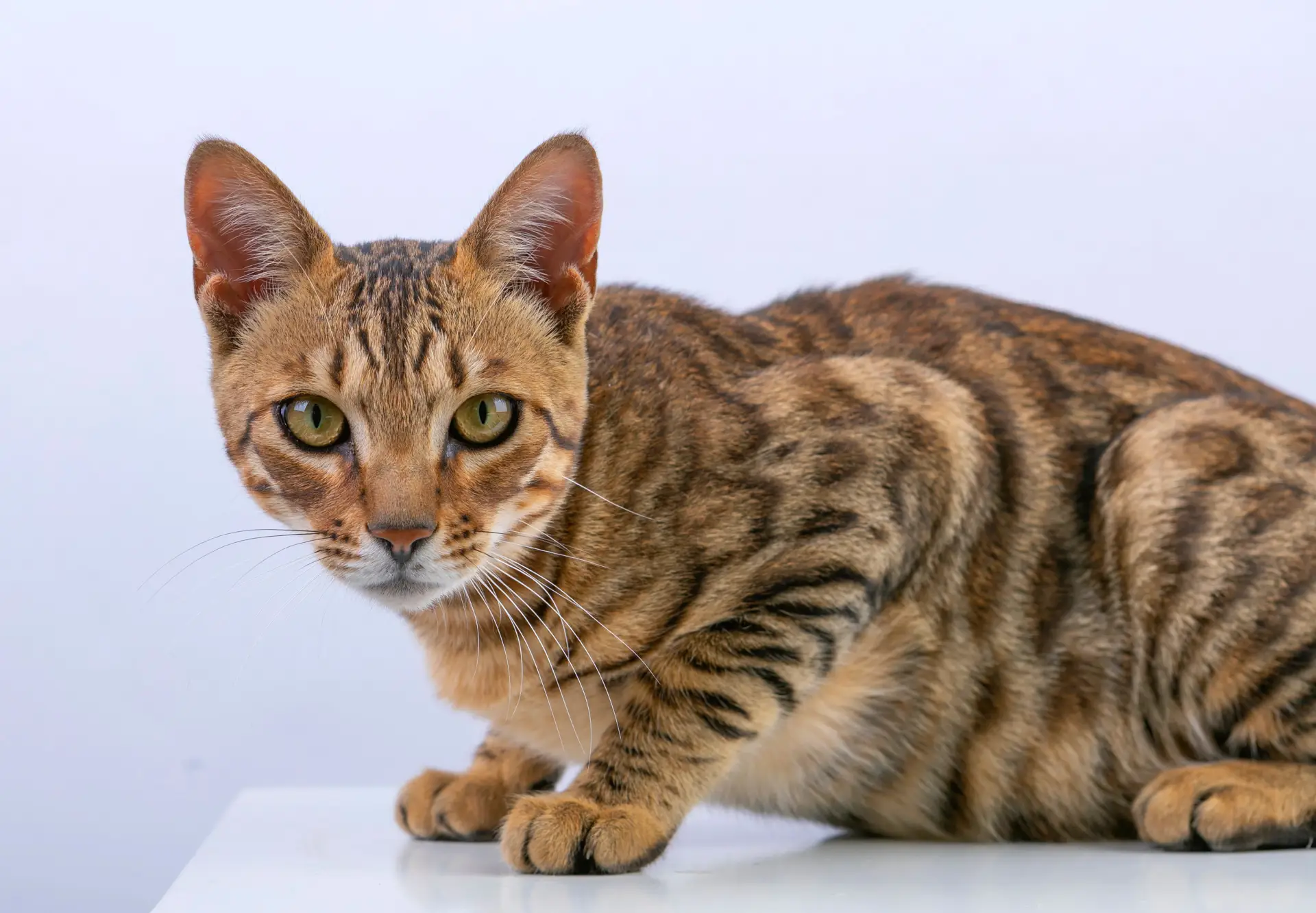
 A classic Toyger showing off those unmistakable tiger-like markings — the striped coat is the breed’s signature.
Key Takeaways
- Toygers are 100% domestic cats — no wild tiger DNA, no Asian Leopard Cat in the mix. Every bit of that tiger look was achieved through selective breeding of domestic shorthairs.
- They’re built for connection. Toygers are social, people-oriented cats who genuinely want to be part of your daily routine — not just nearby, but with you.
- The breed is still relatively rare, especially outside the United States, which means pricing and waitlists can be significant.
- Their coat is remarkably low-maintenance given how striking it looks — weekly brushing is generally all they need.
- Toygers are athletic and intelligent, which means they need real mental and physical stimulation, not just a food bowl and a sunny spot.
- Health-wise, they’re generally hardy, but heart health should be monitored — more on that later.
Quick Overview
| Trait | Detail |
|---|---|
| Origin | United States, developed by Judy Sugden starting in the 1980s |
| Size | Medium to large |
| Weight | Males 10–15 lbs; females 7–10 lbs |
| Lifespan | 10–15 years |
| Coat | Short, dense, and soft with a unique glittering sheen |
| Color | Brown mackerel tabby with deep, dark stripes on a warm orange/tan background |
| Temperament | Affectionate, playful, intelligent, and highly social |
| Grooming | Low-maintenance — weekly brushing and routine nail/ear care |
| Price | $1,500–$5,000+ USD from reputable breeders |
How a Cat Breeder Decided to Make a Tiger (And Actually Pulled It Off)
The Toyger story begins with one woman and a genuinely audacious idea. Judy Sugden — daughter of the legendary Jean Mill, who developed the Bengal cat — noticed something unusual about one of her tabby cats in the 1980s. Two of the spots on the cat’s temple were arranged in a way that mimicked the circular head markings of a tiger. Most people would’ve shrugged. Judy saw a roadmap.
Her goal wasn’t to hybridize with wild cats (a path her mother had taken with the Bengal). Judy wanted to achieve a tiger look using only domestic cats, through careful, generational selective breeding. She imported a street cat from Kashmir, India — notable for its unusually wide-spaced facial stripes — and used it as a foundational outcross to expand the gene pool and introduce new structural traits.
The name “Toyger” itself is a portmanteau of “toy” and “tiger” — a compact, domestic tiger you can actually keep as a pet. TICA (The International Cat Association) accepted the Toyger for registration in 1993 and granted it full championship status in 2007. That 14-year journey from registration to championship tells you something about how seriously breeders took the development process — they weren’t rushing.
What makes the breed’s history especially compelling is that it’s ongoing. Toyger breeders are still working to refine certain traits — particularly the circular head markings and the body structure — meaning the breed you see today is arguably still a work in progress, slowly but deliberately moving closer to that tiger ideal with each generation.
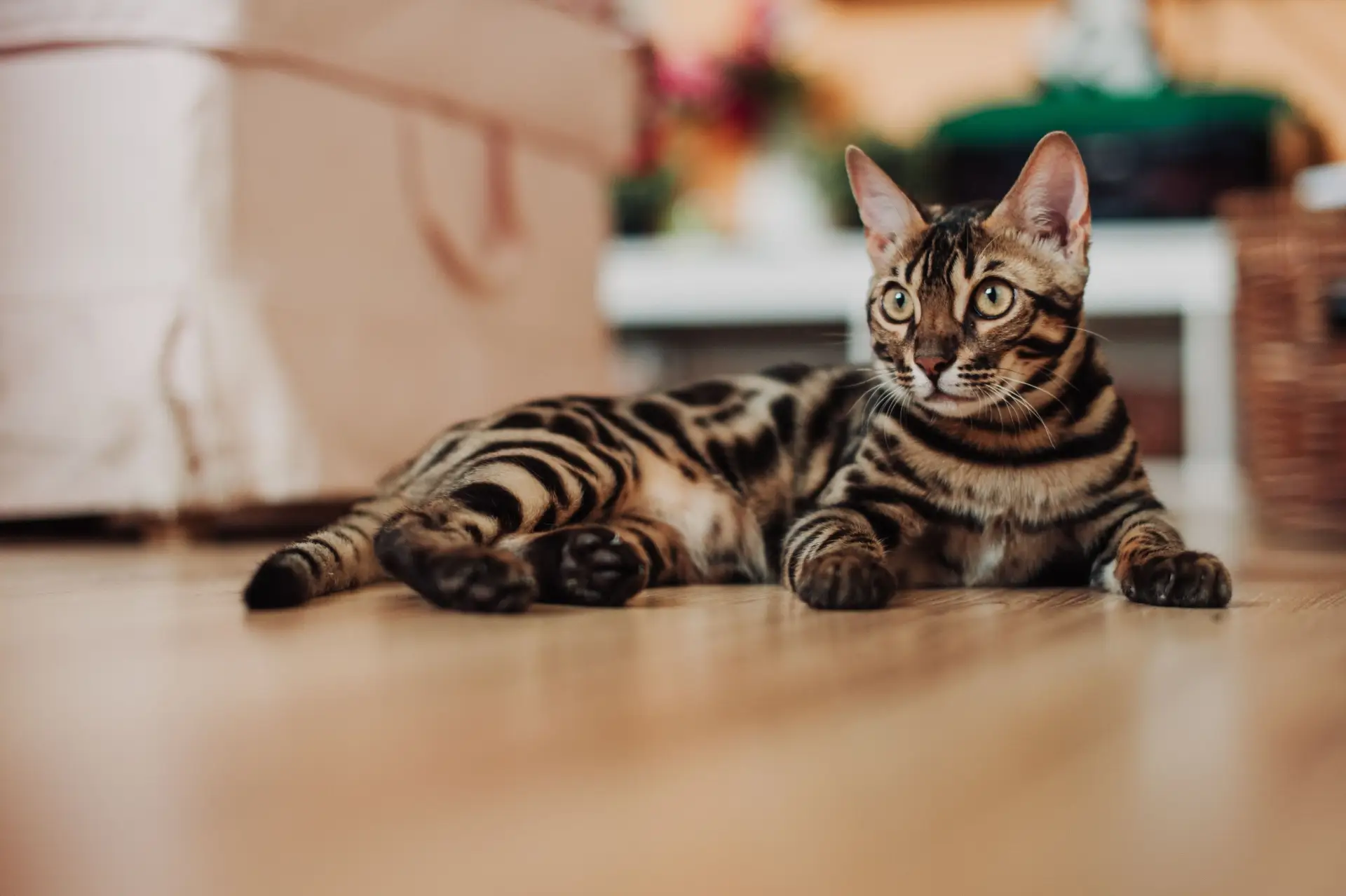
 Even as kittens, Toygers display those signature circular facial markings that set them apart from ordinary tabbies.
What a Toyger Actually Looks Like Up Close (Beyond Just “It Has Stripes”)
Yes, the stripes are the headline. But spend five minutes with a Toyger and you start noticing all the other details that make the overall tiger illusion work so effectively.
The body is long, muscular, and low-slung — built more like a predator than a pet. The chest is deep, the shoulders are wide, and there’s a deliberate heaviness to the build that makes a Toyger move differently than your average tabby. They don’t prance; they prowl.
The head shape is part of what breeders have worked hardest on. Toygers have a longer, more rectangular skull compared to most domestic cats, with small, rounded ears set wide and low on the head — features that visually echo a tiger’s head profile. The muzzle is prominent and well-defined, and the eyes are small to medium-sized, set with a slight hooded appearance that gives the face that characteristic feline intensity.
Then there’s the coat itself. The stripes on a Toyger are supposed to be non-repeating, branching, and circular — wrapping around the body the way a tiger’s markings do, rather than running in parallel lines like a standard mackerel tabby. The contrast matters too: the ideal is jet-black or very dark brown stripes against a rich, warm orange or tawny background. Top-quality Toygers also have a unique “glittering” quality to the coat — individual hairs tipped in a way that catches light, giving the fur a subtle luminosity that photographs absolutely beautifully.
The belly and inner legs should show lighter coloring, again mimicking what you’d see on an actual tiger. And the tail? Long, thick, and rounded at the tip.
A show-quality Toyger is genuinely breathtaking in person. But even pet-quality Toygers (more on that distinction later) carry enough of those features to regularly stop people mid-conversation when they come over to your house.
The Genetics Behind Those Stripes: It’s More Complicated Than You’d Think
Here’s where things get interesting for the science-curious among us.
The Toyger’s striking pattern isn’t the result of any single “tiger gene.” It’s the product of careful selection across multiple traits simultaneously — stripe width, spacing, color contrast, background hue, and that unique circular/branching pattern that distinguishes Toygers from regular tabbies.
The base coat pattern in Toygers comes from the mackerel tabby gene (Mc), which is recessive to spotted/ticked patterns. But what breeders have done over generations is push the expression of that tabby gene in very specific directions — selecting for broader stripes, reduced “ghost striping” on the background, and that critical warm orange/brown base color rather than the grayish tones you see in typical tabbies.
The “glittering” effect seen in high-quality Toygers is the same trait found in Bengals — caused by translucent hair shafts that allow light to pass through and refract, creating that pearlescent shimmer. It was likely introduced early in the breed’s development through careful selection and may have some genetic overlap with Bengal ancestry in certain lines, though Toygers are not classified as hybrid cats.
Currently, the accepted color pattern for show competition is essentially one: brown mackerel tabby with the specific Toyger patterning. There’s no “silver Toyger” or “snow Toyger” in the recognized show standard the way you see color variations in Bengals. The breed’s focus has remained deliberately narrow — all energy pointed toward perfecting that one tiger look rather than diversifying into multiple coat variations.
That said, color genetics don’t always cooperate. Some kittens in a litter will show better contrast, richer orange tones, or more defined striping than others — which is part of why there’s a significant price difference between show-quality and pet-quality Toygers even from the same litter.
Living With a Toyger: What the Photos Don’t Tell You
If you’ve been researching Toygers mostly through Instagram, let me fill in some gaps.
Those beautifully composed shots of a Toyger draped artistically across a windowsill? That’s real — they do love a good perch with a view. But the rest of the time, your Toyger is probably following you to the bathroom, chirping at you while you make coffee, and absolutely destroying that expensive puzzle feeder you bought because it figured it out in four minutes.
Toygers are engaged cats. They’re not aloof observers — they want to participate. Owners consistently describe them as dog-like in their social behavior: they’ll meet you at the door, learn their name readily, and some pick up leash walking with surprising ease. They tend to get along well with children and other pets, including dogs, as long as introductions are handled sensibly.
The flip side of that engagement is that they don’t do well with benign neglect. A Toyger that’s bored and under-stimulated will find its own entertainment, and you probably won’t enjoy what it comes up with. Puzzle feeders, rotating toys, cat trees with real height, and interactive play sessions aren’t optional extras — they’re maintenance. Budget at least 20-30 minutes of active engagement daily, and consider having two cats if you’re away from home for long stretches.
One thing that surprises a lot of new Toyger owners is their voice. These cats communicate. The repertoire goes well beyond standard meowing — there are chirps, trills, chattering sounds when they spot birds, and a remarkably expressive range of vocalizations that start to feel almost conversational once you know your cat. It’s charming. It’s also occasionally a lot at 6 AM.
They’re also surprisingly physical in their affection. Toygers lean into you, headbutt with enthusiasm, and have a fondness for sprawling directly on or against their person. If you wanted a decorative, hands-off cat that exists beautifully in your space, look elsewhere. If you want a cat that’s actually in your life, the Toyger delivers.
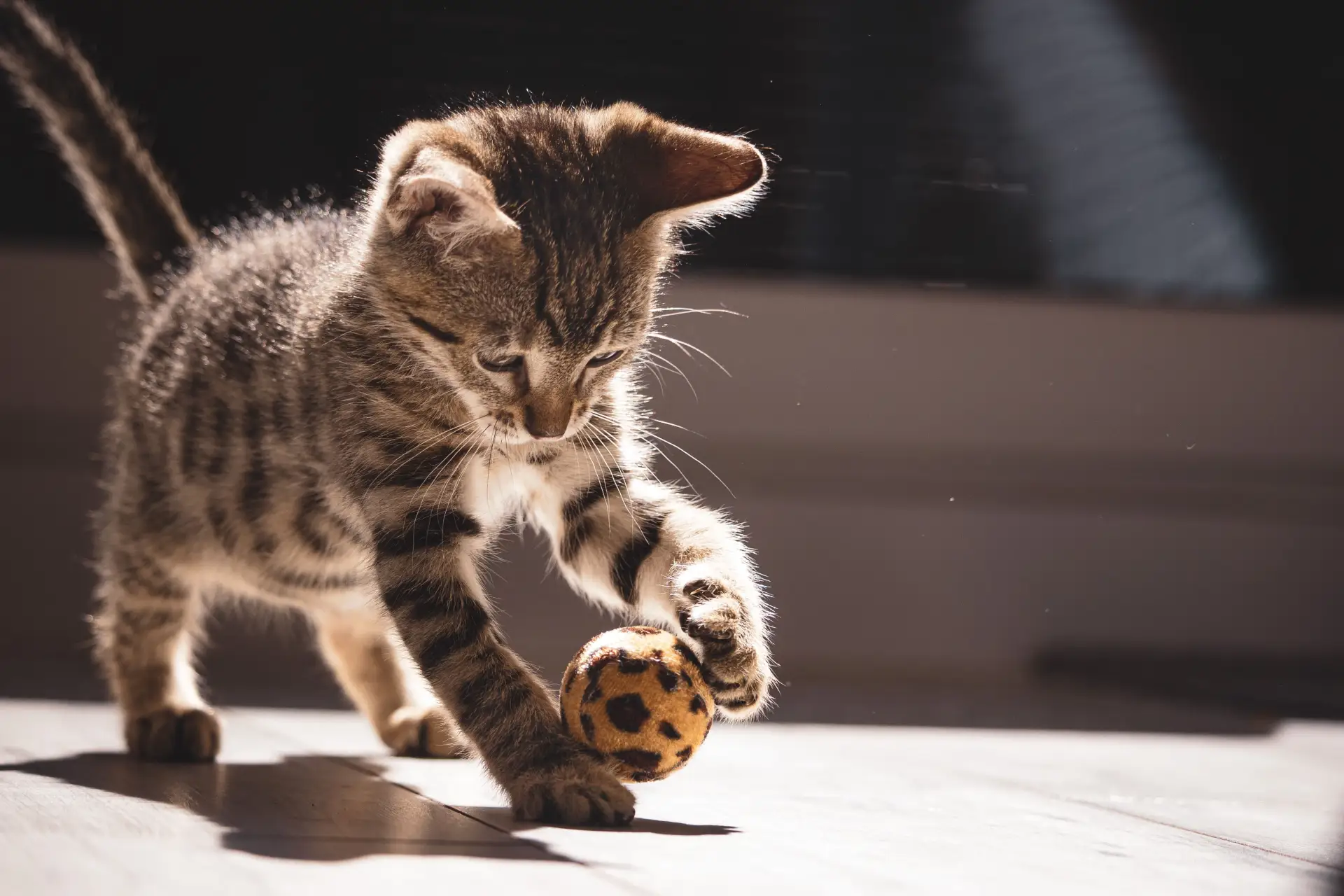 Toygers are intensely playful and athletic — interactive toys that challenge them mentally are just as important as physical exercise.
Keeping a Toyger Happy and Healthy: The Real Day-to-Day
Note: This section discusses health considerations. Please consult your veterinarian for personalized advice.
Feeding
Toygers are muscular cats with real metabolisms, and they do best on high-protein diets. A quality commercial food — wet, dry, or raw — with meat listed as the first ingredient is the baseline. Given the breed’s cardiovascular health considerations (more on that below), some owners and vets recommend foods with added taurine, which is essential for heart muscle function in cats.
Watch portions. Toygers can have a healthy appetite, and that muscular build can tip toward pudgy if free-feeding gets out of hand. Puzzle feeders are a great way to slow eating while also providing mental stimulation — two problems, one solution.
Exercise and Enrichment
This isn’t a cat that will self-regulate its activity level with a few toy mice on the floor. Tall cat trees, wall-mounted shelves, and climbing structures are important — Toygers like height and use it. Wand toys, laser pointers with a physical reward at the end (so the cat doesn’t go insane chasing something it can never catch), and rotation of puzzle feeders keep things fresh.
Leash training is genuinely worth attempting if you start young. Many Toygers take to harness and leash walking remarkably well, and it’s an excellent way to provide environmental enrichment safely.
Grooming
Here’s where owning a Toyger is genuinely easy. That short, dense coat doesn’t mat, doesn’t require professional grooming, and sheds relatively modestly. A weekly once-over with a soft bristle brush or rubber grooming mitt keeps the coat in great shape and reduces hairballs. The grooming session itself tends to be a bonding moment — most Toygers are comfortable with handling and will lean into the brush.
Standard cat maintenance applies: trim nails every 2-3 weeks, check and gently clean ears monthly, and keep up with dental hygiene. Dental disease is one of the most underrated health issues in cats generally, so getting your Toyger comfortable with tooth brushing early (or at minimum providing dental chews and water additives) pays off long-term.
⚠️ Health Disclaimer: This information is for educational purposes only and is not a substitute for professional veterinary advice. Always consult a licensed veterinarian for diagnosis, treatment, and health decisions regarding your cat.
What You Should Know About Toyger Health Before You Fall in Love
Toygers are generally robust cats, and because the breed was developed from a fairly diverse genetic foundation, they don’t carry some of the extreme health burdens of more inbred breeds. But there are a few things worth knowing.
Hypertrophic Cardiomyopathy (HCM)
This is the big one. HCM — a thickening of the heart muscle — is the most common heart disease in cats across all breeds, but it appears in Toygers with enough frequency that responsible breeders screen breeding cats via echocardiogram. The condition can be present without symptoms for years, which is why regular vet checks and periodic cardiac screening (especially as your cat ages) are genuinely important, not just box-checking.
Ask any breeder you’re considering about their HCM screening protocol. A reputable breeder will have documented echocardiogram results for their breeding cats and will be transparent about any cardiac history in their lines.
Murmurs and Early Detection
Related to HCM: heart murmurs can be an early sign of cardiac changes. Your vet should listen to your Toyger’s heart at every annual exam. If a murmur is detected, an echo referral to a veterinary cardiologist is the appropriate next step.
General Health
Beyond cardiac concerns, Toygers are not known for breed-specific genetic diseases. Ensure your kitten comes with documentation of vaccinations, has been tested for common infectious diseases, and has a vet health guarantee from the breeder. Starting with a well-socialized kitten from a health-conscious breeder is by far the most important variable in long-term health outcomes.
Lifespan of 10-15 years is typical, with well-cared-for Toygers regularly reaching the higher end of that range.
How Rare Are Toygers in the US, and What Will You Actually Pay?
Let’s be honest about this: Toygers are not common cats. There are relatively few breeders in the United States, and most reputable ones have waitlists. You’re not going to find one at your local shelter (though miracles happen — always check Petfinder), and the days of stumbling across a Toyger at a backyard breeder for $300 are — hopefully — behind us.
The Price Reality
From a reputable, TICA-registered breeder:
- Pet-quality Toygers: typically $1,500–$3,000
- Show/breeder-quality Toygers: $3,000–$5,000+
That wide range reflects differences in coat quality, marking clarity, body structure, and whether you’re purchasing a spayed/neutered pet or a breeding-rights kitten. Pet-quality doesn’t mean “flawed” — it means the kitten’s markings or structure don’t quite meet the strict show standard, but they’re still beautiful, healthy, fully-Toyger cats.
What to Watch Out For
The price tag attracts scammers. There are unfortunately fake listings with stolen photos, “breeders” with no TICA registration, and people selling heavily striped domestic shorthairs as Toygers. Red flags: unusually low prices, no in-person visits allowed, payment via wire transfer or gift cards, no health guarantee, no TICA registration papers.
Finding Reputable Breeders
TICA’s breeder directory is the starting point. The Toyger Society also maintains breeder listings. Expect a real conversation before a reputable breeder agrees to sell you a kitten — they’re going to ask about your living situation, other pets, and your experience with cats. That’s a feature, not a bug.
Adoption is possible but rare. Check Petfinder, Adopt-a-Pet, and breed-specific rescue networks. Occasionally adult Toygers enter rescue when circumstances change for their owners, and adopting an adult has real advantages — their personality is fully established, they’re usually already spayed/neutered and vaccinated, and the adoption fee is a fraction of breeder pricing.
Frequently Asked Questions About Toygers
Are Toygers really related to tigers?
No — and this is probably the most common misconception about the breed. Toygers are 100% domestic cats with no wild tiger genetics whatsoever. The tiger-like appearance was achieved entirely through selective breeding of domestic shorthair cats over multiple generations. The breed was created by selecting for specific visual traits — stripe pattern, body structure, head shape — that echo a tiger’s appearance without any actual hybridization with wild cats.
Are Toygers good with kids and other pets?
Generally, yes. Toygers are known for being adaptable, sociable, and tolerant — qualities that make them good fits for active family households. They tend to be patient with respectful children and typically accept dogs and other cats when introduced properly. That said, every individual cat has its own personality, and proper introductions matter regardless of breed.
How much exercise does a Toyger need daily?
More than your average couch-potato cat breed. Plan for at least 20–30 minutes of active, interactive play per day — wand toys, fetch, puzzle feeders, climbing. Beyond structured playtime, they’ll also self-entertain if they have enough enrichment in the environment (cat trees, window perches, puzzle toys). A second cat can significantly help with their socialization and activity needs if you’re away from home frequently.
Do Toygers make a lot of noise?
They’re vocal cats, yes. Not at the ear-splitting level of a Siamese, but Toygers are communicative and won’t hesitate to narrate their needs and opinions. Most owners describe their vocalizations as charming rather than annoying — there’s real variety in their sounds, including chirps, trills, and conversational meows. If you specifically want a quiet cat, Toygers might test your patience.
Can Toygers go outside?
Most breeders recommend keeping Toygers as indoor-only cats, or providing supervised outdoor access via a secure catio or leash/harness setup. Beyond the usual outdoor risks (traffic, predators, disease exposure), Toygers are eye-catching cats that are unfortunately theft targets in some areas. The good news is that their intelligence and adaptability mean they take to leash training remarkably well — outdoor enrichment is absolutely achievable safely.
How do I find a reputable Toyger breeder?
Start with TICA’s official breeder directory at tica.org. The Toyger Society also maintains a list of registered breeders. Any reputable breeder should be TICA-registered, willing to let you visit their facility, transparent about health testing (specifically HCM screening for breeding cats), provide a written health guarantee, and ask you questions about your home and lifestyle. The waitlist is real — expect to wait several months to a year for a quality kitten.
What’s the difference between a pet-quality and show-quality Toyger?
Both are purebred Toygers from reputable breeders — the difference is how closely the kitten’s markings, structure, and overall appearance match the breed’s show standard. A pet-quality Toyger might have stripes that are less dramatic, a slightly shorter body, or markings that aren’t symmetrical enough for the show ring. None of these qualities affect the cat’s health or personality. Show-quality Toygers are priced higher and are typically sold with breeding rights.
Are Toygers hypoallergenic?
No. Toygers are not hypoallergenic. No cat breed is truly hypoallergenic — all cats produce Fel d1, the primary allergenic protein, regardless of coat length or type. Some people with mild cat allergies find they react less strongly to certain individual cats, but this varies person to person, not by breed. If allergies are a concern, spending time with a Toyger before committing is important.
How long do Toygers live?
The typical lifespan is 10–15 years, with many reaching the upper end of that range when given proper veterinary care, a healthy diet, and a safe indoor environment. The most significant health risk affecting longevity is hypertrophic cardiomyopathy (HCM), which is why regular cardiac screenings and annual vet exams are especially important for this breed.
Is a Toyger the right cat for me if I’m away from home a lot?
It depends on your setup. Toygers are social cats that don’t thrive in isolation — long hours alone, day after day, isn’t ideal for them. If your lifestyle involves regular long absences, the best solution is getting two Toygers (or pairing a Toyger with another sociable cat) so they have company. Environmental enrichment — tall cat trees, window access, puzzle feeders — also helps. It’s not a dealbreaker, but it’s something to take seriously rather than dismiss.
Owning a Toyger is genuinely a different experience from having a typical domestic cat. There’s something that stays slightly surreal about it — even after years, you’ll catch your cat doing something completely ordinary and still have that half-second where your brain says tiger. That’s the magic Judy Sugden spent decades engineering, and it works every single time.
They’re not the easiest cat — they have real social and mental needs — but if you can match their energy and engagement, the reward is a bond with an animal that’s simultaneously one of the most visually extraordinary and emotionally connected cats you can share your life with. Worth every penny of that waitlist and every minute of that daily play session.