There’s something almost theatrical about a Bombay cat walking into a room. That jet-black coat catches the light like polished obsidian, those copper penny eyes cut right through you, and the whole package moves with a quiet confidence that makes you do a double-take. For a split second, you genuinely wonder how a miniature panther ended up sitting on your radiator.
But here’s the thing about Bombay cats that the dramatic first impression often overshadows: underneath all that sleek, panther-worthy exterior is one of the most people-obsessed, lap-hungry, genuinely sociable cats you’ll ever share your home with. This isn’t a cat that tolerates your existence. This is a cat that needs you, in the best possible way.
If you’re researching Bombay cats because you spotted one and couldn’t look away, or because someone told you they’re “basically dogs in cat suits,” you’re in the right place. This guide covers everything — the history, the temperament quirks, the health realities, the real cost of ownership, and the parts nobody talks about until you’re already in deep.
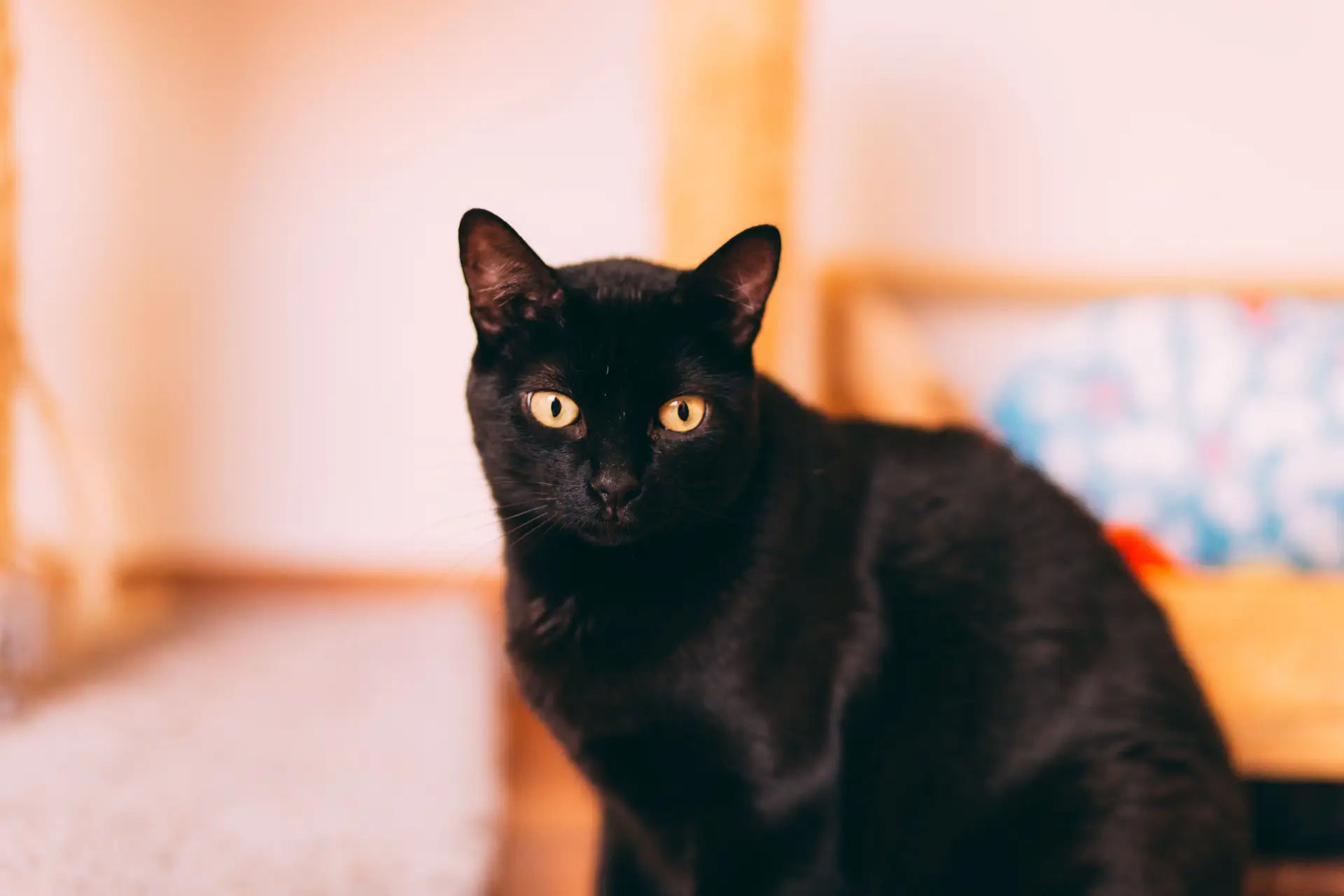 The Bombay’s signature copper eyes and glossy black coat make an unforgettable first impression.
Key Takeaways
- Bombay cats are purpose-bred — they were deliberately created in the 1950s to look like miniature black leopards while maintaining a friendly, domestic temperament.
- Their coat is genuinely unique — short, tight, and with an almost patent-leather sheen that you don’t see in typical black domestic cats.
- They’re velcro cats by nature — if you want a cat that keeps its distance, a Bombay will genuinely confuse and frustrate you.
- They do exceptionally well with other pets and kids, making them one of the more family-friendly cat breeds out there.
- Health-wise, they’re relatively sturdy, but the Burmese ancestry does bring some genetic considerations worth knowing about.
- They’re rarer than you’d think — finding a reputable Bombay breeder in the US takes some effort, and the price reflects that.
Quick Overview
| Trait | Detail |
|---|---|
| Origin | United States (developed in Louisville, Kentucky, 1950s) |
| Size | Medium |
| Weight | 8–15 lbs (males tend larger; females typically 8–12 lbs) |
| Lifespan | 12–16 years, with many reaching their late teens |
| Coat | Short, tight, and exceptionally glossy — almost satin-like to the touch |
| Color | Solid black only (jet black from root to tip, including nose leather and paw pads) |
| Temperament | Affectionate, social, playful, intelligent, and deeply people-oriented |
| Grooming | Minimal — weekly brushing and occasional wipe-down keeps that coat gleaming |
| Price | $500–$2,000+ from reputable breeders in the US |
The Surprisingly Intentional Story Behind Bombay Cats
Most cat breeds happened organically — centuries of regional adaptation, the occasional happy accident, some selective pressure from farmers who needed good mousers. The Bombay cat is different. Someone sat down, had a vision, and engineered it on purpose.
That someone was Nikki Horner, a breeder from Louisville, Kentucky, who in the late 1950s decided she wanted to create a cat that looked like the black leopards she’d seen in photos of India’s wildlife. She had a specific aesthetic locked in her head: deep black coat, muscular body, golden-copper eyes, and the kind of gaze that makes you feel slightly judged even when you’re being complimented.
Her plan was methodical — cross a sable Burmese with a black American Shorthair. The Burmese brought the compact, muscular build, the people-magnet personality, and those extraordinary eye colors. The American Shorthair contributed hardiness, the rounder face, and a somewhat calmer disposition. Early attempts didn’t quite land the look she was after, but Horner kept refining.
By the 1970s, the Cat Fanciers’ Association (CFA) gave the Bombay official recognition — a relatively fast track by breed development standards. The name itself is a nod to Bombay (now Mumbai), India, evoking the black leopards of the subcontinent, even though the breed has zero Indian origin and is thoroughly American.
What’s interesting is that some Bombay cats today are still developed through controlled Burmese crosses, which is why you’ll occasionally see breeders list kittens that look Bombay-adjacent but aren’t quite the finished article. A true show-quality Bombay has very specific structural requirements — it’s not just “a black cat.”
What a Bombay Actually Looks Like Up Close
Photographs flatter Bombay cats, but seeing one in person adds a whole new dimension. The coat isn’t just black — it has a sheen that looks almost wet. Run your hand along it and it feels like brushed satin, completely flat against the body with no fluffiness, no undercoat bulk, just this tight, gleaming pelt.
The body is medium-sized but surprisingly heavy when you pick them up. Bombays are famously described as “brick wrapped in silk” — compact, dense, muscular, with none of the fragile delicacy you might expect from such a sleek-looking cat.
The head is distinctly rounded with no sharp angles — wide at the brow, gently tapering to a blunt muzzle. The ears are medium-sized, set wide apart, and slightly forward-tilting, which gives the face a perpetually alert, interested expression. The nose leather is black. The paw pads are black. Every visible surface is some shade of black — the breed standard is uncompromising on this.
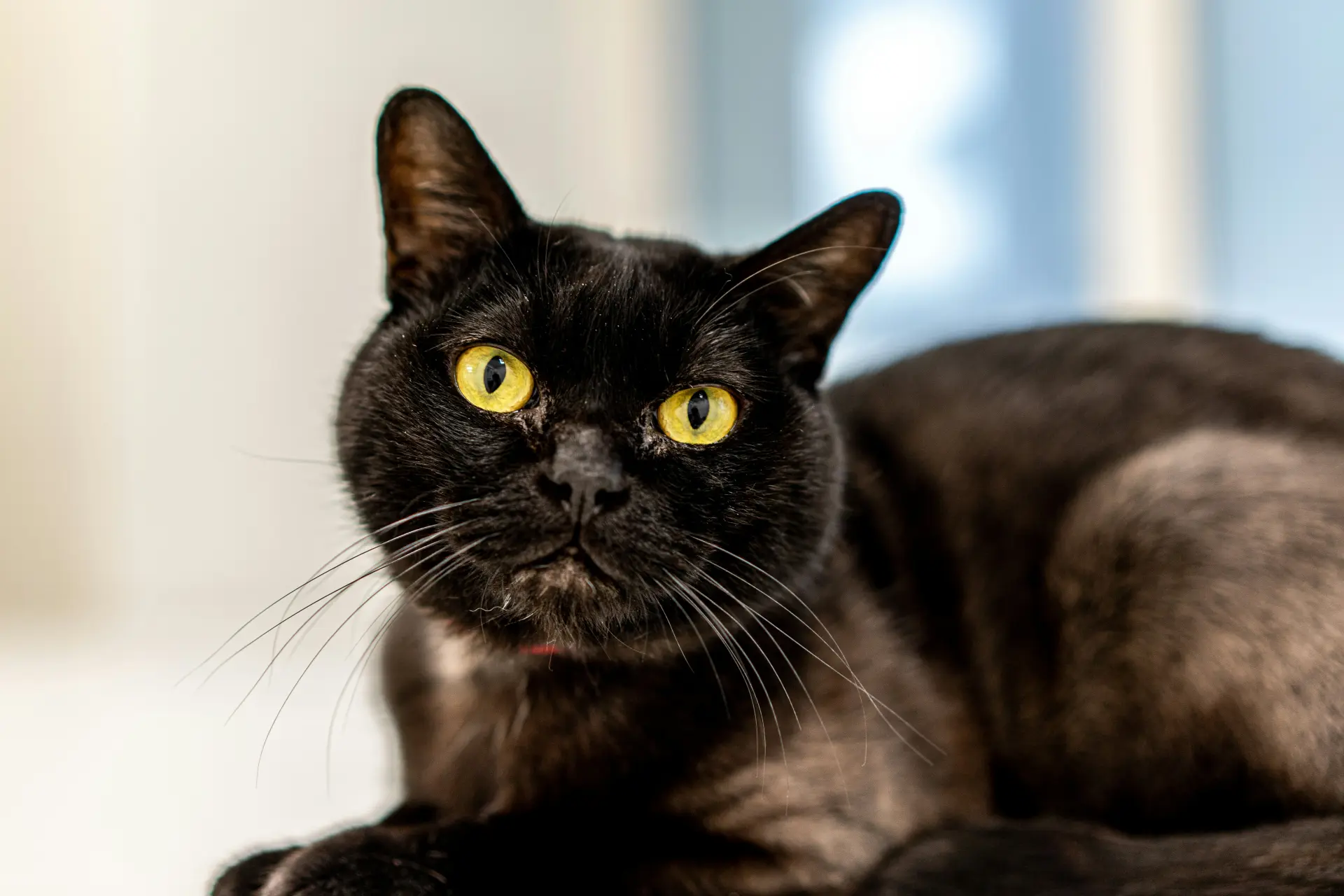 That rounded face and wide-set copper eyes are hallmarks of a well-bred Bombay — distinct from ordinary black domestic cats.
But the eyes. The eyes are what Bombay owners talk about most. The CFA standard calls for gold to copper coloring, and the best examples have this rich, burnished penny color that looks almost backlit in certain lighting. Combined with the black face, it creates a genuinely striking contrast that photographs like a professional studio shot every single time.
One thing worth noting: Bombay kittens are not born with this final look. Young kittens often have ghost tabby striping visible in bright light, and their eye color starts blue before transitioning through yellow to the final copper. The full, polished adult appearance typically sets in around 18 months to 2 years — so if you get a Bombay kitten and think “hmm, is this right?”, give it time.
The Coat Color Question: Why Bombays Are Always Black (And What That Actually Means Genetically)
Here’s where things get interesting if you’re curious about the genetics side. Bombay cats are exclusively black — that’s not just a breed preference, it’s written into the genetic structure of what the Bombay is.
The black coloration comes from the dominant B allele (black pigment) combined with the non-dilute D allele, which prevents the dilution that would turn black into blue/grey. The tight, non-ticked coat pattern means no tabby markings break through — or at least, they shouldn’t in a properly bred adult.
The “ghost tabby” pattern you sometimes see in kittens and young adults is a vestige of the underlying tabby genetics that all domestic cats carry. In most cases, this fades completely as the cat matures and the coat fully develops its characteristic black saturation.
Because Bombay breeding programs sometimes incorporate Burmese crosses to maintain the muscular build and temperament, you can occasionally get sable (dark brown) kittens in a Bombay litter. These kittens carry the Burmese coat coloration and are typically registered as Burmese, not Bombay — the two breeds share ancestry but are judged separately.
The glossiness that makes the Bombay coat so distinctive isn’t just a color effect — it’s structural. The individual hairs have a tight, flat lie and a higher surface reflectivity than most cat coat types. This is why even “black” domestic shorthairs typically don’t have the same visual quality as a true Bombay. The coat is part of what was selectively bred, not just the color.
Living With a Bombay Cat: What the Breed Profile Doesn’t Warn You About
Every breed profile will tell you Bombay cats are “affectionate” and “people-oriented.” What they won’t tell you is how much, and what that actually looks like day-to-day.
Bombay cats don’t just enjoy your company — they engineer situations to maximize it. This is a cat that will follow you from room to room, position itself at eye level when you’re working at a desk, and actively seek out whoever is least available at any given moment. Busy on a call? The Bombay will consider this an invitation.
They’re vocal without being relentless about it — not as chatty as a Siamese, but they will carry on conversations with you if you initiate them. The voice is softer than you’d expect from such a purposeful-looking cat. It’s more of a melodic murmur than a demanding yell.
What’s genuinely interesting about their temperament is the combination of curiosity and composure. Most highly social cats are also high-energy to the point of exhaustion. Bombays are engaged and playful without being frantic. They’ll play an energetic session of wand toy chase, then seamlessly transition to lying across your chest while you watch television. The on/off switch is remarkably well-calibrated.
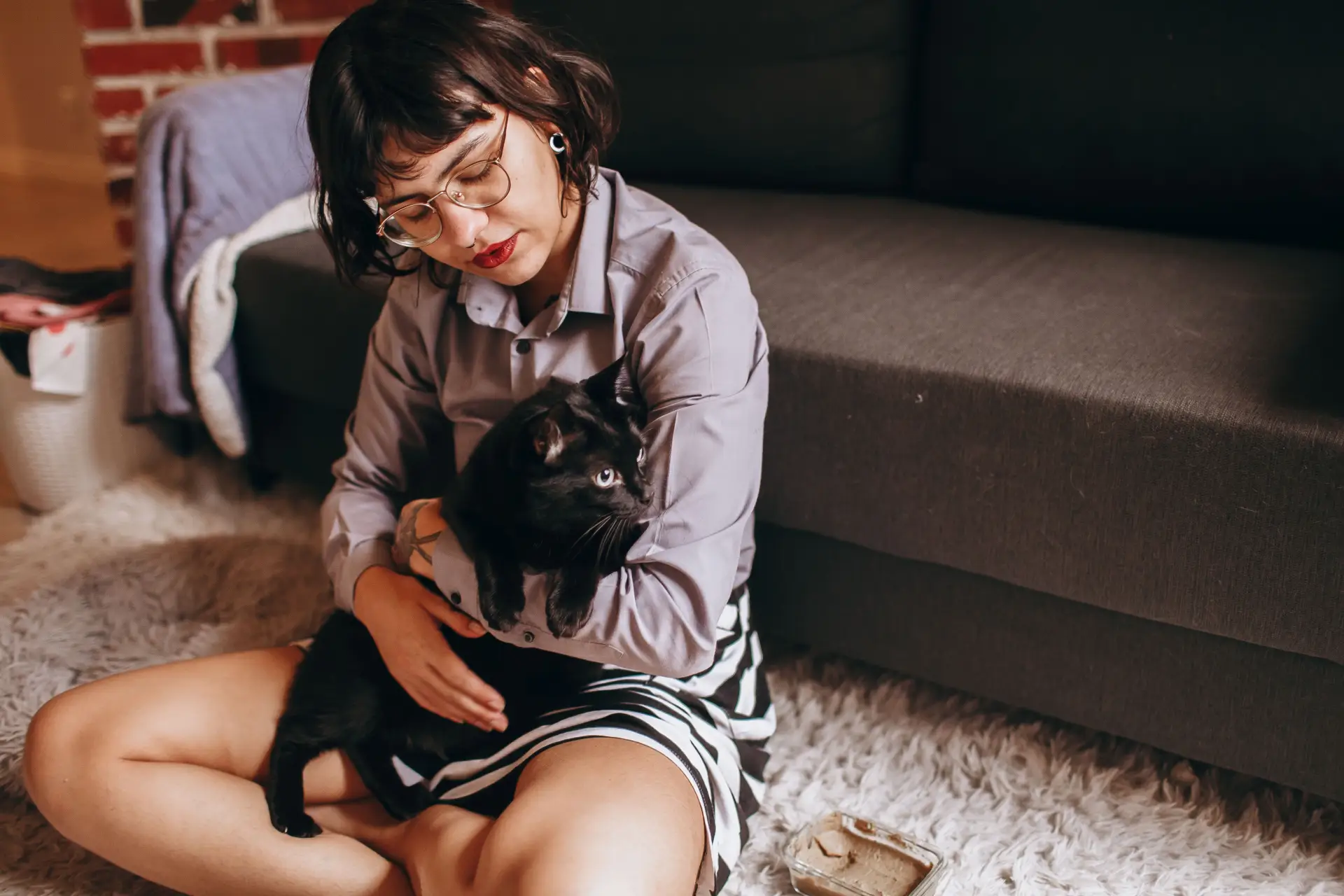 Lap cat doesn’t begin to cover it — Bombays treat human contact as a baseline requirement, not a luxury.
They’re also unusually dog-friendly for cats, which traces directly back to the Burmese side of their lineage. Many Bombay owners report that their cats greet visitors at the door, travel reasonably well, and adapt to dogs in the household with minimal drama. This isn’t universal — individual personality varies — but it’s a genuine breed tendency, not marketing copy.
The flip side: a Bombay cat left alone for extended periods can become genuinely distressed. They don’t do well with isolation the way some more independent breeds manage. If your lifestyle involves long work hours and frequent travel, a Bombay will need either a companion animal or some serious environmental enrichment. This is a breed that costs you emotionally if you’re not prepared to reciprocate the attachment they offer.
Keeping That Coat Gleaming: Real-World Bombay Cat Care
The good news about Bombay care is that the coat, for all its visual drama, is genuinely low-maintenance. No mats, no serious shedding seasons, no complicated grooming routines. A soft bristle brush or rubber grooming mitt once a week keeps things tidy and distributes the natural oils that give the coat its signature shine.
The one grooming tip that makes a real visible difference: a chamois cloth or a slightly damp hand run over the coat after brushing. It sounds almost too simple, but the result is that extra level of gleam that makes Bombay owners look like they spend hours on coat care when they really don’t.
Diet matters more for this breed than owners sometimes expect. Because the Bombay’s dense, muscular build can tip easily into overweight territory — especially in spayed/neutered cats — portion control and diet quality are worth paying attention to. A high-protein, moderate-fat diet with real meat as the primary ingredient is the baseline. Many Bombay owners do well with a combination of quality wet food and a measured amount of dry kibble, which also helps with dental health.
Exercise and mental stimulation deserve more emphasis than they usually get in breed care guides. Bombays are smart enough to get bored and will invent their own entertainment if you don’t provide structured play. Fifteen to twenty minutes of active wand toy play twice a day covers their physical needs surprisingly well. Puzzle feeders and foraging toys take the edge off their food motivation in a healthy way and give their brains something to work on.
For nail trimming, most Bombays tolerate it reasonably well if you start young and keep the sessions short and treat-rewarded. Ears need a quick visual check weekly — wipe with a damp cotton ball if there’s debris. Dental hygiene is the one area where many cat owners underinvest, and Bombays, like all cats with Burmese heritage, benefit from regular tooth brushing or at minimum dental treats and water additives.
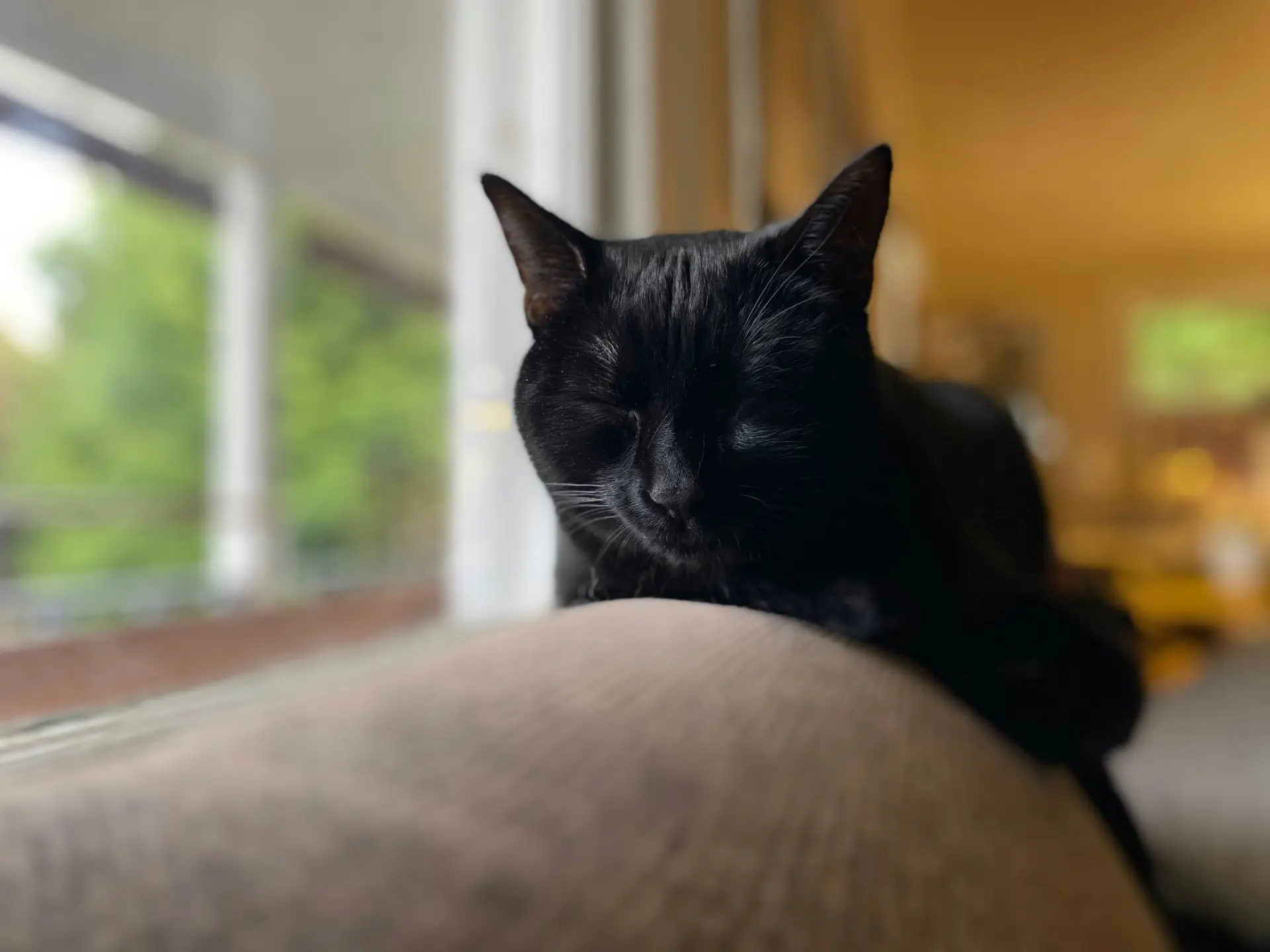 Give a Bombay cat a sunny window and your undivided attention, and they’ll give you fifteen years of complete devotion.
What to Know About Bombay Cat Health Before You Commit
Note: This section discusses health considerations. Please consult your veterinarian for personalized advice.
Bombay cats are generally considered a healthy breed, and with proper care, lifespans of 15 or even 17 years aren’t uncommon. That said, the Burmese foundation brings some genetic considerations that honest breeders will discuss with you upfront.
Craniofacial defect is the most significant health concern associated with Bombay breeding programs. This occurs when two Burmese-type cats carrying the same genetic mutation are crossed, and it results in severe skull abnormalities in affected kittens. Responsible Bombay breeders test for this and structure their breeding programs to avoid affected pairings — it’s one of the primary reasons you should only work with breeders who do proper genetic testing.
Hypertrophic Cardiomyopathy (HCM) — the thickening of the heart muscle that’s unfortunately common across many cat breeds — is something Bombay owners should be aware of. Annual cardiac screenings from a board-certified cardiologist are the gold standard. Many breeders now offer cardiac-tested parent cats, which reduces (but doesn’t eliminate) risk.
Obesity is genuinely common in this breed, and it matters more than it sometimes gets credit for. Bombays are food-motivated, tend toward lower activity levels as they age, and have that dense muscle base that makes weight gain easy to overlook until it’s significant. The “feels heavier than expected” breed characteristic can mask early weight gain. Regular vet check-ins with an actual weight tracking component help catch this early.
Respiratory considerations: Bombays have a slightly shortened muzzle (brachycephalic-adjacent, though not as extreme as Persians or Exotics). In most Bombays this causes zero problems, but in hot, humid conditions or during high stress, some cats can show mild respiratory sensitivity. It’s worth noting rather than worrying about.
The overall health picture is genuinely positive for the breed — but it argues strongly for buying from breeders who health-test, rather than from sources where that background is unknown.
⚠️ Health Disclaimer: This information is for educational purposes only and is not a substitute for professional veterinary advice. Always consult a licensed veterinarian for diagnosis, treatment, and health decisions regarding your cat.
Finding a Bombay Cat in the US: What It Actually Costs and Where to Look
Bombay cats are not rare in the way that some exotic breeds are rare, but they’re not common either. In any given year, there aren’t that many dedicated Bombay breeders operating in the United States — you’re not going to find them at every cat show or through a quick Google search and immediate availability.
From reputable breeders, expect to pay between $500 and $2,000 for a pet-quality Bombay kitten, with show-quality cats from champion lines pushing well above that. The price reflects health testing, the breeding program’s reputation, early socialization, initial vaccinations, and microchipping. When you see Bombay kittens advertised for $150–$300 with no documentation, that’s a red flag, not a deal.
The CFA and TICA breeder directories are good starting points for finding legitimate breeders. Be prepared for a waitlist — good Bombay breeders don’t have kittens constantly available, and some have waiting lists stretching six months to a year. That’s normal and is actually a sign of a thoughtful breeding program rather than a production operation.
Adoption is a real option worth considering. Black cats are statistically the most overlooked cats in shelters, and while a shelter cat is unlikely to be a pedigreed Bombay, cats that are Bombay mixes or simply Bombay-adjacent in appearance and temperament turn up in rescue all the time. Petfinder and Adopt-a-Pet are obvious starting points. Burmese breed-specific rescues sometimes have Bombay or Bombay-mix cats as well.
If you are set on a pedigreed Bombay, the Bombay Cat Society is a breed-specific organization that can connect you with ethical breeders and sometimes has rescue cats available as well.
One piece of advice: if a breeder can’t tell you about the health testing history of the parents, doesn’t ask you any questions about your home environment, and seems eager to move the transaction along as quickly as possible — that’s your sign to look elsewhere, regardless of how good the photos look.
Frequently Asked Questions About Bombay Cats
Are Bombay cats good for first-time cat owners?
Honestly, yes — with one important caveat. Bombays are easygoing, adaptable, and genuinely forgiving of rookie mistakes in care. Their low grooming needs and robust health make them less demanding than many breeds on the practical side. The caveat is that first-time owners need to understand the social demands upfront. If you’re expecting a cat that mostly does its own thing, a Bombay will surprise you. If you want genuine daily interaction and a cat that integrates into your life rather than occupying the margins of it, they’re fantastic for beginners.
Do Bombay cats get along with dogs?
Better than most cat breeds, generally speaking. The Burmese ancestry gives them a social confidence that translates well across species. That said, a lot depends on the individual dog’s temperament and the introduction process. A slow, properly managed introduction — scent swapping before visual contact, controlled initial meetings — gives the pairing the best chance. Bombays who grow up with dogs typically regard them as just another family member. Adult Bombays introduced to dogs can take a few weeks to settle, but rarely end up in permanent conflict.
How much do Bombay cats shed?
Less than you’d expect, but not zero. The tight, short coat doesn’t mat and doesn’t blow out seasonally the way double-coated breeds do. You’ll find black hairs on lighter furniture, but it’s manageable. A weekly brushing session significantly reduces ambient shedding. If you’re wearing white linen to a formal event, give the cat a quick groom beforehand — that’s really the extent of the shedding consideration.
Can Bombay cats be left alone during the day?
For a regular workday (8–9 hours), yes, they manage — but they’ll want to make up for it when you get home. If you’re regularly away for 10–12 hours or travel frequently, either arrange a sitter/cat companion or reconsider whether this breed fits your lifestyle. Bombays left alone excessively can develop stress-related behaviors: over-grooming, appetite changes, or becoming clingy to the point of anxiety when you are home. Two Bombays, or a Bombay paired with another social cat, largely solves the alone-time problem.
Are Bombay cats hypoallergenic?
No. There is no truly hypoallergenic cat breed — the allergen is Fel d 1 protein, which is produced in saliva and skin secretions, not just fur. That said, Bombays’ low-shedding coat means less allergen distribution around the home, and some people with mild cat allergies find they tolerate Bombays better than heavier-shedding breeds. If allergies are a serious concern, spend time with the specific cat before committing.
What’s the difference between a Bombay cat and just a black cat?
More than you’d think, though the distinction isn’t always obvious to the untrained eye. True Bombays have a specific body structure (compact, muscular, surprisingly heavy), a distinctly rounded head type, and a coat quality — that tight, glossy, almost lacquered look — that regular black domestic cats don’t have. The eyes are another giveaway: that rich copper/gold coloring is part of the breed standard and isn’t typical of random black cats, who more commonly have green or yellow eyes. Temperamentally, the Burmese-derived people-orientation is another differentiator.
How long do Bombay cats typically live?
Most Bombay cats live 12–16 years, and it’s not unusual to see individuals reach 17 or 18. The combination of hybrid vigor from the Burmese/American Shorthair cross and a generally robust genetic base contributes to their longevity. Quality nutrition, regular veterinary care (including dental cleanings), maintaining a healthy weight, and indoor-only living are the most significant factors within an owner’s control.
Are Bombay cats vocal?
They’re conversational but not demanding about it. Think of them as cats that participate in discussions rather than cats that monologue. They’ll respond to you if you talk to them, and they have a pleasant, slightly raspy meow that’s surprisingly soft for such a confident-looking animal. They’re not going to wake you at 5am demanding breakfast with the persistence of a Siamese — but they’ll definitely let you know if their food bowl is empty.
Do Bombay kittens look different from adults?
Yes, considerably so. Young Bombay kittens often show ghost tabby markings in certain lighting, have much less impressive coat gloss, and go through an eye color transition from blue through yellow to the final copper. The full adult appearance — that polished, saturated black coat and deep copper eyes — typically completes around 18 months to 2 years. If your Bombay kitten looks a bit rough around the edges compared to the photos that got you interested in the breed, that’s completely normal.
Is the Bombay cat recognized by major cat registries?
Yes. The Cat Fanciers’ Association (CFA) granted the Bombay championship status in 1976. TICA (The International Cat Association) also recognizes the breed. The breed standards between organizations are similar but not identical — TICA tends to allow slightly more variation in accepted crosses. Both registries maintain breeder lists and show standards that you can reference when evaluating breeders.
Bombay cats are the kind of breed that sounds almost too good on paper — low maintenance coat, excellent health, great with kids and other pets, deeply affectionate without being neurotic. The reality actually holds up to that description for the right person in the right home. They’re not the cat for everyone: the social needs are real, the attachment runs deep, and the occasional health consideration requires an engaged owner.
But if you want a cat that acts like it genuinely chose you, that makes your living room look like a luxury lifestyle shoot, and that will meet you at the door after a terrible day with an uncanny sense of timing — a Bombay cat is hard to argue with.