There’s a moment every Munchkin cat owner knows well — you’re sitting on the couch, and suddenly this tiny, low-slung creature comes thundering across the hardwood floor, legs a blur, ears pinned back, acting for all the world like it’s the fastest animal alive. It isn’t. But it absolutely believes it is. That’s the Munchkin cat in a nutshell: compact in stature, massive in confidence, and completely unaware that its legs are roughly half the length of a typical cat’s.
If you’ve stumbled here because you saw a Munchkin trotting around on social media and thought “I need one of those immediately,” slow down just a little. These cats are genuinely wonderful — but they’re also widely misunderstood, occasionally controversial, and definitely not the right fit for everyone. This guide will walk you through everything: the real history, the health truths, the personality surprises, and the practical realities of daily life with a Munchkin. No fluff, no sugarcoating.
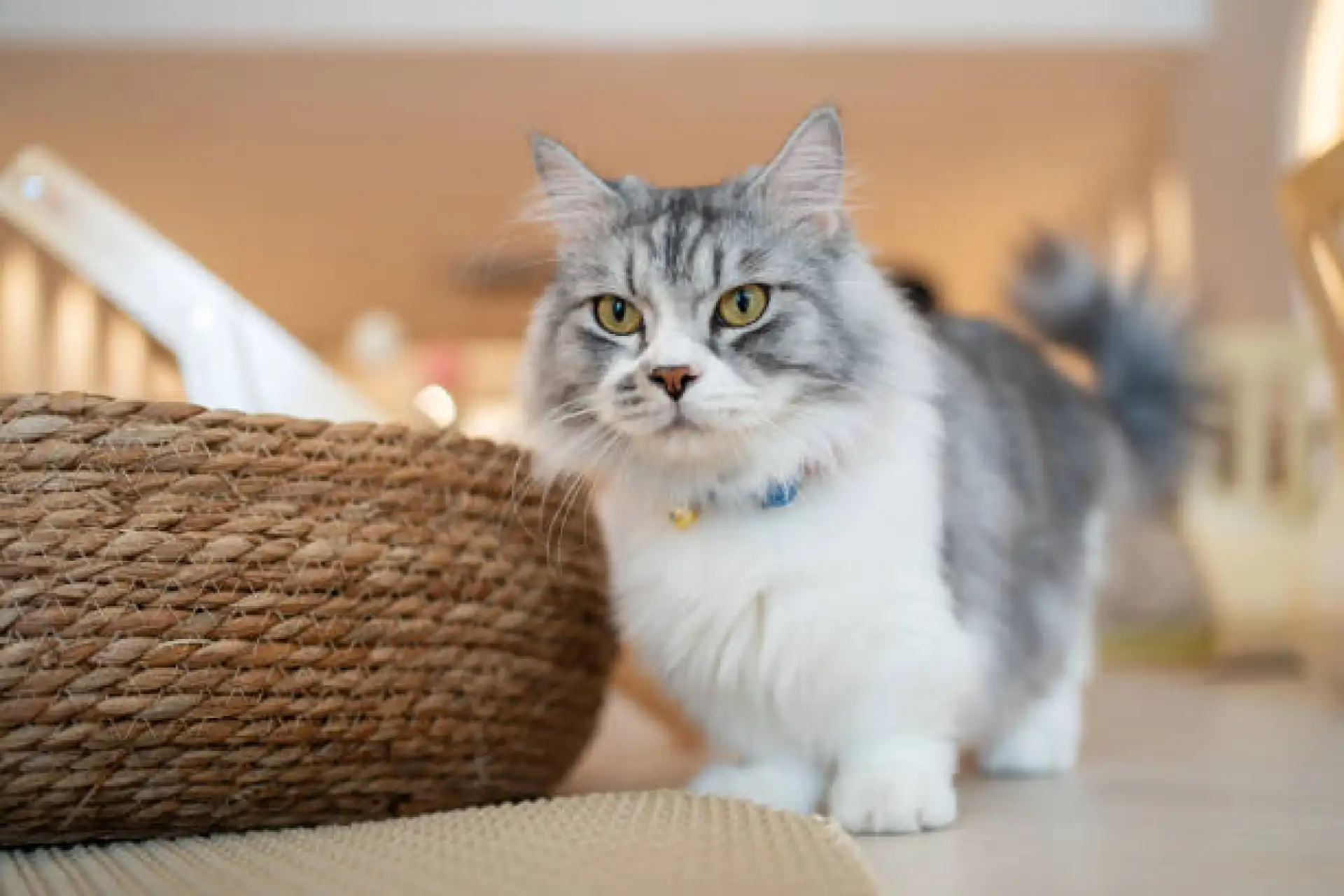 A classic Munchkin cat in its signature “loaf” position — short legs tucked under, completely unbothered.
Key Takeaways
- Munchkin cats are born from a natural genetic mutation — the short legs aren’t the result of selective engineering in a lab, but a spontaneous mutation similar to what gives Dachshunds and Corgis their low-rider silhouettes.
- They are not handicapped by their short legs. Munchkins run, jump (with modifications), play, and hunt with the same enthusiasm as any long-legged cat — they just get there in their own unique way.
- The breed carries a genuine ethical debate. Not all cat registries recognize the Munchkin, and responsible breeders are the only safeguard against health problems caused by irresponsible breeding.
- Their personality is where they truly shine. Munchkins are social, playful, curious, and surprisingly dog-like in their attachment to their people.
- Grooming needs vary significantly depending on whether you have a short-coat or long-coat Munchkin — don’t assume they’re all low-maintenance.
- Price ranges are wide — from $500 at the low end to over $2,500 for show-quality kittens from reputable breeders.
Quick Overview
| Trait | Detail |
|---|---|
| Origin | United States (Louisiana), 1983 |
| Size | Small to medium |
| Weight | 5–9 lbs (females typically smaller) |
| Lifespan | 12–15 years |
| Coat | Short or long, plush and dense |
| Color | All colors and patterns accepted |
| Temperament | Playful, social, curious, affectionate, and confident |
| Grooming | Short-coat: weekly brushing; long-coat: 2–3x weekly |
| Price | $500–$2,500+ USD depending on lineage and coat type |
The Surprisingly Real Story Behind the Munchkin Cat’s Short Legs
The Munchkin cat’s origin story reads less like a carefully planned breeding program and more like something that happened by happy accident in rural Louisiana. In 1983, a music teacher named Sandra Hockenedel found a pregnant stray cat hiding under a truck — the cat was noticeably short-legged, but otherwise healthy and spirited. Sandra kept her, named her Blackberry, and when the litter arrived, about half the kittens had those same distinctive short legs.
One of those kittens — a male named Toulouse — was given to a friend named Kay LaFrance, and the two women essentially became the accidental founders of the Munchkin breed. The cats were allowed to roam and breed naturally with the local cat population in Louisiana, which helped establish that the short-leg trait was passed on consistently through a dominant gene.
The Munchkin made its formal public debut at a cat show in New York City in 1991, organized through The International Cat Association (TICA). The reception was… mixed, to say the least. Veterinarians and breeders in the audience raised serious concerns about whether these cats would suffer spinal and joint problems similar to those seen in short-legged dog breeds like Dachshunds. Some walked out in protest.
TICA did eventually grant the Munchkin full championship status in 2003, but the Cat Fanciers’ Association (CFA) still does not recognize the breed today — and that ongoing debate isn’t just political posturing. It reflects real, legitimate questions about breeding ethics that any honest Munchkin guide needs to acknowledge.
The science side of the story is interesting: the short legs are caused by a mutation in the gene that controls bone growth (specifically the fibroblast growth factor receptor). Crucially, the Munchkin carries this gene in what’s called a “lethal allele” arrangement — a kitten that inherits two copies of the mutation (homozygous) doesn’t survive, which is why responsible breeders always pair Munchkins with standard-legged cats. Every surviving Munchkin is heterozygous for the gene.
What a Munchkin Cat Actually Looks Like (Beyond Just the Legs)
Yes, the legs are the first thing you notice. They’re short — noticeably, undeniably, sometimes almost comically short. The standard calls for legs that are roughly one-third shorter than those of an average cat, giving the Munchkin a silhouette that looks a bit like someone hit “scale down” on just the vertical axis.
But spend five minutes with a Munchkin and you start noticing everything else. The body is medium-boned and surprisingly muscular — these aren’t fragile little creatures. The chest is broad, the back has a gentle upward slope from shoulders to hips (a natural result of the shorter front legs), and the overall impression is of a cat that is compact and solid, not delicate.
The head is a modified wedge — not as extreme as a Siamese, not as round as a Persian — with high cheekbones, walnut-shaped eyes that can be any color, and medium-sized ears that sit upright and alert. There’s an expression that Munchkin owners often describe as “eternally curious,” and once you see it, you’ll immediately understand what they mean.
The tail is roughly equal in length to the body, carried upright when the cat is moving — and Munchkin owners quickly learn that a tail held high is basically the cat’s resting expression of pure confidence.
Two coat varieties are officially recognized:
- Short-coat Munchkins: Medium-plush, resilient texture that doesn’t mat easily, with a slight undercoat that becomes more noticeable in winter months.
- Long-coat Munchkins: Semi-long, silky fur with a slight wave in some individuals, a definite undercoat, and the kind of feathering around the ears and tail that makes them look perpetually fancy.
Both varieties look equally charming. The long-coat version just requires more grooming honesty from the owner.
A Coat for Every Preference: Colors, Patterns, and What the Genetics Actually Mean
One of the underrated joys of the Munchkin cat world is how genuinely diverse these cats look. Because Munchkins have been crossed with so many different domestic cat populations over the decades, the breed accepts essentially every color and pattern known to domestic cats — and TICA’s breed standard reflects this openness.
Solid colors you’ll commonly find: white, black, blue (a diluted charcoal gray), red (orange), cream, and chocolate.
Tabby patterns are extremely common: classic tabby (the bullseye swirl), mackerel tabby (thin parallel stripes), spotted tabby, and ticked tabby.
Pointed patterns also appear — think color on the face, ears, paws, and tail with a lighter body, similar to Siamese coloring.
Tortoiseshell, calico, and bicolor cats are all well-represented in the breed population.
Here’s where the genetics get genuinely interesting: because of the heterozygous breeding requirement (always pairing Munchkin × standard-leg cat), the breed gene pool stays relatively diverse. There’s no closed registry forcing intense inbreeding, which is actually one of the arguments in the breed’s favor from a health standpoint. You get a wide range of colors and personality variations as a result.
The one thing you won’t find in a reputable breeding program is a deliberate Munchkin × Munchkin pairing — responsible breeders know this produces smaller litters, higher rates of reabsorbed embryos, and potential health complications.
If you encounter a “super short leg” Munchkin advertised as especially desirable or rare, that’s a red flag. Extreme leg shortening beyond the breed standard often indicates irresponsible breeding.
Living With a Munchkin Cat: The Real Personality (Not the Instagram Version)
Here’s what nobody tells you upfront: Munchkin cats do not act like they have short legs. They have absolutely zero complex about it.
Watch a Munchkin interact with a standard-height cat and you’ll notice the Munchkin is usually the one initiating play, the one going after the toy first, and frequently the one who wins the mock wrestling match through sheer audacity. They’re tenacious. They’re scrappy in the most endearing sense of the word.
The curiosity is relentless. If you bring a paper bag into the house, a Munchkin will be in it within 45 seconds. New furniture gets a full inspection. Visitors are greeted with interest rather than suspicion. They remind a lot of owners of perpetual kittens — that wide-eyed engagement with everything just doesn’t really fade with age.
They’re genuinely social animals. This is a cat that wants to be where you are. Not in a velcro-clingy, anxious way — but in a “I’m going to follow you from room to room and sit nearby while you work” kind of way. Leave them alone for long stretches regularly, and you’ll have a bored, occasionally destructive Munchkin. They do well with other cats and cat-friendly dogs for this reason.
The magpie tendency is real. Munchkins are notorious for picking up small shiny objects — hair ties, earrings, coins, pen caps — and stashing them. You’ll find little collections in corners and under furniture. It’s charming right up until you can’t find your AirPods.
They’re not typically big vertical jumpers, and this is one area where the shorter legs do change their behavior. They can jump onto low furniture without issue, but high countertops and tall cat trees present more of a challenge. They’ve learned to problem-solve — using furniture as stepping stones to get higher — but if your cat-proofing strategy relies on putting things “up high,” that plan works better with Munchkins than it would with most cats.
Vocalization sits at a comfortable medium. They’re not silent, but they’re not demanding screamers either. They’ll talk to you if something is interesting or if dinner is late.
Keeping a Munchkin Cat Healthy and Happy: Daily Care That Actually Works
Note: This section discusses health considerations. Please consult your veterinarian for personalized advice.
Feeding
Munchkins aren’t prone to weight gain more than any other cat, but because they’re lower to the ground and their spine carries weight slightly differently, keeping them at a healthy weight genuinely matters. Obesity puts extra stress on their spine and joints. A high-protein diet — wet food as the primary component, with measured dry food if used — is the approach most vets recommend. Free-feeding dry food is convenient, but it’s the fastest route to a pudgy Munchkin.
Exercise
Don’t let the short legs fool you into thinking these cats need less exercise. They need just as much stimulation as any active domestic cat. Interactive toys, wand toys, puzzle feeders, and dedicated play sessions are all genuinely important. The classic feather wand gets used hard in a Munchkin household. They love fetch too — some Munchkins will bring the toy back reliably enough that you start to wonder if you accidentally got a small dog.
Grooming
Short-coat owners: A good brushing once a week handles shedding well, and occasional combing during the spring and fall when shedding increases. Bathing is rarely needed unless the cat gets into something.
Long-coat owners: This requires more commitment — brushing two to three times a week minimum to prevent tangles and mats, especially around the armpits, belly, and behind the ears (all the awkward spots). If you let a long-coat Munchkin go too long without brushing, you’ll be dealing with mats that require scissors or professional grooming help, and neither of you will enjoy that experience.
Nails should be trimmed every two to three weeks. Ear cleaning once a month is usually sufficient, though check more often if your cat has ear hair that traps debris.
Litter Box
Because of their shorter stature, Munchkins do better with litter boxes that have lower entry points. The tall-sided boxes that many cats appreciate are harder to navigate comfortably. A box with a low front entry and high back walls is usually the sweet spot — easy to get into, contains litter scatter effectively.
⚠️ Health Disclaimer: This information is for educational purposes only and is not a substitute for professional veterinary advice. Always consult a licensed veterinarian for diagnosis, treatment, and health decisions regarding your cat.
Munchkin Cat Health: The Honest Picture
This is the section where some breed guides get either dismissive (“they’re perfectly healthy!”) or alarmist (“they suffer terribly!”). Neither is accurate.
Lordosis — excessive curvature of the spine — is a condition that can affect Munchkins and shows up more in cats bred irresponsibly. Mild lordosis can be asymptomatic; severe cases cause breathing and organ problems. This is one of the reasons why breeder reputation matters enormously with this breed.
Pectus excavatum (a chest deformity sometimes called “funnel chest”) has been reported in Munchkins, though it’s not clear this rate is higher than in the broader domestic cat population.
Osteoarthritis — wear on the joints — is something to watch for as Munchkins age, particularly in the hips and spine. Keeping them at a healthy weight is the single most impactful preventative measure you can take.
What’s notably absent from the Munchkin health story? The catastrophic spinal cord problems that critics feared in the early days — problems like intervertebral disc disease seen in Dachshunds — haven’t materialized as a widespread issue. Multiple veterinary studies have tracked Munchkin cats over time and found that most lead normal, comfortable lives without spinal issues. This doesn’t mean complacency is appropriate, but it does mean the sky-is-falling narrative isn’t quite right either.
Expected lifespan: 12–15 years. Well-cared-for Munchkins from responsible breeders routinely hit the higher end of that range.
Annual vet visits, core vaccinations, spay/neuter if not breeding, dental care (often overlooked in cats!), and parasite prevention are the fundamentals. Nothing exotic — just consistent, attentive care.
How Rare Are Munchkin Cats in the US, and What Will One Cost You?
Munchkins are not common, but they’re not extremely rare either — they occupy a middle tier of availability in the US. You’re unlikely to find one at a local shelter (though it does happen — mixed-breed cats occasionally carry the Munchkin gene), but with some patient searching, you can find reputable breeders within a few hours’ drive in most parts of the country.
The price range is genuinely wide, and understanding why helps you evaluate what you’re being offered:
- $500–$900: Often from breeders who are newer to the breed or offer cats without papers. Not necessarily bad, but requires more due diligence.
- $1,000–$1,500: Typical range for a well-bred pet-quality Munchkin from an established breeder with health guarantees, TICA registration, and vet records.
- $1,800–$2,500+: Show-quality or breeding-quality kittens, exceptional coat type or coloring, from breeders with long waitlists and strong show records.
Red flags to avoid: “teacup Munchkins,” Munchkins advertised with extremely short legs as a premium feature, any breeder who won’t let you visit the cattery or video call, and kittens available “immediately” with no waitlist from a breeder who claims to specialize in Munchkins.
Reputable resources for finding breeders: TICA’s breeder directory (tica.org) is the most reliable starting point. The Munchkin Cat Club also maintains a breeder list. Expect to be on a waitlist — good breeders have them, and that’s actually a sign of credibility, not inconvenience.
If adoption is your priority: sites like Petfinder and Adopt-a-Pet occasionally list Munchkin and Munchkin-mix cats. Patience pays off here.
Frequently Asked Questions About Munchkin Cats
Are Munchkin cats in pain because of their short legs?
This is probably the most important question to answer honestly. The short answer is: healthy Munchkins from responsible breeders are not in pain from their legs. The shorter limb length doesn’t cause the bone-on-bone joint pain or spinal compression that critics initially feared. That said, cats from irresponsible breeders who’ve pushed for extreme shortness or didn’t screen for co-occurring health conditions can have problems. Health depends enormously on breeding quality.
Can Munchkin cats jump and climb normally?
They jump, but differently. Munchkins tend to be stronger leaped than you’d expect given their leg length, but they can’t reach the heights a typical domestic cat achieves in a single leap. They’ve generally learned to navigate this through creative problem-solving — using furniture like steps. Cat trees designed with shorter platforms and more frequent intermediate levels work much better for them than tall, single-jump towers.
How do Munchkin cats get along with kids and other pets?
Very well, generally. Their social, curious, and unflappable temperament makes them good family cats. They’re usually too confident and busy to be easily stressed by children or other animals. Proper introductions still matter — you can’t just drop any cat into any situation and expect perfection — but Munchkins tend to adapt more readily than many breeds.
Do Munchkin cats shed a lot?
Short-coat Munchkins shed at a moderate level — a weekly brushing keeps it manageable. Long-coat Munchkins shed more noticeably and require more frequent grooming. Neither variety is hypoallergenic, and if you’re allergic to cat dander (which is actually the protein Fel d 1, not the fur itself), a Munchkin won’t solve that problem.
Is it ethical to buy a Munchkin cat?
This is a question worth genuinely sitting with. The ethical concerns center on whether deliberately breeding for a physical trait (short legs) that limits some natural behaviors is justified. Reasonable, caring people land on different sides. If you do decide to get a Munchkin, the most ethical path is buying only from breeders who health-test breeding pairs, pair Munchkins only with standard-leg cats, and prioritize the cats’ wellbeing over aesthetic extremes.
What is the difference between a Munchkin cat and a dwarf cat?
Great question that causes a lot of confusion. “Dwarf cats” — like the Minskin or Napoleon (now called Minuet) — are specifically crosses between a Munchkin and another breed that also carries genetic traits for small size or specific body type. They’re distinct breeds. A purebred Munchkin is specifically descended from the original Louisiana cats and bred to TICA’s Munchkin standard.
How long do Munchkin cats live?
Typically 12–15 years, which is consistent with the average domestic cat lifespan. Well-cared-for Munchkins from healthy lines regularly reach 14–15 years. Factors that influence longevity most: body weight (keep them lean), regular veterinary care, indoor-only lifestyle, and the health of the breeding cats they came from.
Do Munchkin cats do well as indoor cats?
They’re ideally suited to indoor life — perhaps more so than some other breeds. Their lower clearance from the ground doesn’t make them more vulnerable outdoors per se, but they’re social, people-oriented cats that genuinely thrive in the company of their family. The outdoor dangers that apply to all cats (traffic, predators, disease) apply equally here. Indoor with access to enrichment is the ideal setup.
Why won’t the CFA recognize the Munchkin cat breed?
The Cat Fanciers’ Association has declined to recognize Munchkins, citing concerns about deliberately breeding cats with a mutation that alters their natural physical structure and could impact quality of life. It’s not a frivolous position — it’s rooted in breed standard philosophy that prioritizes natural feline form. TICA takes a different view, having granted full championship status in 2003. The debate reflects a broader philosophical split in the cat fancy world about what responsible breed development looks like.
What should I look for when choosing a Munchkin kitten?
Look for a kitten that is bright-eyed, active, and alert — one that moves comfortably and freely, not stiffly. Ask the breeder for health records for both parents, including any screening for heart conditions and hip/spine issues. The kitten shouldn’t have any visible chest deformity or any unusual hesitation in movement. A good breeder will welcome your questions, show you the parents if possible, and have a health guarantee in writing. If a breeder is defensive or evasive about health questions, that’s your signal to walk away.
Munchkin cats are genuinely one of the most personality-dense cats you can share your life with — curious, funny, affectionate, and absolutely convinced they’re regular-sized. The ethical questions around the breed deserve real consideration rather than dismissal, but for owners who do their homework and choose responsibly, life with a Munchkin tends to be exactly as delightful as those viral videos suggest — just with significantly more stolen hair ties.