There’s a moment that happens to almost everyone who meets a Sphynx cat for the first time — a split-second flinch, followed by an irresistible urge to reach out and touch. That wrinkled, velvety skin. Those enormous satellite-dish ears. The way they stare at you like they already know your deepest secrets. Love them or find them unsettling, Sphynx cats do not let you feel neutral about them.
But here’s what most people get spectacularly wrong: the Sphynx isn’t some cold, alien creature bred for shock value. Underneath all that gloriously naked skin lives one of the most affectionate, clownish, and emotionally intelligent cats you’ll ever share a couch with. If you’ve been curious about this breed — or you’ve already fallen down the Sphynx rabbit hole and need someone to confirm your suspicions that yes, you absolutely need one — this guide is for you.
Key Takeaways
- The Sphynx isn’t actually hairless — they have a fine layer of peach-fuzz down that makes them feel like warm suede, not cold rubber.
- They’re the golden retrievers of the cat world. Social, velcro-attached, and deeply unhappy when left alone for long stretches.
- Grooming demands are surprisingly high for a “hairless” cat — no shedding, sure, but their skin produces oils that need weekly attention.
- Heart health is a real concern. Hypertrophic Cardiomyopathy (HCM) is the breed’s biggest health risk, and responsible breeders test for it.
- They run hot. Literally — their metabolism is slightly faster, which means they’re warm to the touch and eat more than you’d expect.
- This is not a low-maintenance breed. They need warmth, companionship, regular bathing, and a lot of your time. Give them that, and you’ll have a best friend unlike any other.
Quick Overview
| Trait | Detail |
|---|---|
| Origin | Toronto, Canada (1966) |
| Size | Medium |
| Weight | 6–12 lbs (males typically larger) |
| Lifespan | 8–14 years |
| Coat | Essentially hairless with fine peach-fuzz down; wrinkled skin |
| Color | All colors and patterns possible, visible directly on the skin |
| Temperament | Extroverted, affectionate, playful, attention-seeking, highly social |
| Grooming | Weekly baths required; ear cleaning and nail care needed regularly |
| Price | $1,500–$3,000+ from reputable breeders in the US |
From a Toronto Basement to Cat Show Fame: The Sphynx Cat’s Unexpected Origin Story
The Sphynx cat didn’t start as someone’s grand design. In 1966, a domestic cat in Toronto, Canada gave birth to a hairless kitten named Prune — a natural genetic mutation that a breeder named Ridyadh Bawa recognized as something worth exploring. Working with his mother, Yania Bawa, they began selectively breeding Prune back to normal-coated cats to develop the trait further while maintaining genetic diversity and health.
It wasn’t a smooth journey. Early breeding programs in North America struggled with small gene pools and health problems, and the original lines nearly died out. The breed got a genuine lifeline in 1975 when two more hairless kittens — named Epidermis and Dermis — were found on a Minnesota farm. Then in 1978, a Dutch breeder named Hugo Hernandez acquired a hairless male named Wadiki, crossing him with Devon Rex cats. This cross became foundational to the modern Sphynx’s genetic health.
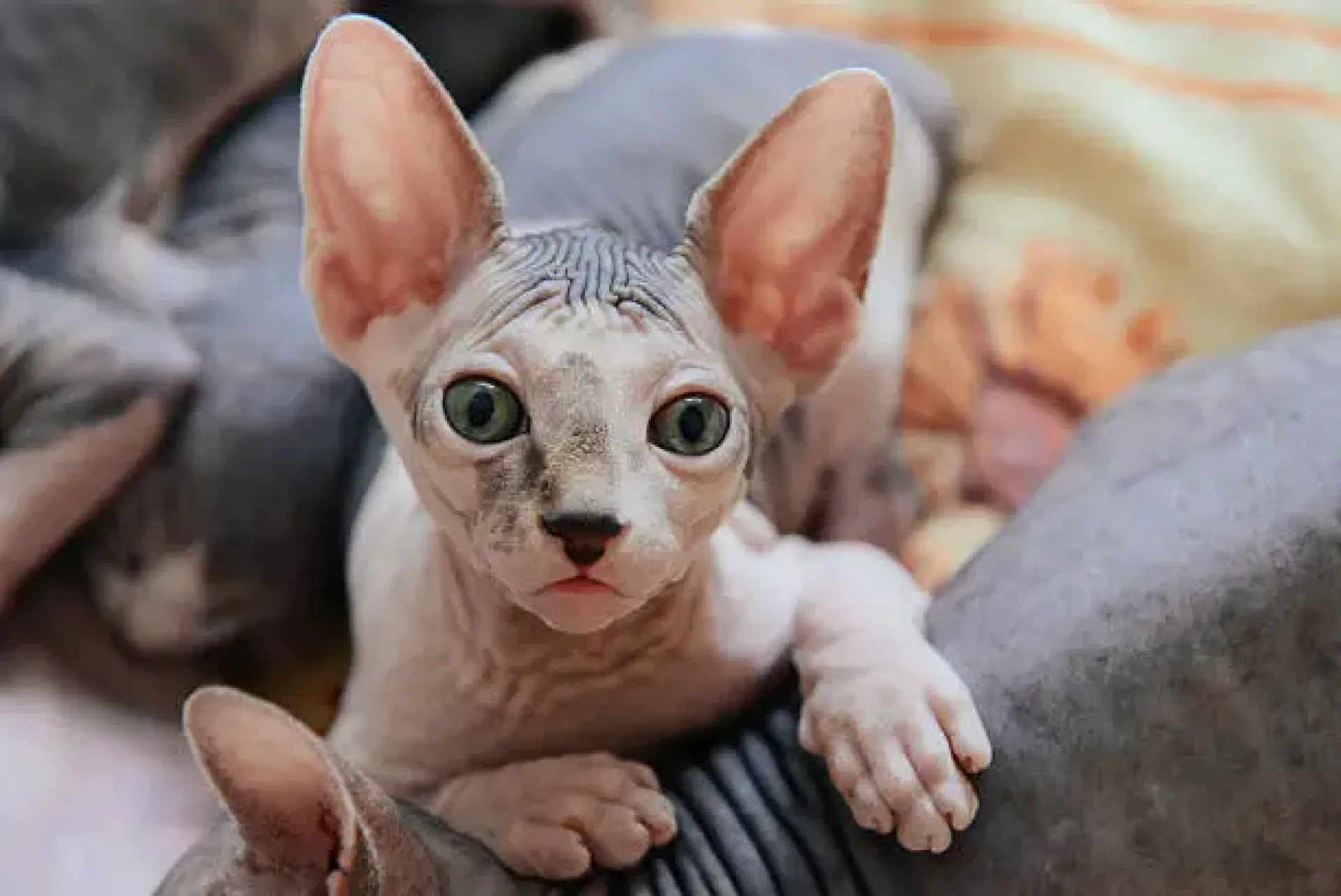 The Sphynx’s unusual appearance traces back to a single natural mutation in 1966 Canada.
The Cat Fanciers’ Association (CFA) officially recognized the Sphynx in 2002, though TICA had accepted them earlier. Today, the breed is carefully maintained through selective breeding that still occasionally introduces Devon Rex or domestic shorthair lines — which is why reputable Sphynx breeders will often have documentation showing a mix of pedigrees going back several generations.
One thing that surprises new fans of the breed: the Sphynx is not related to the ancient Egyptian cats depicted in hieroglyphics, despite the name. That was purely a marketing decision — someone decided the regal, angular look echoed the statues of ancient Egypt, and honestly, it’s hard to argue with the comparison.
That Face, Those Wrinkles, That Presence: What Sphynx Cats Actually Look Like Up Close
On paper, the Sphynx cat description sounds almost comical: hairless, wrinkled, with a round belly, enormous ears, and lemon-shaped eyes. In person? The effect is somehow both alien and deeply warm.
The head is a modified wedge — broad, with prominent cheekbones and a strong chin. Those ears are massive, wide at the base, and set high on the skull, which gives them a permanently alert, slightly theatrical expression. The eyes come in nearly every color and have an almost unsettling depth to them, especially since there’s no fur to soften the gaze.
The body itself is medium-sized but surprisingly substantial — muscular, with a rounded abdomen that looks a bit like they’ve just finished a large meal (even when they haven’t). The skin folds and wrinkles, especially around the shoulders, muzzle, and between the ears, are considered a breed hallmark; more wrinkles are actually preferred in show standards.
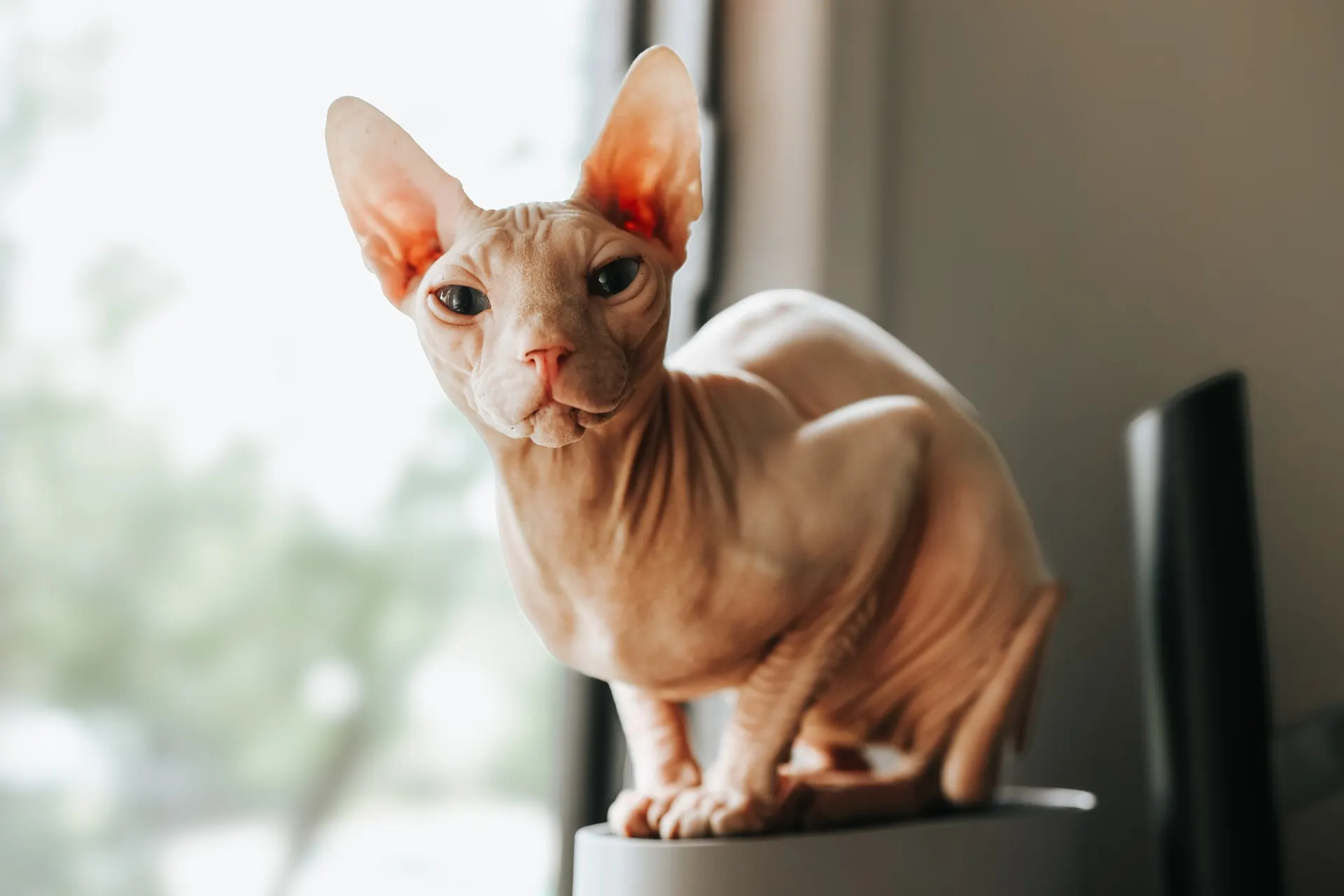 That unblinking gaze is a Sphynx trademark — equal parts curious, intelligent, and slightly theatrical.
Touch is the thing that really changes people’s minds about this breed. The skin feels like warm chamois leather — soft, yielding, and faintly fuzzy in a way you can only feel, not see. On a chilly morning, pressing your face against a Sphynx cat’s belly is genuinely one of the most comforting things you can do. They retain body heat remarkably well, and they seem instinctively aware that they’re a living hot water bottle — most Sphynx cats will actively seek out the warmest person in the room to drape themselves over.
The tail is long and whippy, sometimes with a small puff of fur at the tip like a lion’s tail. Paws are large with long, almost finger-like toes that they use with surprising dexterity — don’t be surprised if you find your Sphynx has figured out how to open cabinet doors or bat objects off shelves with unsettling precision.
More Than Skin Deep: Sphynx Cat Colors, Patterns, and What’s Happening Genetically
Here’s one of the more fascinating quirks of the Sphynx: they can technically come in every color and pattern that exists in the domestic cat world — it’s just that all of it is displayed directly on their skin rather than through a coat. The pigmentation that would normally color the fur instead creates a visual pattern of darker and lighter skin tones, which you can see clearly and sometimes feel as subtly different textures.
A Sphynx can be solid (black, white, blue, red, cream), tabby-patterned (classic, mackerel, spotted, ticked), tortoiseshell, calico, pointed (like a Siamese), and everything in between. The pattern is often most visible in good lighting — a “black” Sphynx looks velvety dark charcoal-grey, while a tabby-patterned Sphynx has clearly defined striping across their wrinkles and limbs.
Genetically, the hairlessness in Sphynx cats is caused by a recessive mutation in the KRT71 gene, which affects the development of hair follicles. Interestingly, this is a different mutation from the one responsible for hairlessness in Peterbald cats, meaning the two breeds arrived at the same “hairless” result through entirely separate genetic pathways.
The peach-fuzz covering most Sphynx cats is technically guard-hair-free — what remains is a very fine, short layer of vellus hair (essentially the same as what humans have on their arms). Some Sphynx individuals will have slightly more fuzz around their extremities — the ears, nose, toes, and tail tip — which is completely normal. A few rare individuals are more completely hairless, but the breed standard generally prefers that characteristic soft down.
One important note for prospective owners: the Sphynx is not hypoallergenic, despite common assumptions. The allergen most people react to (Fel d 1) is a protein in cat saliva, skin secretions, and urine — not the fur itself. Because Sphynx cats have exposed skin that isn’t trapping allergens in a coat, some allergy sufferers report fewer reactions, but it’s genuinely individual. If allergies are your concern, spending time with a Sphynx before committing is absolutely the right move.
Living With a Sphynx Cat: The Velcro Companion You Didn’t Know You Needed
If you picture a typical cat — independent, mysterious, deigning to acknowledge you only when food is involved — the Sphynx will cheerfully shatter every one of those assumptions.
These cats want in. On your lap, under your blankets, on your shoulder while you’re trying to work, wedged between you and your partner at 3 AM. My friend who owns two Sphynx cats describes it as “having toddlers who are also tiny space heaters.” They follow you from room to room. They greet guests at the door. They’ll supervise your shower, critique your cooking, and absolutely insert themselves into any video call you try to have.
This isn’t clinginess in the anxious sense — it’s genuine sociability. Sphynx cats are extroverts in the deepest possible way. They get energy from company rather than being drained by it. What this means practically: a Sphynx left alone for most of the day will be unhappy, and an unhappy Sphynx tends to express that through destructive behavior, excessive vocalization, or just a general air of dramatic suffering that will make you feel genuinely guilty.
The solution most Sphynx owners land on is getting two. They bond intensely with each other and with other cat-friendly pets, including dogs. A Sphynx cat living with a patient Labrador is one of the most mutually satisfying pairings in the pet world.
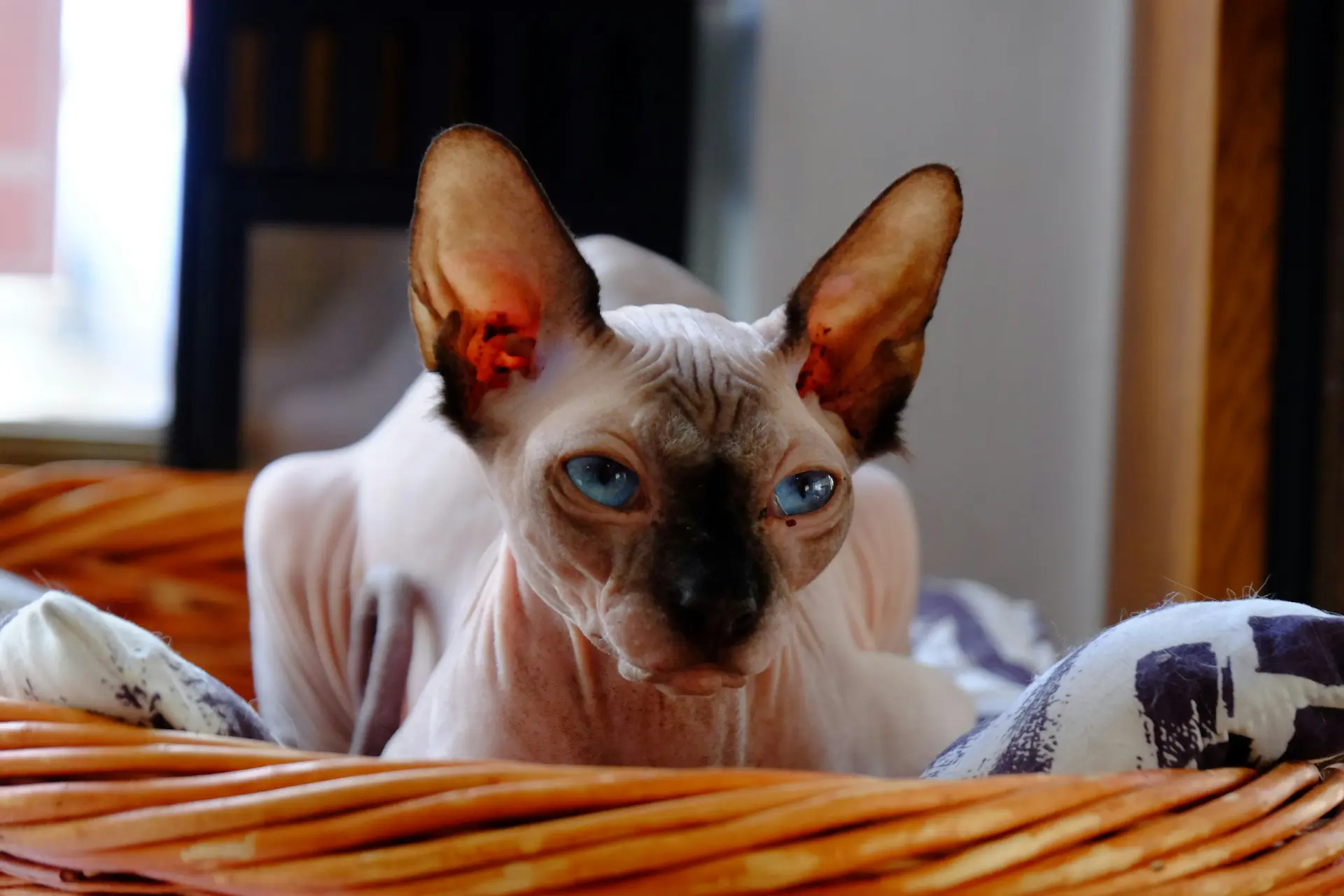 Blankets, laps, and warm bodies — a Sphynx will seek out heat and company with equal enthusiasm.
They’re also genuinely clever and remarkably trainable for a cat. Sphynx cats can learn their names (and choose to respond, which is very cat), come when called, and pick up tricks like fetch, sit, and high-five with relatively little effort if you use positive reinforcement and keep sessions short. The mental stimulation aspect is actually important — a bored Sphynx will find their own entertainment, and their entertainment ideas are rarely aligned with yours.
One quirk that sometimes catches new owners off guard: Sphynx cats are vocal. Not Siamese-level operatic, but they will hold full conversations with you, narrate their displeasure, announce their arrivals, and generally keep you informed of their inner life. Some people find this charming. Some find it exhausting. Worth knowing before you commit.
Sphynx Cat Care: The Weekly Bath Is Not Optional (And Other Things Nobody Warned You About)
Here’s the real talk that a lot of polished breed guides skip over: caring for a Sphynx is more hands-on than caring for most coated cats, in a specific way.
Bathing. Because there’s no coat to absorb the natural oils their skin produces, Sphynx cats build up a visible, slightly greasy residue on their skin — you’ll notice it most in skin folds and on any surface they sleep on regularly. A weekly bath (yes, bath) with a gentle cat shampoo is genuinely necessary, not optional. The good news is that Sphynx cats raised from kittenhood with regular baths usually tolerate or even enjoy them. The trick is to keep the water warm (they chill easily), move efficiently, and have a warm towel ready immediately afterward.
Ear cleaning. Those magnificent ears trap dirt and produce more wax than a typical cat because there’s no ear fur acting as a filter. Weekly ear cleaning with a cotton ball and a vet-approved ear cleaner is part of the routine. Neglect this and you’ll be dealing with ear infections.
Nail care. Sphynx cats accumulate a dark, waxy buildup in the skin folds around their nails (similar to what happens in their skin folds elsewhere). Weekly nail cleaning and regular trimming keeps this from becoming a problem.
Sun protection. This one genuinely surprises people. Sphynx cats can sunburn. If you have sunny windows, be thoughtful about how much direct sun exposure your cat gets, especially lighter-skinned individuals. Some owners use pet-safe sunscreen on cats who lounge in sunny spots for extended periods.
Diet. Because of their faster metabolism and higher body temperature, Sphynx cats eat more relative to their size than most cat breeds. A high-quality, high-protein diet — ideally with some raw or wet food component — supports their energy needs and skin health. Many Sphynx cats do well on a schedule of 2-3 meals per day rather than free feeding, which helps maintain a healthy weight without overfeeding.
Warmth. These cats need it. If your home drops below comfortable human room temperature, your Sphynx needs a sweater (yes, they make them, and yes, Sphynx cats look absolutely unhinged wearing clothes, in the best possible way) or a heated cat bed. They’re not adapted for cold, and they’ll make their discomfort very clear.
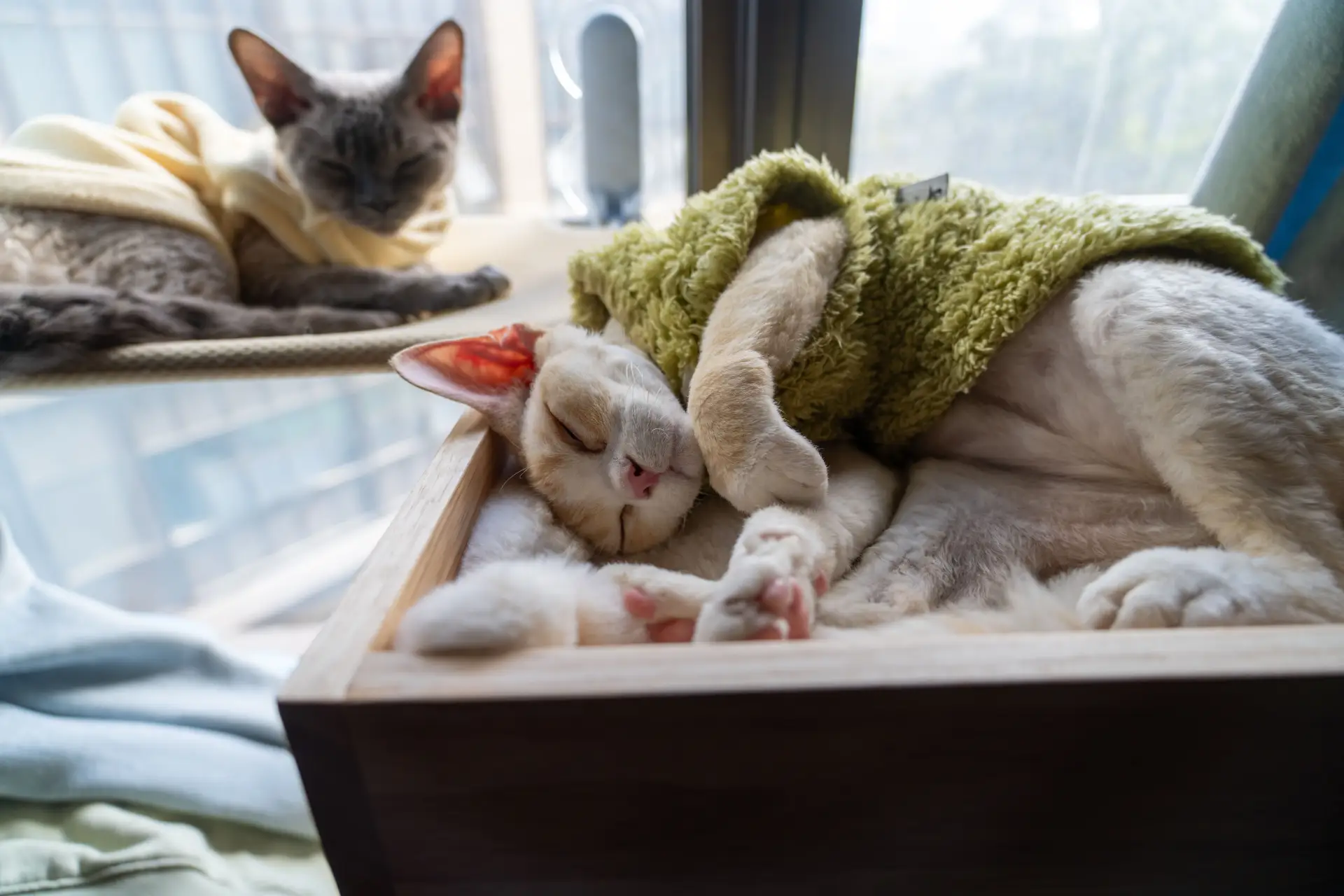 Cat sweaters aren’t just a fashion statement for Sphynx cats — warmth is a genuine care requirement.
Enrichment. Cat trees, interactive toys, puzzle feeders, window perches with bird feeders outside — all of this matters more for a Sphynx than for many other breeds because of their intelligence and social needs. A Sphynx with nothing to do and nobody to do it with is not a happy situation.
What Your Vet Needs to Know: Sphynx Cat Health, Lifespan, and the Big Concerns
Note: This section discusses health considerations. Please consult your veterinarian for personalized advice.
Let’s talk honestly about health, because it’s one of the most important parts of deciding whether this is the right breed for you.
The Sphynx’s biggest health concern is Hypertrophic Cardiomyopathy (HCM) — a thickening of the heart muscle that’s the most common heart disease in cats generally, but particularly prevalent in Sphynx cats. It can range from mild and manageable to severe, and it can develop at any age. Reputable breeders will health-test their breeding cats for HCM using echocardiograms and will share those results transparently. This is the question to ask any breeder before you put down a deposit.
Hereditary Myopathy is another condition found in the breed — a muscle weakness disorder that typically appears in young kittens and affects their ability to hold their head up and move normally. It’s less common than HCM but worth being aware of.
Skin conditions are an ongoing management area rather than a crisis — sunburn, skin infections in folds, and occasional acne-like buildup are manageable with good hygiene but require attention.
Dental health needs active management. Like many cat breeds, Sphynx cats are prone to periodontal disease, so establishing a tooth-brushing routine early (yes, this is a thing you can absolutely do) and scheduling regular veterinary dental cleanings matters.
The typical lifespan for a well-cared-for Sphynx cat is 8–14 years, with many living into their early teens. The range is wide because HCM can significantly affect longevity if it develops severely, while cats who remain heart-healthy often age gracefully into their mid-teens.
Finding a vet who is experienced with or interested in exotic/pedigree breeds makes a meaningful difference. Sphynx cats can run slightly warmer than typical cats as a baseline, which can sometimes confuse temperature readings if a vet isn’t familiar with the breed’s normal ranges.
⚠️ Health Disclaimer: This information is for educational purposes only and is not a substitute for professional veterinary advice. Always consult a licensed veterinarian for diagnosis, treatment, and health decisions regarding your cat.
What Does a Sphynx Cat Cost in the US — And Where Do You Actually Find One?
The Sphynx is not a budget adoption. From a reputable breeder in the United States, expect to pay between $1,500 and $3,000 for a pet-quality kitten, with show-quality cats from champion lines potentially exceeding that. The price reflects the genuine care that goes into ethical Sphynx breeding: health testing, early socialization, veterinary care, and the time investment of a small gene pool that requires careful management.
Price red flags to watch for: kittens priced significantly below $1,000, breeders who won’t share health testing documentation, no-questions-asked transactions, and listings on Craigslist or general classified sites. The Sphynx’s popularity has attracted backyard breeders who produce kittens without health testing, often in poor conditions, and those cats frequently develop serious health problems that cost far more than you “saved” upfront.
For finding reputable breeders, TICA (The International Cat Association) and CFA (Cat Fanciers’ Association) both maintain breeder directories. Facebook groups dedicated to the Sphynx breed are also good resources, as the community is active and generally quick to flag known problematic breeders.
Rescue and adoption is a real option for Sphynx cats, though less common than for other breeds. Organizations like Sphynx Rescue and general pedigree cat rescue networks do occasionally have Sphynx cats available. These cats often end up in rescue because owners underestimated the care requirements — which is one more reason this kind of thorough guide matters before you decide.
In terms of rarity, the Sphynx is considered moderately rare in the US — not impossible to find, but definitely not as available as Persians or Maine Coons. Expect a waiting list of several months from quality breeders, which is actually a good sign. A breeder with kittens always immediately available may not be doing the level of selective pairing and testing that the breed deserves.
Frequently Asked Questions About Sphynx Cat
Are Sphynx cats good for people with allergies?
Not reliably. The main cat allergen is Fel d 1, a protein found in saliva, skin secretions, and urine — not fur. While some allergy sufferers report fewer symptoms around Sphynx cats (possibly because there’s no coat trapping allergens), the breed is not considered hypoallergenic. If you have cat allergies and are seriously considering a Sphynx, spend time with the specific breed first before committing.
Do Sphynx cats really need weekly baths?
Yes, genuinely. Without a coat to absorb skin oils, a waxy buildup develops on the skin and in folds that becomes uncomfortable for the cat and can lead to skin infections if neglected. Weekly bathing with a gentle shampoo is standard care for this breed, not an optional extra.
How much attention do Sphynx cats actually need?
More than most cats. They’re extremely social animals who bond deeply with their people and don’t do well with extended isolation. If you work full-time away from home, the best setup is having two Sphynx cats or a companion pet. A single Sphynx left alone for 8+ hours daily will typically become anxious or destructive.
Are Sphynx cats indoor-only pets?
Yes, absolutely. Beyond the obvious risks that apply to any cat (traffic, predators, disease), Sphynx cats are particularly vulnerable outdoors — they can sunburn, they lose body heat rapidly in cold weather, and they have no protective coat. These are strictly indoor cats. Some owners build outdoor enclosures (“catios”) to give them safe outdoor access.
What’s the difference between a Sphynx cat and a Peterbald?
Both are hairless breeds but they come from different genetic mutations and selective breeding programs. Peterbalds originated in Russia in the 1990s by crossing a hairless cat with an Oriental Shorthair. They tend to be more slender and have a wider range of coat types (from completely hairless to short-coated). Sphynx cats have a rounder, more muscular build and a more established, standardized appearance.
Can Sphynx cats go outside in winter?
With significant precautions and not for long periods. If you live somewhere with cold winters, supervised outdoor time in a sweater is the maximum. They lose body heat far faster than coated cats and are genuinely at risk of hypothermia in cold temperatures. Indoor cats by design.
How long do Sphynx cats typically live?
With good veterinary care, regular health screenings, and a quality diet, most Sphynx cats live 8–14 years. Heart health (specifically HCM screening) is the biggest variable in longevity. Cats from health-tested lines who remain heart-healthy can comfortably reach their mid-teens.
Are Sphynx cats good with kids and other pets?
Generally excellent. Their outgoing, people-oriented nature makes them unusually tolerant and playful with children, and their social drive means they often bond enthusiastically with dogs or other cats. As with any introduction, gradual socialization and supervision early on sets everyone up for success.
Why does my Sphynx cat eat so much?
Because their metabolism genuinely runs faster than a coated cat’s. They maintain a higher body temperature and burn more calories staying warm, which means they need more food relative to their size. A high-quality, protein-rich diet fed on a schedule (rather than free feeding) keeps them well-nourished without becoming overweight.
How do I find a reputable Sphynx cat breeder in the US?
Start with the breeder directories maintained by TICA and CFA. Ask any breeder you contact for HCM testing records for both parents, vaccination history, and references from previous buyers. A good breeder will ask you questions too — about your living situation, experience with cats, and plans for care. If a breeder seems indifferent about where their kittens end up, that’s a signal worth heeding.
The Sphynx cat is genuinely not for everyone — and that’s okay. They need more active care than most cats, they need company, and they’ll insert themselves into every corner of your life without apology. But if you’re the kind of person who wants a cat that actually participates in your life — that greets you at the door, sleeps pressed against you, and looks at you with those enormous, knowing eyes like you’re the most interesting thing in the room — there’s nothing quite like living with a Sphynx. They’re weird, and wonderful, and completely unlike anything else in the feline world.