There’s a moment every Snowshoe cat owner knows well — you’re sitting on the couch, halfway through a show, and suddenly this sleek, blue-eyed creature is on your lap, pressing a white-tipped paw against your arm like it’s placing an order. Not demanding. Just… stating its case. That’s the Snowshoe for you. Equal parts Siamese drama and American Shorthair groundedness, this breed occupies a very specific and delightful niche that not nearly enough people know about.
If you’ve stumbled across photos of these cats with their distinctive white “boots” and piercing sapphire eyes, you’re probably already halfway in love. But beyond the looks, the Snowshoe is one of the more fascinating personalities in the cat world — social without being clingy, vocal without being relentless, and affectionate in a way that actually feels earned rather than performative.
This guide covers everything: the history, the quirks, the care needs, the health realities, and the honest truth about what it’s actually like living with one.
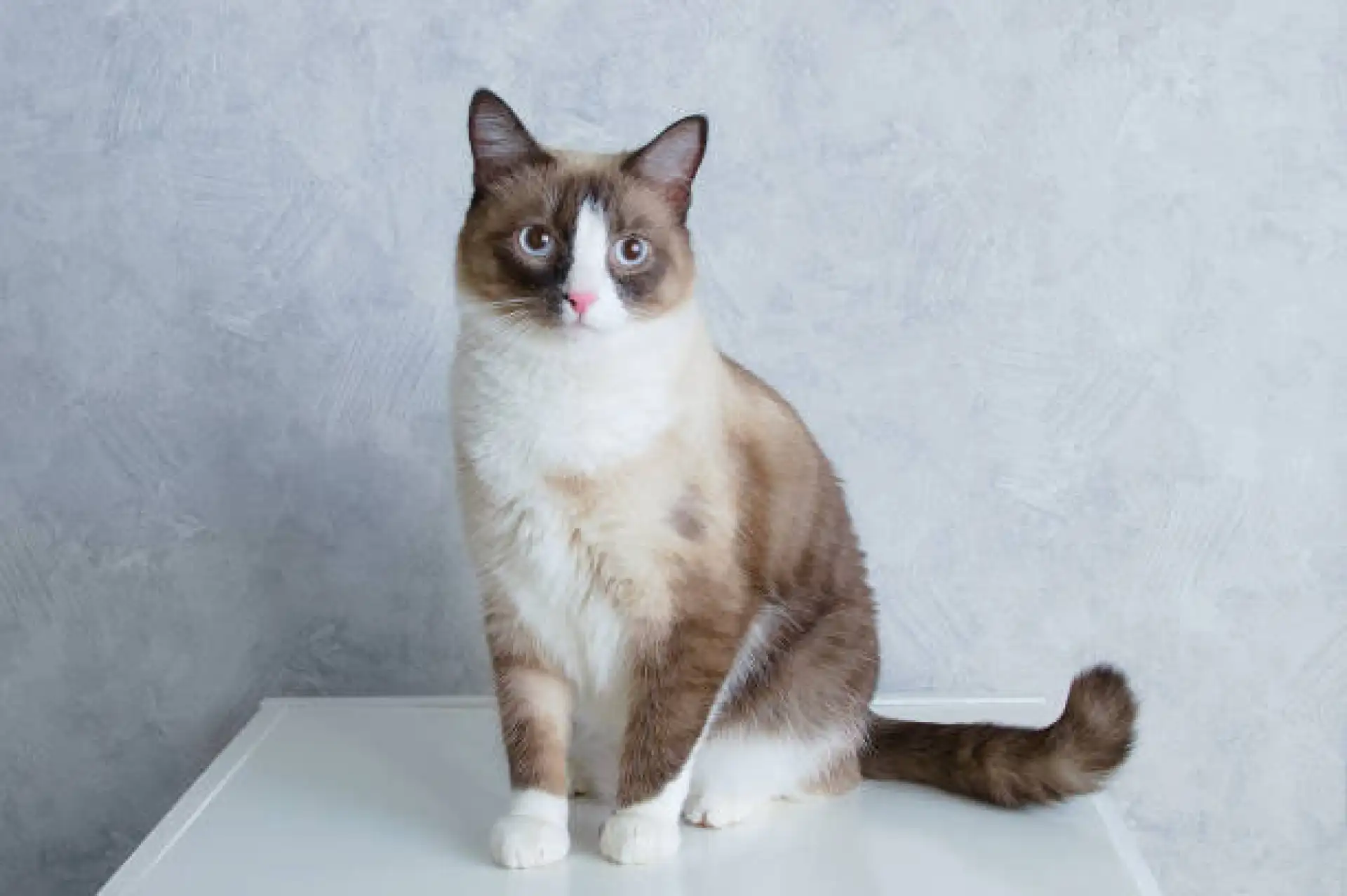 A classic Snowshoe cat displaying the signature white “boots” and striking blue eyes that define the breed.
Key Takeaways
- Rare but not impossible to find — Snowshoe cats are one of the rarer recognized breeds in the US, but reputable breeders do exist. Patience pays off.
- Blue eyes are non-negotiable — All Snowshoes have vivid blue eyes. If the cat doesn’t have blue eyes, it’s not a Snowshoe by breed standard.
- They’re talkers, but not screamers — Unlike their Siamese relatives, Snowshoes have softer, more melodic voices. Living with one is more “gentle conversation” than “4am opera.”
- Social to the bone — This breed genuinely struggles with prolonged isolation. A Snowshoe left alone all day without stimulation or company will let you know about it.
- The white markings are genetically unpredictable — Breeding for the exact boot pattern is notoriously tricky, which is a big reason the breed remains rare.
- They age beautifully — Well-cared-for Snowshoes routinely reach their mid-to-late teens, and many stay playful and engaged well into old age.
Quick Overview
| Trait | Detail |
|---|---|
| Origin | United States (Philadelphia, 1960s) |
| Size | Medium |
| Weight | 7–14 lbs (males tend toward the higher end) |
| Lifespan | 14–20 years |
| Coat | Short to medium, smooth, single-layer |
| Color | Seal point, blue point, chocolate point, lilac point — all with white markings |
| Temperament | Affectionate, social, moderately vocal, intelligent, and playful |
| Grooming | Low-maintenance; weekly brushing is typically sufficient |
| Price | $600–$1,800 USD from reputable breeders |
Origins & History: Born From a Happy Accident
The Snowshoe cat’s story starts in Philadelphia in the 1960s with a Siamese breeder named Dorothy Hinds-Daugherty. One morning, she found something unexpected in a litter of Siamese kittens — three of them had white feet. To most breeders, this would’ve been a disappointment. To Dorothy, it was a lightbulb moment.
She began deliberately working to recreate that look, crossing Siamese cats with bi-color American Shorthairs. The goal was to get that pointed Siamese coloring combined with white mittens and a sturdier, more rounded body type. Early results were promising but inconsistent — as anyone who’s tried to breed for specific white spotting patterns knows, genetics has a sense of humor.
Progress was slow. The breed was so difficult to produce consistently that by the mid-1970s, Dorothy had stepped back from the project. Another breeder, Vikki Olander, stepped in and essentially carried the torch solo for years, writing the first breed standard and lobbying for recognition. For a while, she was reportedly the only person in the United States actively breeding Snowshoes.
The Cat Fanciers’ Federation (CFF) gave the breed experimental status in 1974, and the American Cat Fanciers Association (ACFA) followed. Full championship recognition from TICA (The International Cat Association) came in 1994 — a long road for a cat that deserves far more attention than it gets.
Today, the Snowshoe remains one of the rarer breeds registered with major cat associations, largely because producing cats that meet the strict white-marking standards is genuinely difficult. That rarity is part of what makes finding a well-bred one feel like such a score.
Appearance & Unique Physical Traits
The Snowshoe doesn’t try to be flashy — it just is. There’s an elegance to this breed that comes from the contrast between its pointed coloring and those bright white feet, set against a medium-muscular body and anchored by eyes that are, frankly, unfair in their intensity.
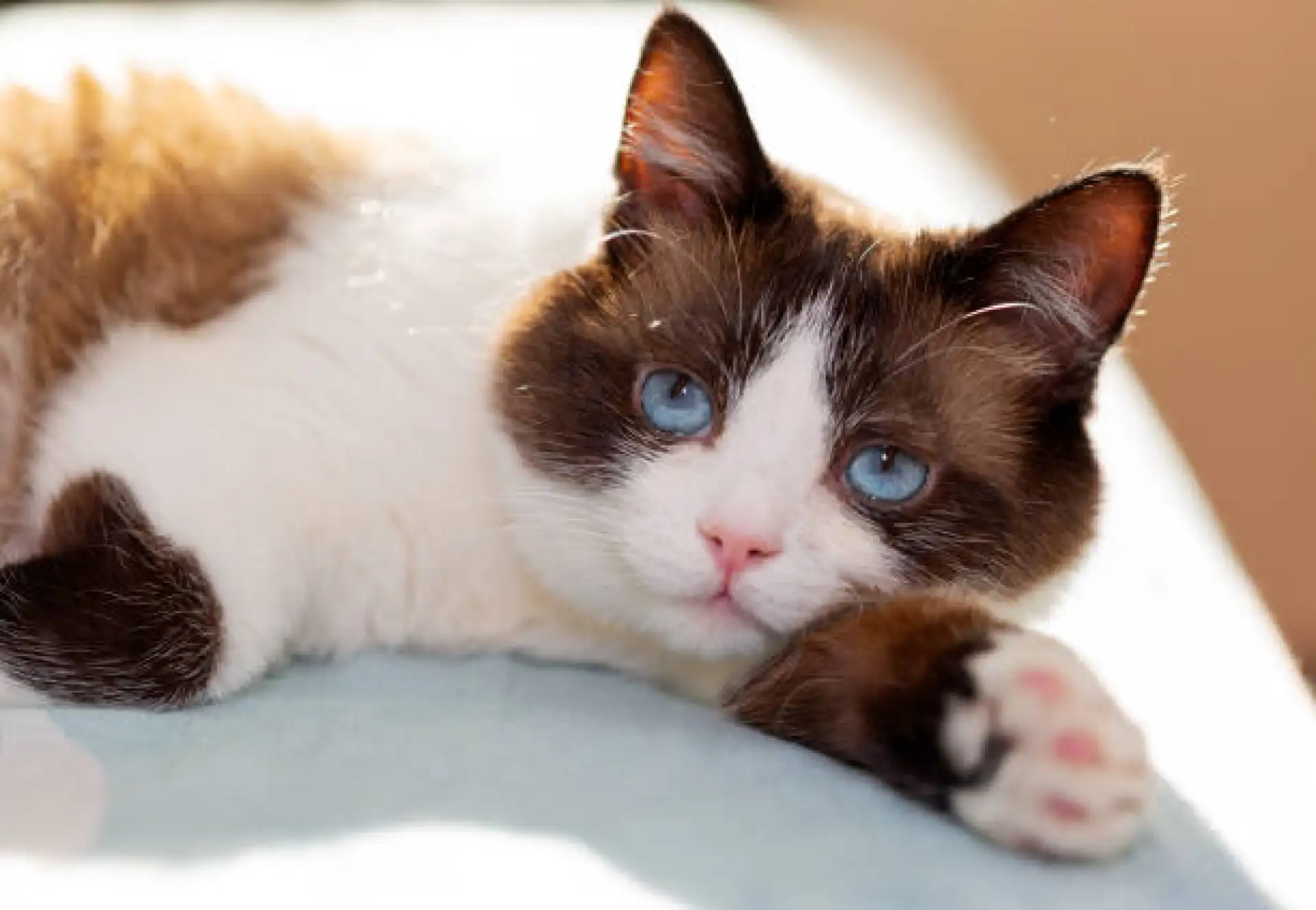 The Snowshoe’s defining blue eyes and inverted-V facial marking are immediately recognizable and genetically consistent across the breed.
Body: Think “athlete in a blazer.” The Snowshoe is neither as slender and angular as a Siamese nor as stocky as a typical American Shorthair. They’re medium-sized, well-muscled, and surprisingly solid when you pick one up. Males typically run between 9–14 lbs; females are more petite at 7–10 lbs.
Face: The head is broad and slightly rounded — a departure from the Siamese’s sharp wedge shape. The muzzle is medium-length, and when you look at a Snowshoe head-on, you’ll often notice an inverted “V” or blaze of white running up from the muzzle toward the forehead. This is one of the most sought-after facial markings in the breed standard, though not all cats carry it as clearly.
Eyes: This is where the Snowshoe stops traffic. The eyes are large, oval-to-walnut shaped, and always, always blue — ranging from a pale, icy blue to a deep sapphire. No other eye color is accepted in the breed standard. These aren’t contacts. These aren’t a photo filter. They’re just that striking in person.
The White Boots: The namesake feature — white on all four paws, ideally extending evenly up the legs. The front paws typically show white up to the ankle (“mitted” pattern), while the rear may extend higher. This is where genetics gets complicated and breeders lose sleep, because getting a symmetrical, well-defined boot pattern that meets show standards is genuinely unpredictable, even with experienced parents.
Coat: Short to medium length, smooth, and lying close to the body. No undercoat to speak of, which is great news for anyone who’s owned a Maine Coon and developed a complicated relationship with their vacuum cleaner.
Coat Colors, Variations & Genetics
The Snowshoe’s color system is rooted firmly in the pointed pattern genetics inherited from the Siamese side of the family. “Pointed” means the cat’s extremities — ears, face, paws, and tail — are darker than the body, and the contrast typically deepens with age and cooler ambient temperatures (same mechanism as the Siamese).
Accepted Base Colors:
- Seal Point — The most classic and common. Rich, dark brown-black points against a pale cream or fawn body. What most people picture when they imagine a Snowshoe.
- Blue Point — A cooler, slate-gray tone on the points against a bluish-white body. Sophisticated and slightly more subtle than seal.
- Chocolate Point — Warm milk-chocolate points, less common and highly attractive.
- Lilac Point — The lightest of the four, with pinkish-gray points and a near-white body. Quite rare.
Some cat associations are beginning to acknowledge additional point colors like lynx (tabby) points and tortie points, though these are less standardized across all registries.
The White Spotting Problem (in the best way)
Here’s the genetics rabbit hole that makes Snowshoe breeding so challenging: the white markings are controlled by the piebald or white spotting gene (S locus), which is — to put it plainly — wildly inconsistent. A cat can carry one or two copies of this gene and express anywhere from minimal white (a few toes) to extensive white (entire legs and belly). Breeding two Snowshoes together doesn’t guarantee the offspring will have the “right” amount of white in the right places.
This means a litter from two beautiful, show-quality Snowshoe parents might produce kittens that are technically Siamese-patterned without boots, or kittens with too much white, or kittens with asymmetrical markings. Only a portion of any given litter is likely to meet breed standards — which directly explains why the breed is rare and why well-marked kittens command higher prices.
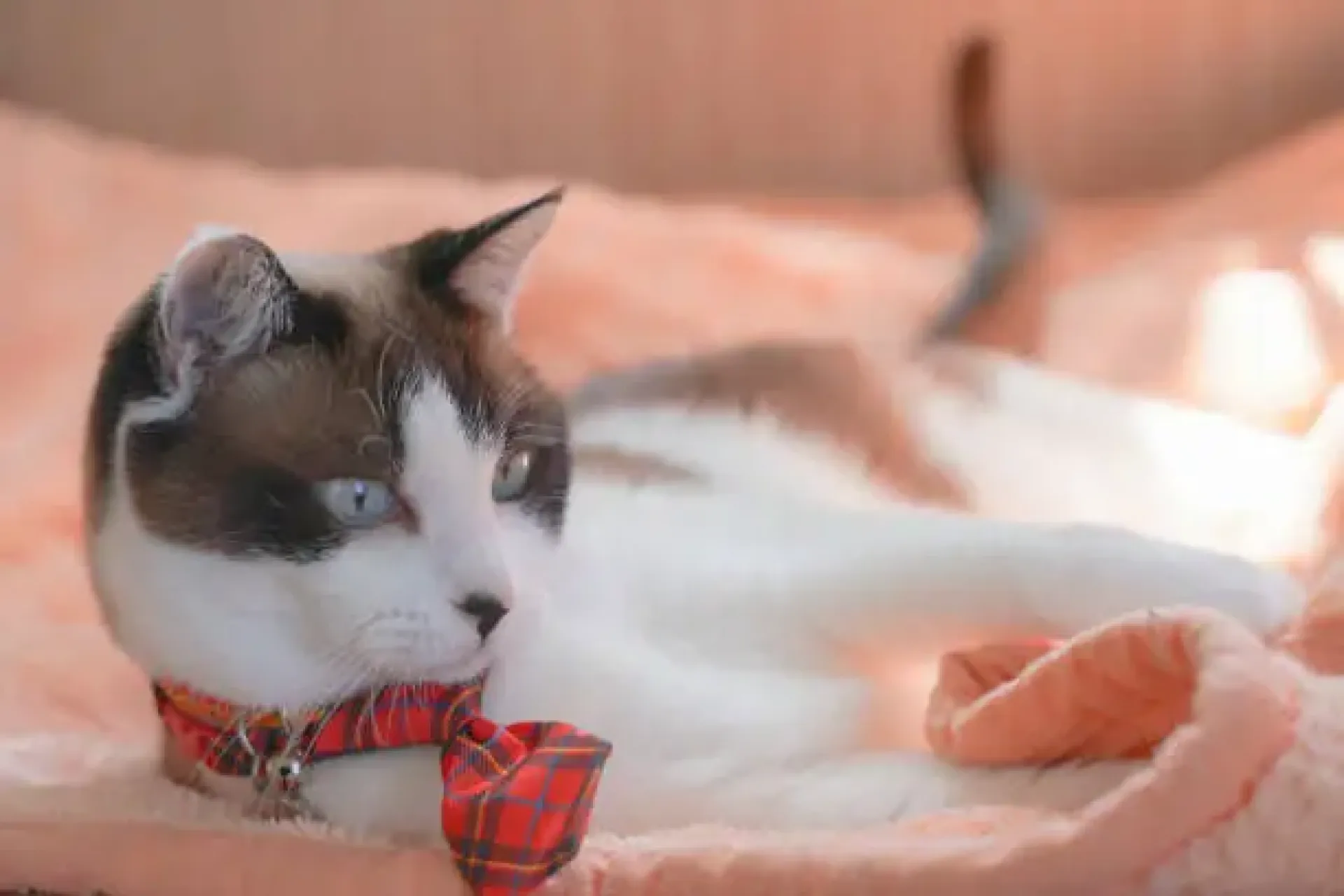 Snowshoe kittens are born white and develop their point coloring gradually over the first few weeks — the white boots remain visible from birth.
It’s also worth noting that Snowshoe kittens are born entirely white (like Siamese) and develop their point coloring gradually. By 4 weeks, you can start to see the points coming in. By 2 years, the coloring has typically fully developed and will continue to slightly deepen throughout their life.
True Temperament: What They’re Actually Like to Live With
Let’s get past the marketing language for a second. “Affectionate and social” describes about 40 different breeds. What does it actually mean to live with a Snowshoe?
It means you have a cat that will follow you from room to room with genuine curiosity about what you’re doing — not because it needs something, but because it’s actually interested. Snowshoes have an investigative quality to them. You’re doing dishes? They’re on the counter watching. You’re working? They’re on your keyboard. You’re sleeping? There’s a good chance there’s a warm weight on your feet.
The Siamese Dial is Turned Down (But Not Off)
Snowshoes inherited the Siamese’s social intelligence and emotional sensitivity but dialed back the volume — literally. They have softer, more musical voices than Siamese, and while they are communicative cats (you will have conversations), they’re not the type to scream at 3am because their water bowl is on the wrong side of the kitchen. They express preferences, not ultimatums.
That said, they do feel things deeply. A Snowshoe that senses tension in the house will often become quieter and more watchful. A Snowshoe that’s been left alone too long will meet you at the door with a level of reproachful intensity that, honestly, might make you feel slightly guilty. They’re emotionally attuned in a way that goes beyond “cats being cats.”
They Pick a Person
Most Snowshoes develop a primary bond with one person in the household — the one who feeds them, the one who wakes up earliest, or sometimes just the one who sat still long enough. This doesn’t mean they ignore everyone else. They’re social with the whole family and typically fine with respectful strangers. But there’s a depth to their bond with their chosen person that you’ll feel. It’s the cat that rearranges its whole nap schedule to be in the same room as you. That’s a Snowshoe move.
Energy Level: Engaged, Not Chaotic
These aren’t the cats that are ricocheting off walls at midnight (unless they’re young and have been cooped up all day). Adult Snowshoes are playful and curious in an intelligent way — they like interactive toys, puzzle feeders, and games that involve some mental engagement. A feather wand gets their attention. A crinkle ball they can bat under furniture keeps them occupied. They’re not couch potatoes, but they’re also not going to redecorate your shelves at 2am.
Kids and Other Pets
Snowshoes generally do well in multi-pet households, especially if socialized young. They tend to coexist peacefully with dogs that respect cat boundaries, and they often actively enjoy the company of another cat — particularly another Snowshoe or a breed with similar energy levels. A lonely Snowshoe plus a compatible second cat is often the secret to a settled, content household.
With children, they’re typically patient and gentle, though they do appreciate being approached on their own terms rather than grabbed. Teach the kids to let the cat come to them, and the relationship tends to be warm and genuinely affectionate.
Daily Care & Grooming: Easier Than You’d Think
One of the quieter selling points of the Snowshoe is that it’s a genuinely low-maintenance cat in the grooming department. No coat to de-mat, no undercoat explosions twice a year. A weekly brushing with a fine-toothed comb or soft slicker brush keeps the coat sleek and reduces the (already minimal) shedding. During seasonal changes, you might bump this to twice a week, but that’s about it.
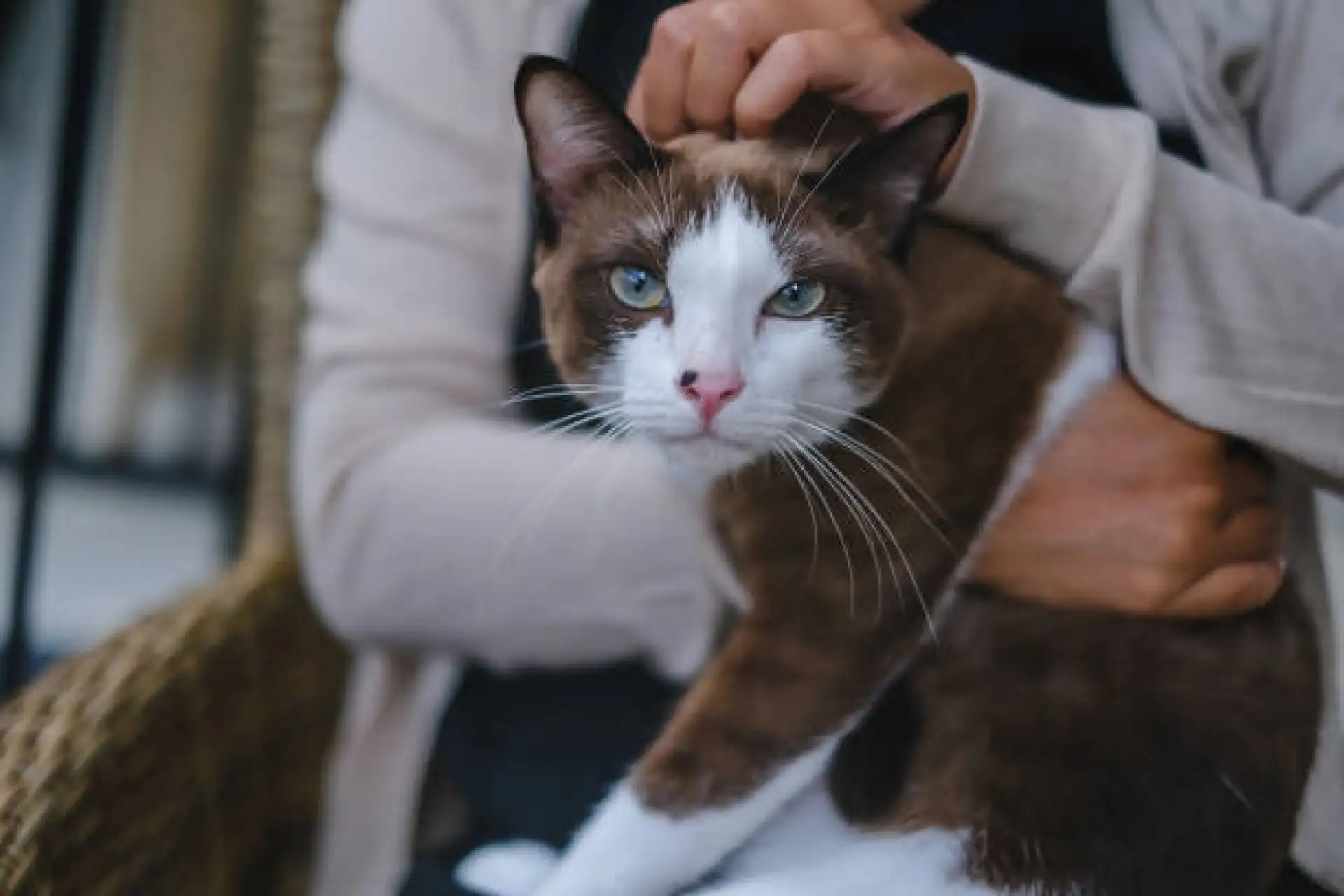 Weekly brushing keeps the Snowshoe’s short coat in excellent condition — most cats come to enjoy the routine as a bonding activity.
The Ears and Eyes
Those large eyes, while stunning, can accumulate a bit of discharge in the inner corners — particularly in cats with slightly flatter muzzles. A gentle wipe with a damp cotton pad every few days handles this easily. Do one pad per eye to avoid any cross-contamination.
Ears should be checked weekly. Snowshoes aren’t particularly prone to ear issues, but regular checks mean you catch anything early. Clean with a vet-approved ear cleaner and cotton ball if you see buildup; if it’s dark, crumbly, or smells off, that’s a vet visit rather than a DIY situation.
Dental Hygiene
This is the one grooming step most cat owners skip and most vets wish they wouldn’t. Snowshoes — like many Siamese-related breeds — can be prone to periodontal issues as they age. Brushing teeth two to three times a week sounds like a comedy sketch the first time you try it, but with kittens started young, it becomes remarkably routine. At minimum, use dental treats or water additives if the full brush routine isn’t feasible.
Diet and Weight
Snowshoes are medium-muscled cats and do best on a high-protein diet with controlled carbohydrate content. They’re not particularly prone to obesity if fed appropriate portions, but like any cat, free-feeding kibble all day is a path toward a pudgy middle-aged cat. A combination of quality wet food (great for hydration) and measured dry food portions works well for most adults. Fresh water, always.
Exercise and Enrichment
These cats need mental stimulation as much as physical exercise. A Snowshoe with nothing to do becomes a Snowshoe looking for something to do — which may or may not involve your houseplants. Interactive play sessions of 10–15 minutes twice a day are enough to keep most adults satisfied. Puzzle feeders, cat trees near windows, and rotating toys help maintain engagement when you’re not home.
If your Snowshoe is an only cat and you work long hours, seriously consider getting a companion. This isn’t a breed that thrives in solitude.
Health Profile & Lifespan Data
Note: This section discusses health considerations. Please consult your veterinarian for personalized advice.
The good news: the Snowshoe benefits from hybrid vigor. By crossing Siamese with American Shorthairs and maintaining genetic diversity, the breed avoids some of the more concentrated hereditary issues you see in purebreds with very narrow gene pools.
Lifespan: 14–20 years is a realistic range for a well-cared-for Snowshoe. This is genuinely impressive compared to many pedigreed breeds. Cats hitting 17, 18, even 19 are documented within the breed. That’s a long commitment — plan accordingly, but in the best way.
Known Health Considerations:
Heart conditions (HCM — Hypertrophic Cardiomyopathy): The most common heart disease in cats generally, and worth monitoring in any breed. Responsible Snowshoe breeders screen breeding stock with echocardiograms. Ask for documentation.
Dental disease: As mentioned above, the Siamese lineage brings some predisposition to gum and tooth issues. Proactive dental care is genuinely one of the highest-impact health interventions you can make.
Renal issues: Kidney disease is common in aging cats broadly — not specifically overrepresented in Snowshoes, but worth monitoring through annual bloodwork once your cat passes 8–10 years.
Joint health: Again, not a breed-specific concern, but Snowshoes’ active lifestyle means maintaining a healthy weight pays dividends in joint comfort as they age.
What to Ask a Breeder:
Any reputable Snowshoe breeder should be able to provide health testing documentation for the parents (HCM screening at minimum), vet records for the kitten, information about the genetic lines being used, and a health guarantee. If a breeder brushes off these questions or can’t produce records, keep looking.
⚠️ Health Disclaimer: This information is for educational purposes only and is not a substitute for professional veterinary advice. Always consult a licensed veterinarian for diagnosis, treatment, and health decisions regarding your cat.
Rarity & Pricing in the US
Let’s be honest about something: Snowshoe cats are genuinely hard to find from reputable sources, and this is almost entirely because of genetics. Producing kittens that consistently meet breed standards for white markings is unpredictable enough that many breeders who attempt it eventually move on to breeds with more consistent results. The breeders who stick with Snowshoes are usually deeply passionate about the breed — which is actually a good sign when you’re looking for a reputable source.
How Rare Are They?
The Snowshoe consistently ranks among the rarer recognized breeds in the US. TICA and CFF registrations for Snowshoes are a fraction of what you’d see for Maine Coons, Ragdolls, or even British Shorthairs. There are active breeders in most regions of the country, but you may be waiting 6–12 months for a kitten from a quality breeder, and geographic flexibility (being willing to fly a kitten home or use a reputable shipper) often opens up more options.
Price Range:
- Pet-quality kittens (white markings don’t fully meet show standards but otherwise healthy and well-socialized): $600–$1,000
- Breed/show-quality kittens (strong markings, potential for showing or breeding): $1,200–$1,800+
- Adult retired breeding cats: Often available from breeders for $300–$600. These are typically well-socialized, health-tested adults — genuinely underrated adoption option.
Rescue and Adoption:
Purebred Snowshoes in rescue are rare but not impossible. Breed-specific rescues occasionally have Snowshoes listed, and general cat rescues sometimes have Snowshoe mixes (often listed as “Siamese mix” or “Snowshoe mix”). These mixed cats often carry the personality traits and partial markings of the breed and can be wonderful companions at a fraction of the cost.
Sites like Petfinder and Adopt-a-Pet are worth checking. Additionally, reaching out directly to Snowshoe breeders about rehome situations or retired cats is often productive — breeders usually have a network and can point you toward cats that need new homes.
Red Flags to Avoid:
- Kittens available immediately with no waiting period
- No health testing documentation for parents
- Multiple breeds being sold from the same “farm”
- Prices significantly below $600 (may indicate a mill situation or significant health corners being cut)
- Sellers unwilling to let you video call to see the living conditions
Frequently Asked Questions About Snowshoe Cats
Are Snowshoe cats rare?
Yes, genuinely so. The Snowshoe is one of the rarer recognized cat breeds in the United States, primarily because the genetics controlling their white markings are difficult to predict and breed consistently. Even experienced breeders can’t guarantee that a given litter will produce kittens that fully meet the breed standard. This means fewer breeders work with Snowshoes compared to more “producible” breeds, which keeps the overall population small.
Do Snowshoe cats have health problems?
Snowshoes are generally a hardy breed, benefiting from the hybrid vigor of their Siamese/American Shorthair origins. They don’t carry the concentrated genetic diseases seen in some narrow-gene-pool breeds. That said, they share some risks with all cats — particularly HCM (a heart condition) and dental disease. The dental issue is worth taking seriously given the Siamese lineage; proactive home dental care makes a real difference over a cat’s lifetime. Sourcing from health-tested breeding lines significantly reduces risk.
How long do Snowshoe cats live?
The typical range is 14–20 years, with many well-cared-for individuals reaching the higher end of that range. This is one of the longer lifespans among pedigreed breeds, and it’s one of the things longtime Snowshoe owners cite most proudly. Getting a Snowshoe kitten is a long commitment — plan for a 15+ year relationship.
Are Snowshoe cats good with kids and dogs?
Generally, yes. Snowshoes are social and tolerant cats that adapt reasonably well to active households. They tend to do better with children who are taught to interact respectfully (letting the cat approach rather than forcing handling), and they typically coexist peacefully with cat-friendly dogs. Early socialization makes a significant difference — a Snowshoe kitten raised around dogs and children will almost always be more comfortable with them as an adult than one introduced later in life.
Do Snowshoe cats like to be held?
This varies by individual, but the breed as a whole is affectionate and enjoys physical closeness rather than distance. Many Snowshoes are active lap cats and will seek out cuddles on their own terms. “On their own terms” is the key phrase — they tend to prefer initiating contact rather than being scooped up unexpectedly. Earn their trust and they’re generous with affection. Grab them when they’re in the middle of something else and you’ll get a look that transcends species.
How vocal are Snowshoe cats?
Moderately vocal. They communicate clearly and will absolutely let you know when they’re hungry, bored, or want the door opened, but they have softer, more melodic voices than Siamese. Think “ongoing gentle commentary” rather than “operatic demands.” Most owners describe living with a Snowshoe as having pleasant background conversation in the house rather than constant noise.
Can Snowshoe cats be left alone during the day?
Short answer: they can handle a normal workday, but they’re not well-suited to extended isolation or households where they’re consistently alone for 10+ hours. This is a social, people-oriented breed that genuinely needs interaction. If you work long hours, a second cat as a companion is a meaningful quality-of-life upgrade for a Snowshoe. Interactive puzzle feeders and window perches with bird views help during solo time, but they’re no substitute for actual companionship.
How do I find a reputable Snowshoe cat breeder?
Start with TICA’s breeder registry (tica.org) and the CFF breeder listings. Look for breeders who are active in cat shows, can provide HCM screening records for parent cats, offer a health guarantee, and are willing to answer detailed questions about their breeding program. The wait for a kitten from a quality breeder is often 6–12 months — that’s normal and worth it. Be cautious of anyone with kittens always immediately available, and never buy from a pet store or an online marketplace seller who won’t allow a video call to see their setup.
What’s the difference between a Snowshoe cat and a Siamese?
They share common ancestry, but they’re distinct breeds with noticeable differences. Snowshoes are more solidly built with a rounder head, less extreme angular features, and of course, the defining white paws that Siamese don’t carry. Temperamentally, Snowshoes are generally considered gentler and less intensely vocal than Siamese, though they share the social intelligence, blue eyes, and pointed coloring. If you love the Siamese personality but find the breed’s drama slightly exhausting, a Snowshoe is often described as “Siamese on a slightly lower setting” — which many people find is exactly right.
Are Snowshoe cats indoor or outdoor cats?
Reputable breeders universally recommend keeping Snowshoes as indoor-only or supervised-outdoor cats. This isn’t breed-specific paranoia — it applies to most pedigreed cats. The combination of their social nature (which can make them less street-smart than feral-adjacent cats), their striking appearance (which unfortunately makes them theft targets), and their moderate but real value makes indoor life the right call. Leash-walking with a well-fitted harness is a great option for Snowshoes that have a lot of energy; many take to it happily given their curious, people-oriented nature.
The Snowshoe cat is one of those breeds where the more you learn, the more you understand why people who own them become so devoted to them. They’re not the easiest breed to find, they’re not the cheapest to source responsibly, and they’ll absolutely rearrange your work-from-home schedule around their nap preferences. But in exchange, you get a genuinely intelligent, emotionally connected companion that will likely be part of your life for close to two decades.
That’s a trade most Snowshoe owners would make again without hesitation.