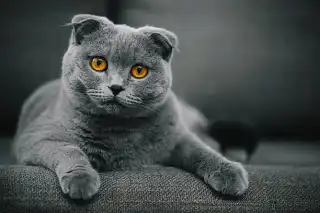
There’s a moment every British Shorthair owner knows well — you’re sitting on the couch, maybe reading, maybe scrolling your phone, and you look up to find this dense, round-faced cat just staring at you from across the room. Not demanding attention. Not meowing. Just watching, calm and deliberate, like a small, fluffy philosopher who’s already figured out the meaning of life and found it mildly amusing.
That quiet, self-possessed dignity is the British Shorthair in a nutshell. They’re one of the oldest and most recognized cat breeds in the world, and somehow, despite being everywhere — on cat food packaging, in internet memes, in the arms of celebrities — they remain genuinely misunderstood. People expect a lap cat and get something more interesting: an independent soul with a deep capacity for loyalty, on their own terms.
If you’re researching whether a British Shorthair is right for you, or you’ve already fallen for those copper penny eyes and just want to know what you’re getting into, this guide covers everything — the history, the health quirks, the real personality (including the parts the breeders don’t always mention), and the practical day-to-day of living with one.
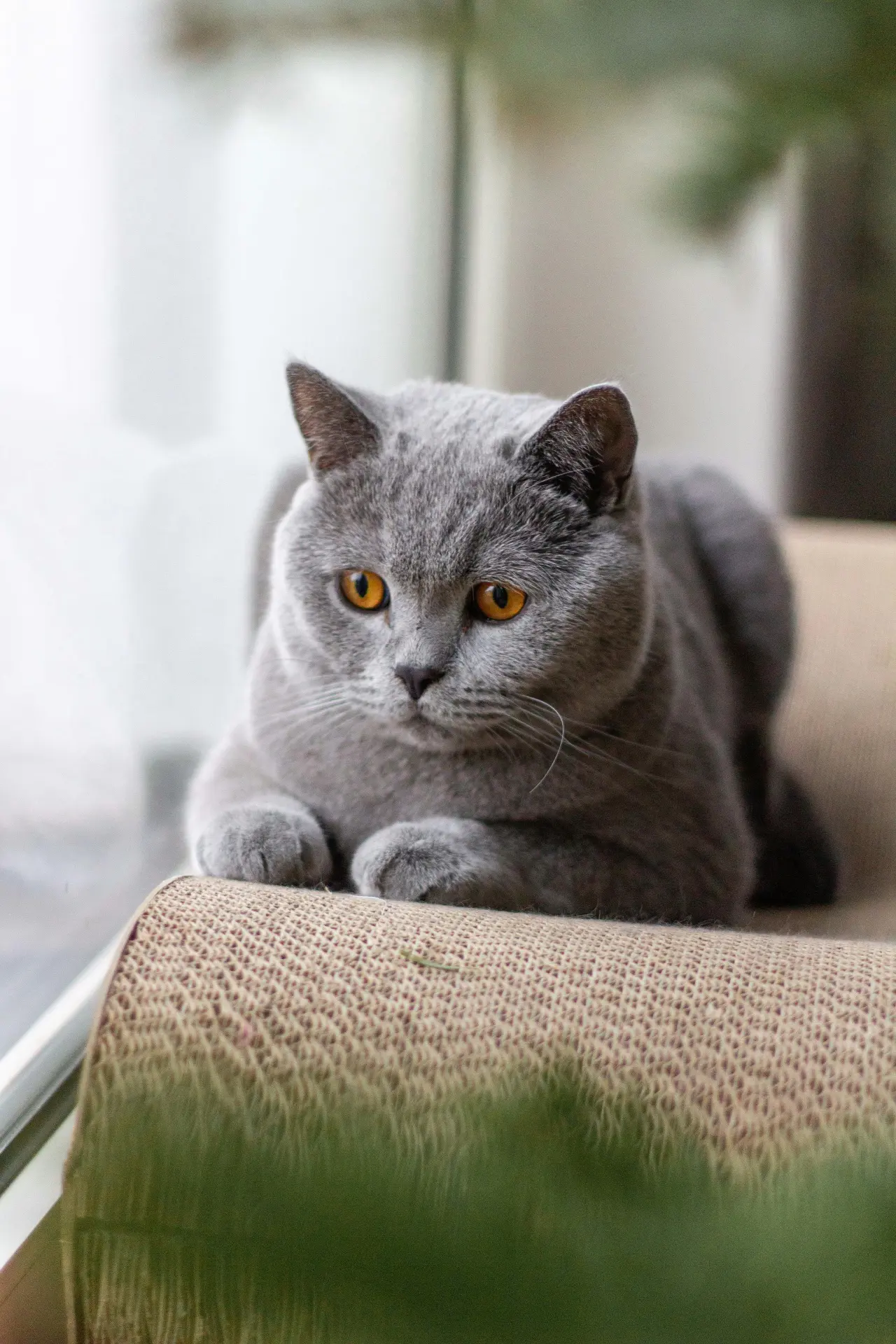
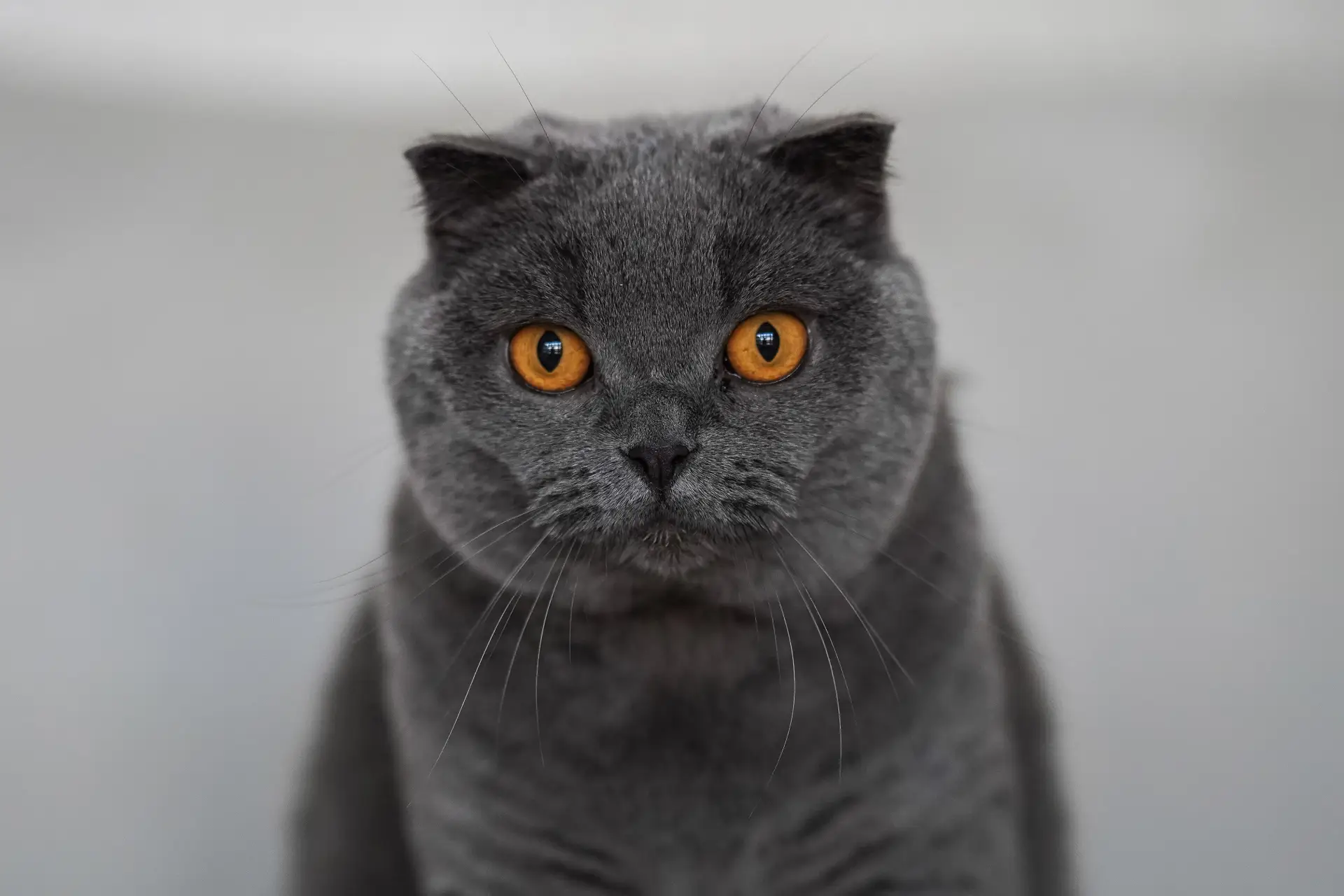 Those wide-set copper eyes and chubby cheeks are classic British Shorthair — the breed standard specifically calls for a fully round head.
Key Takeaways
- Built like a tank, moves like a cloud. The British Shorthair is a powerfully built, dense-coated breed — heavier than they look and surprisingly agile when motivated.
- Independent but deeply bonded. They won’t sit in your lap every night, but they’ll follow you from room to room and keep a quiet eye on everything you do.
- Exceptionally good with kids and other pets. Their calm, unflappable temperament makes them one of the most adaptable purebred cats you can own.
- Health risks are real and worth knowing. HCM (Hypertrophic Cardiomyopathy) and PKD (Polycystic Kidney Disease) are genuine concerns in the breed — responsible breeders test for both.
- Low-drama grooming, but not zero grooming. That plush coat needs regular brushing, especially during seasonal shedding, or you’ll find fur in your coffee.
- Not cheap, not easy to find from quality breeders. Expect to pay $1,500–$3,000+ in the US for a well-bred kitten, and wait lists are common.
Quick Overview
| Trait | Detail |
|---|---|
| Origin | England (developed from Roman-era cats, refined in the 19th century) |
| Size | Medium to large |
| Weight | Males 9–17 lbs; females 7–12 lbs |
| Lifespan | 12–20 years |
| Coat | Short, dense, plush double coat with a crisp texture |
| Color | Over 100 recognized color and pattern combinations, including blue, black, white, tabby, colorpoint, and bicolor |
| Temperament | Calm, loyal, intelligent, independent, gentle |
| Grooming | Moderate — weekly brushing minimum, more during shedding season |
| Price | $1,500–$3,000+ USD from reputable breeders |
From Roman Legions to Your Living Room: The British Shorthair’s Surprising History
The British Shorthair’s story doesn’t start in a breeder’s cattery — it starts on a Roman warship, roughly 2,000 years ago.
When Roman legions invaded Britain around 43 AD, they brought cats with them to protect grain stores from rodents. Those cats — sturdy, adaptable, naturally selected for the cold and damp of the British Isles — interbred with local wildcats over centuries, gradually becoming the robust domestic cat type that would eventually define an entire breed.
For nearly two millennia, these cats lived alongside British households, farms, and pubs, developing their characteristic thick coats, stocky bodies, and notably even temperaments. They were working animals before they were show animals.
That changed in the 1870s, when Harrison Weir — a passionate British cat fancier who organized the world’s first official cat show at Crystal Palace in London in 1871 — began deliberately selecting and breeding the best examples of these native cats. Weir essentially codified the type we now recognize as the British Shorthair: round head, dense plush coat, cobby body, and that signature composed expression.
The breed thrived until World War I and II, when breeding programs collapsed across Europe. By the end of WWII, British Shorthair numbers had plummeted so severely that breeders were forced to crossbreed with Persians, Russian Blues, and other breeds to rebuild the gene pool. That Persian influence, interestingly, is part of why today’s British Shorthair has such an exceptionally plush, dense coat compared to what Harrison Weir was working with.
The breed was officially recognized by the Cat Fanciers’ Association (CFA) in the United States in 1980, and today it consistently ranks among the most popular pedigreed cat breeds globally. The “British Blue” — that iconic blue-gray coat with copper eyes — remains the most iconic and sought-after variety, though the breed now comes in a staggering array of colors and patterns.
That Round Face and Plush Coat Aren’t Just Cute — Here’s What the British Shorthair Really Looks Like
Walk up to a British Shorthair and the first thing you notice is mass. These are not delicate cats. A mature male British Shorthair feels like picking up a solid, well-stuffed throw pillow — substantial, dense, and somehow heavier than physics should allow.
The breed standard calls for a “cobby” body type, which is breeder-speak for compact, broad-chested, and heavily boned. Their legs are short to medium in length, thick, and well-muscled. Their paws are large and round. Everything about the structure suggests a cat built for durability rather than speed.
The head is where the breed really distinguishes itself. It’s genuinely round — not just “roundish” — with full, chubby cheeks, a broad skull, and a short, broad nose. The chin is strong. The neck is short and thick. The overall effect is that distinctive “chubby teddy bear” look that makes British Shorthair photos go viral on a weekly basis.
Their eyes are large, round, and set wide apart, typically in a deep copper or gold color in the classic blue variety, though eye color varies by coat color. The ears are medium-sized, set wide and sitting slightly tilted forward, which adds to that perpetually alert-but-relaxed expression.
The coat is the breed’s other defining feature. It’s short but incredibly dense — described in the standard as “crisp” — and it stands away from the body rather than lying flat. Run your hand through it and it springs back, almost like touching a plush toy. During peak condition (typically in cooler months), it has a remarkable three-dimensional quality that photographs beautifully.
British Shorthairs are slow maturing. Unlike many breeds that reach full physical maturity by 12–18 months, a British Shorthair male often doesn’t fully fill out until 3–5 years of age. If your young British Shorthair looks a little lean or proportionally “off,” give it time — the final form is worth waiting for.
Silver, Blue, Tabby, and Beyond: Navigating British Shorthair Coat Colors
If you thought “British Shorthair” meant one blue-gray cat, the color genetics of this breed are going to pleasantly short-circuit your expectations.
The British Shorthair is one of the most color-diverse pedigreed cat breeds that exists. The Governing Council of the Cat Fancy (GCCF) recognizes well over 100 color and pattern combinations, ranging from the simple to the genuinely exotic. Here’s a practical breakdown:
Solid Colors The most classic is British Blue — a uniform blue-gray that can range from pale lavender-gray to a deeper slate. Also recognized: black, white, chocolate, lilac (a warm dove-gray), red, cream, and cinnamon.
Tabby Patterns Classic tabby (the bold, swirling “bullseye” pattern), mackerel tabby (narrow stripes), spotted tabby, and ticked tabby all appear in the breed. British Shorthair tabbies in silver — a cool silver base with dark markings — are especially striking.
Bicolor & Van Patterns White combined with any recognized color, with specific pattern requirements for show. Bicolor British Shorthairs have a bold, graphic look that photographs strikingly well.
Colorpoint (Himalayan Pattern) Yes, British Shorthairs can carry the colorpoint gene from Persian crosses in the breed’s reconstruction era. Colorpoint British Shorthairs (sometimes called British Colourpoint) have the classic Siamese-style dark points on face, ears, paws, and tail, with blue eyes. They’re less common and quite distinctive.
The Genetics Worth Knowing Chocolate and lilac in British Shorthairs are recessive traits, meaning both parents must carry the gene for kittens to express it. This is why chocolate and lilac British Shorthairs command higher prices — responsible breeding programs require careful genetic pairing, and the colors are less common.
Cinnamon and fawn are even rarer recessive colors, genuinely difficult to find from quality breeders.
A quick note on eye color: it correlates with coat color. Blue coats and most solid colors pair with deep copper or orange eyes. Silver tabbies and chinchilla varieties typically have green or blue-green eyes. White cats can have blue eyes, odd eyes (one blue, one copper), or orange eyes.
Forget the Lap Cat Stereotype: What British Shorthairs Are Actually Like to Live With
Here’s what the breed brochures get slightly wrong about the British Shorthair temperament: they describe these cats as “calm” and “easygoing,” which is technically accurate but misses the texture of what actually living with one is like.
British Shorthairs are calm the way a very self-assured person is calm — not because nothing interests them, but because they’ve decided they don’t need to perform anxiety for anyone. They observe. They think. They make deliberate choices about when to engage and when to simply be present.
They are not lap cats, at least not on your schedule. A British Shorthair will sit next to you, not on you. They’ll follow you to the kitchen, watch you cook, and settle within a few feet while you work — but being picked up and held is often tolerated rather than enjoyed, especially by adults. Kittens are different; British Shorthair kittens go through a genuinely playful, slightly wild phase around 4–8 months that gives way to that dignified adult composure later.
What they are, deeply and genuinely, is loyal. British Shorthairs bond strongly with their families, including children, and often with one person in particular. My own British Blue would spend every evening in the same room as me, always within visual range, but almost never soliciting physical contact — and then once a week, apparently at random, he’d decide it was cuddle time and park himself on my chest like a small, heavy satellite. On his terms. Always on his terms.
They get along remarkably well with dogs, other cats, and children, largely because of their unflappable temperament. They don’t spook easily, don’t react dramatically to noise, and generally approach unfamiliar situations with cautious assessment rather than panic. This makes them an excellent choice for families or households that aren’t serene and quiet.
 That unflappable calm makes British Shorthairs one of the best purebred cats for family households — they’re patient, steady, and genuinely good with kids.
One thing to understand: British Shorthairs are intelligent cats who can become quietly bored. A bored British Shorthair doesn’t usually destroy things — they’re too dignified for that — but they can become withdrawn or develop subtle behavioral shifts like overeating or reduced activity. Puzzle feeders, interactive toys, and rotating play sessions aren’t optional enrichment; they’re part of keeping this breed mentally healthy.
They’re also not particularly vocal, which some people love and others find slightly unnerving at first. They communicate through presence and subtle body language more than meowing. Learn to read those slow blinks and the position of those round ears, and you’ll have a much richer relationship with your British Shorthair.
The Real Work of Owning a British Shorthair: Daily Care That Actually Matters
Grooming
That dense plush coat is gorgeous and relatively low-maintenance compared to a Persian or Maine Coon — but “low maintenance” doesn’t mean “no maintenance.” During stable seasons, weekly brushing with a slicker brush or a de-shedding tool is sufficient. During spring and fall shedding seasons? You’re going from weekly to every two or three days if you want to stay ahead of it. British Shorthairs have a thick double coat that releases a significant amount of undercoat during seasonal transitions. If you’ve ever found cat fur in your coffee, multiply that experience and you’re getting warm.
The good news: most British Shorthairs tolerate, and some actively enjoy, brushing. Start young, use positive reinforcement (small treats, patience), and grooming sessions can become part of your bonding routine rather than a battle.
Ears should be checked and gently cleaned every few weeks. Nails trimmed every 2–3 weeks. Dental hygiene matters enormously for this breed — dental disease is common in cats generally, and British Shorthairs are no exception. Ideally, brush their teeth regularly; at minimum, use dental treats or water additives and have a vet check their teeth annually.
Diet & Weight Management
Weight is one of the most important health variables for British Shorthairs, and it’s worth taking seriously. These cats are naturally stocky and food-motivated, which is a combination that creates real obesity risk in sedentary indoor environments. An overweight British Shorthair isn’t just a comfort issue — it directly compounds the cardiac risks that already exist in the breed.
Feed measured portions of a high-protein, low-carbohydrate diet. Many owners do well with a combination of quality wet food (for hydration and protein) and a measured amount of dry kibble. Free-feeding — leaving a full bowl out all day — tends to lead to overconsumption with this breed. Check the body condition score regularly: you should be able to feel the ribs with light pressure but not see them.
Exercise
British Shorthairs are not high-energy cats, but they’re not couch statues either. Two 10–15 minute interactive play sessions daily — wand toys, feather lures, anything that activates their hunting instinct — keeps them physically and mentally fit. Without this, they will find their own level of activity, which in a quiet apartment tends toward “very low.”
Cat trees, window perches, and environmental enrichment help. British Shorthairs aren’t dramatic climbers compared to some breeds, but they do like elevated observation points for their philosopher-watching.
What Every British Shorthair Owner Needs to Know About Their Health
Note: This section discusses health considerations. Please consult your veterinarian for personalized advice.
British Shorthairs are generally a hardy breed — that centuries-long natural selection for British farm life left them with a reasonably robust constitution. But “generally healthy” doesn’t mean “no concerns,” and there are two conditions in particular that every prospective owner needs to understand.
Hypertrophic Cardiomyopathy (HCM)
HCM is a thickening of the heart muscle wall that reduces the heart’s ability to pump blood effectively. It’s the most common heart disease in cats generally, and British Shorthairs have a documented genetic predisposition to it. HCM can occur in any cat, but the breed-specific risk is real.
Responsible breeders screen their breeding cats with regular cardiac echocardiograms (ultrasound of the heart), typically annually. Ask any breeder for recent HCM screening results on both parents — a breeder who can’t or won’t provide this is a breeder to walk away from.
For your own cat: annual or bi-annual vet checkups with cardiac auscultation are standard. Some owners in high-risk lines choose periodic echocardiograms. Early detection allows for management, even if it doesn’t cure the condition.
Polycystic Kidney Disease (PKD)
Inherited from the Persian crosses in the breed’s reconstruction history, PKD causes fluid-filled cysts to develop in the kidneys, gradually impairing function. The good news: there’s a genetic test for PKD. Responsible breeders test their breeding cats and only breed PKD-negative animals. Ask for PKD-negative certificates for both parents of any kitten you’re considering.
Other Health Considerations
- Obesity: As discussed, a genuine risk in this breed that compounds other health issues.
- Dental disease: Common in the breed; regular dental hygiene and professional cleanings matter.
- Blood type incompatibility: British Shorthairs have a high proportion of blood type B (unusual in domestic cats), which matters if emergency blood transfusions are ever needed. Worth knowing and flagging with your vet.
Lifespan
British Shorthairs are one of the longer-lived large cat breeds, with a typical lifespan of 12–20 years. Well-cared-for cats in healthy lines regularly reach their mid-to-late teens. The genetic health testing, weight management, and regular vet care discussed above are the most direct ways to influence where in that range your cat lands.
⚠️ Health Disclaimer: This information is for educational purposes only and is not a substitute for professional veterinary advice. Always consult a licensed veterinarian for diagnosis, treatment, and health decisions regarding your cat.
Finding a British Shorthair in the US: What It Costs and What to Watch Out For
The British Shorthair is popular in the United States, but finding a genuinely well-bred one requires patience and research.
Price Range
From a reputable, health-testing breeder, expect to pay $1,500–$3,000 for a pet-quality British Shorthair kitten. Show-quality kittens from champion lines run $2,500–$5,000+. Rare colors (chocolate, lilac, cinnamon) typically sit at the higher end or beyond.
Prices that seem too good — $400, $600, $800 for a “purebred” British Shorthair — should trigger alarm bells. This either indicates an unregistered backyard breeder not doing health testing, a kitten mill, or, increasingly common, an outright scam. The cost of responsible breeding (genetic testing, proper nutrition, veterinary care, socialization time) simply doesn’t allow for kitten prices in that range from ethical breeders.
Finding Reputable Breeders
- The Cat Fanciers’ Association (CFA) and The International Cat Association (TICA) both maintain breeder directories and registries. Start there.
- Look for breeders who are members of the British Shorthair Cat Society or equivalent breed clubs.
- Ask specifically: Do you health test for HCM and PKD? Can I see the certificates? Can I visit the cattery or do a video call? A reputable breeder will welcome these questions.
- Expect a wait list. Quality British Shorthair litters from top breeders are often committed before the kittens are born. Waiting 6–12 months is not unusual.
Adoption
Adult British Shorthairs do appear in rescue, though they’re not common. Breed-specific rescues occasionally have them; general purebred cat rescues are worth checking. The ASPCA and Petfinder databases occasionally list cats identified as British Shorthairs, though verification of actual breed lineage is harder without registration papers.
Adopting an adult British Shorthair can be a wonderful option — their personalities are fully developed, health issues (if present) may already be apparent, and the adoption fee is a fraction of breeder prices. The temperament considerations still apply, so meet the cat before committing.
Frequently Asked Questions About British Shorthair Cats
Are British Shorthairs good for first-time cat owners?
Genuinely yes — they’re one of the best breeds for first-time owners. Their calm, undemanding temperament means they’re forgiving of learning curves in cat ownership, they’re not destructive or hyperactive, and they don’t need the intensive interaction that some other breeds do. The main caveat: do your homework on health testing when buying from a breeder, and stay on top of weight management. Those two things will save you a lot of heartbreak down the line.
Do British Shorthairs like to be held?
Mostly no, or at least — not on your schedule. Adult British Shorthairs typically prefer to be near you rather than on you, and being scooped up and held tends to be tolerated rather than relished by most individuals. Kittens are more physically affectionate, but the adult personality leans independent. This isn’t rejection — it’s just the breed’s nature. They show affection through proximity and slow blinks rather than snuggles.
How much do British Shorthairs shed?
More than you’d guess from a short-coated breed. That dense double coat sheds substantially, especially during spring and fall seasonal transitions. Weekly brushing is baseline; you’ll want to bump that up to every 2–3 days during heavy shedding periods. A good de-shedding tool (like a Furminator or similar) used regularly makes a significant difference.
Are British Shorthairs indoor or outdoor cats?
They adapt well to full indoor living and are honestly better kept indoors for safety reasons — traffic, disease exposure, and predators being the main concerns. They don’t have the frantic energy that makes some breeds stir-crazy indoors. Enrichment (play sessions, cat trees, window perches, puzzle feeders) compensates well for the lack of outdoor access.
Can British Shorthairs be left alone during the day?
Better than most breeds, yes. Their independent temperament means they handle solitude reasonably well, and they’re not prone to separation anxiety the way dogs or more socially demanding cats can be. That said, they still need stimulation — leaving enrichment toys, puzzle feeders, or a feline companion helps if you’re away 8–10 hours daily.
What’s the difference between a British Shorthair and a British Longhair?
The British Longhair is essentially the same breed with a long, semi-long coat — the result of the recessive longhair gene present in the British Shorthair gene pool (inherited from Persian crosses during post-WWII breed reconstruction). Temperament and physical structure are the same; the coat care requirements are more intensive for the Longhair. Some registries recognize them as a distinct breed; others consider them a variety.
Are British Shorthairs prone to health problems?
They’re not a fragile breed, but there are specific risks: HCM (heart disease) and PKD (kidney disease) are the primary genetic concerns. Both conditions can be significantly reduced through responsible breeding practices (genetic and cardiac testing). Buying from a health-testing breeder substantially lowers your risk. Obesity is also a real concern and something owners can directly control.
How long do British Shorthairs live?
The typical range is 12–20 years, with well-cared-for cats in healthy lines commonly reaching 15–18 years. They’re one of the longer-lived larger cat breeds. Diet, weight management, regular veterinary care, and genetic health in the bloodline are the biggest variables influencing lifespan.
Are British Shorthairs vocal cats?
No — they’re notably quiet compared to many breeds. They communicate more through body language and presence than vocalization. The occasional chirp or soft meow at feeding time, but you’re not going to wake up at 3am to a British Shorthair aria. This makes them excellent apartment cats.
What should I look for when choosing a British Shorthair kitten?
Beyond the obvious (bright eyes, clean coat, playful energy appropriate for age), the most important factors are: breeder transparency about HCM and PKD health testing on both parents; evidence of good socialization (kittens should be curious and comfortable with human handling, not cowering); and appropriate age at rehoming (12 weeks minimum, ideally 14–16 weeks for proper socialization). A breeder who pressures you to take a kitten at 6–8 weeks is cutting corners on crucial developmental time.
The British Shorthair is one of those breeds that rewards patience and attention. They don’t shout their personality at you — they reveal it gradually, in the quiet moments when you catch that round-faced philosopher watching you with those copper eyes, already three thoughts ahead of whatever you thought you were doing.
If you want a cat that fills a room with warmth and presence without demanding the room’s attention, this might be exactly the breed you’ve been looking for.