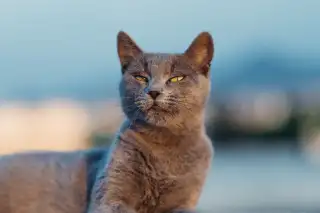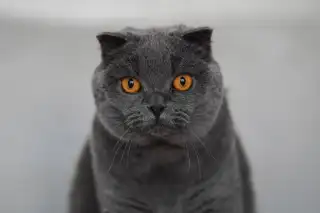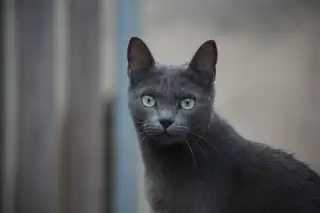
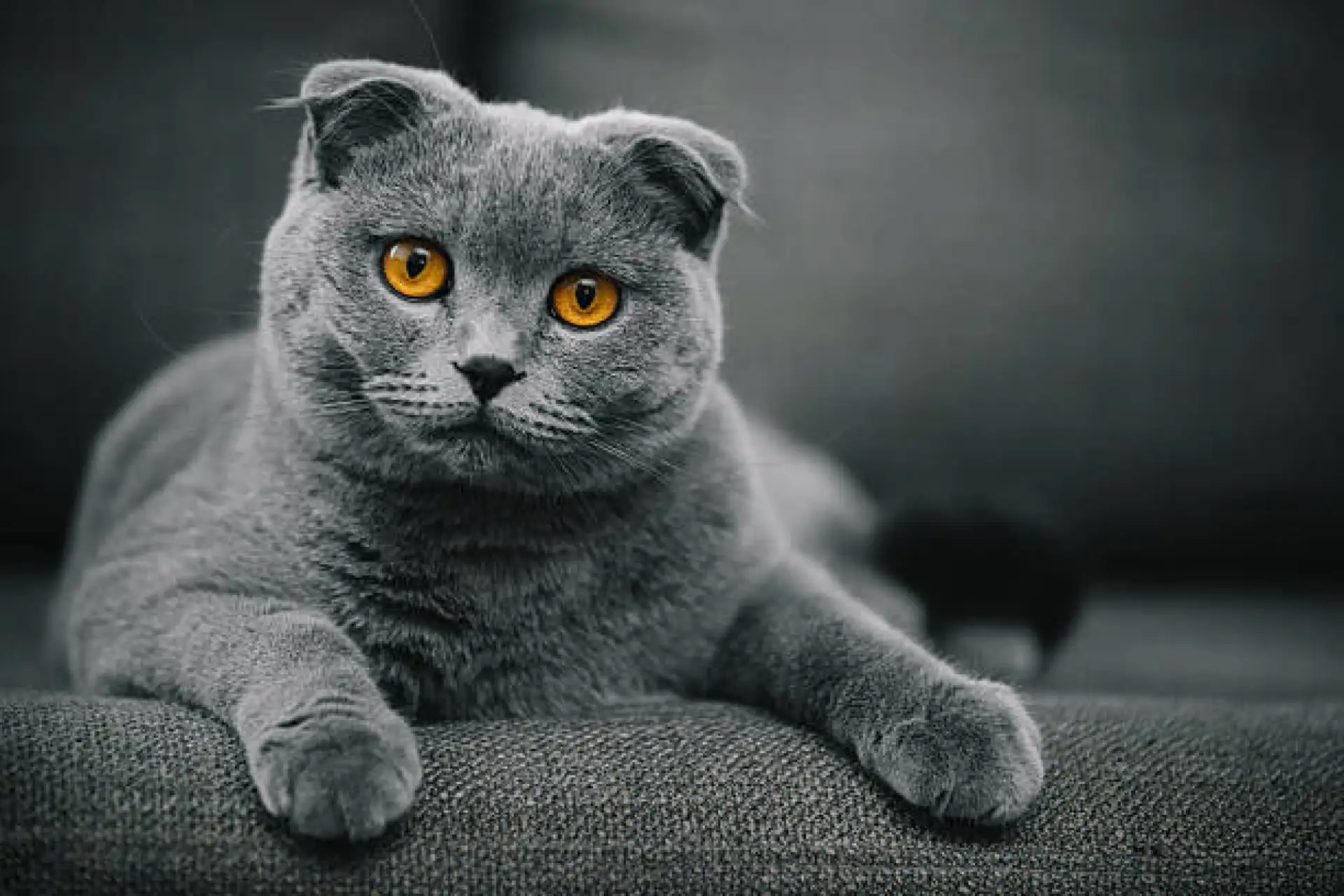
There’s a moment — and if you’ve ever been around a Scottish Fold, you know exactly what I’m talking about — when this cat sits down, tucks its paws underneath its body, and just stares at you with those enormous round eyes and those tiny folded ears, looking for all the world like a tiny, disapproving owl stuffed into a cat costume. It shouldn’t work. It should be unsettling. Instead, it’s one of the most disarming things you’ll ever see, and it’s probably the reason you’re reading this right now.
The Scottish Fold is genuinely one of the most distinctive cat breeds on the planet. Not because of fancy coat patterns or size extremes, but because of one small genetic quirk that rewired the entire face of a barn cat in Scotland and started a decades-long conversation about beauty, ethics, and what we owe the animals we bring into our homes. This guide covers all of it — the charm, the care, the real health concerns you need to understand before you fall head over heels, and everything in between.
Key Takeaways
- That signature look is genetic. The folded ears come from a dominant gene mutation that affects cartilage — which means it can also affect joints throughout the body if not bred carefully.
- Scottish Folds are remarkably calm and adaptable. They adjust well to apartments, families with kids, households with other pets, and just about any lifestyle that includes someone willing to sit on a couch occasionally.
- Health screening is non-negotiable. Osteochondrodysplasia (a joint condition linked to the fold gene) is a real concern. Buying from a responsible breeder who health-tests their cats isn’t a luxury — it’s essential.
- They’re surprisingly quiet. If you want a vocal cat to narrate your morning, look elsewhere. The Fold is more of a “meaningful glance” communicator.
- Grooming needs vary significantly by coat type. Longhaired Folds (sometimes called Highland Folds) need real brushing commitment; shorthaired ones are much more low-maintenance.
- They’re legal to own in the US, but controversial globally. Scotland’s governing cat body no longer recognizes the breed, and some European countries have restrictions. Know what you’re getting into.
Quick Overview
| Trait | Detail |
|---|---|
| Origin | Tayside, Scotland (first discovered in 1961) |
| Size | Small to medium |
| Weight | 6–13 lbs (females smaller, males toward the heavier end) |
| Lifespan | 11–15 years with proper care and health monitoring |
| Coat | Short or long (longhaired variant sometimes called Highland Fold) |
| Color | Nearly all colors and patterns recognized, including white, black, tabby, tortoiseshell, and bicolor |
| Temperament | Calm, gentle, curious, moderately playful, people-oriented without being clingy |
| Grooming | Weekly brushing for shorthaired; several times per week for longhaired |
| Price | $1,000–$3,000+ USD from reputable breeders; varies by coat, color, and ear type |
Where the Fold Began: A Barn Cat Named Susie and the Quirk That Changed Everything
The Scottish Fold’s origin story is one of those “right place, right time” moments that sounds almost too perfect to be true. In 1961, a shepherd named William Ross was walking past a farm in the Tayside region of Scotland when he noticed a white barn cat with peculiarly small, folded-down ears sitting among the hay. The cat’s name was Susie. She looked like someone had gently pressed the top of her ears forward, and instead of standing up like a normal cat’s, they lay flat against her rounded head.
Ross was captivated. With the help of geneticist Pat Turner, he began a careful breeding program using Susie and her descendants, crossing them with British Shorthairs and domestic cats to establish the breed while maintaining genetic diversity. By the 1970s, Scottish Folds had made their way to the United States, where breeders and cat enthusiasts embraced them enthusiastically.
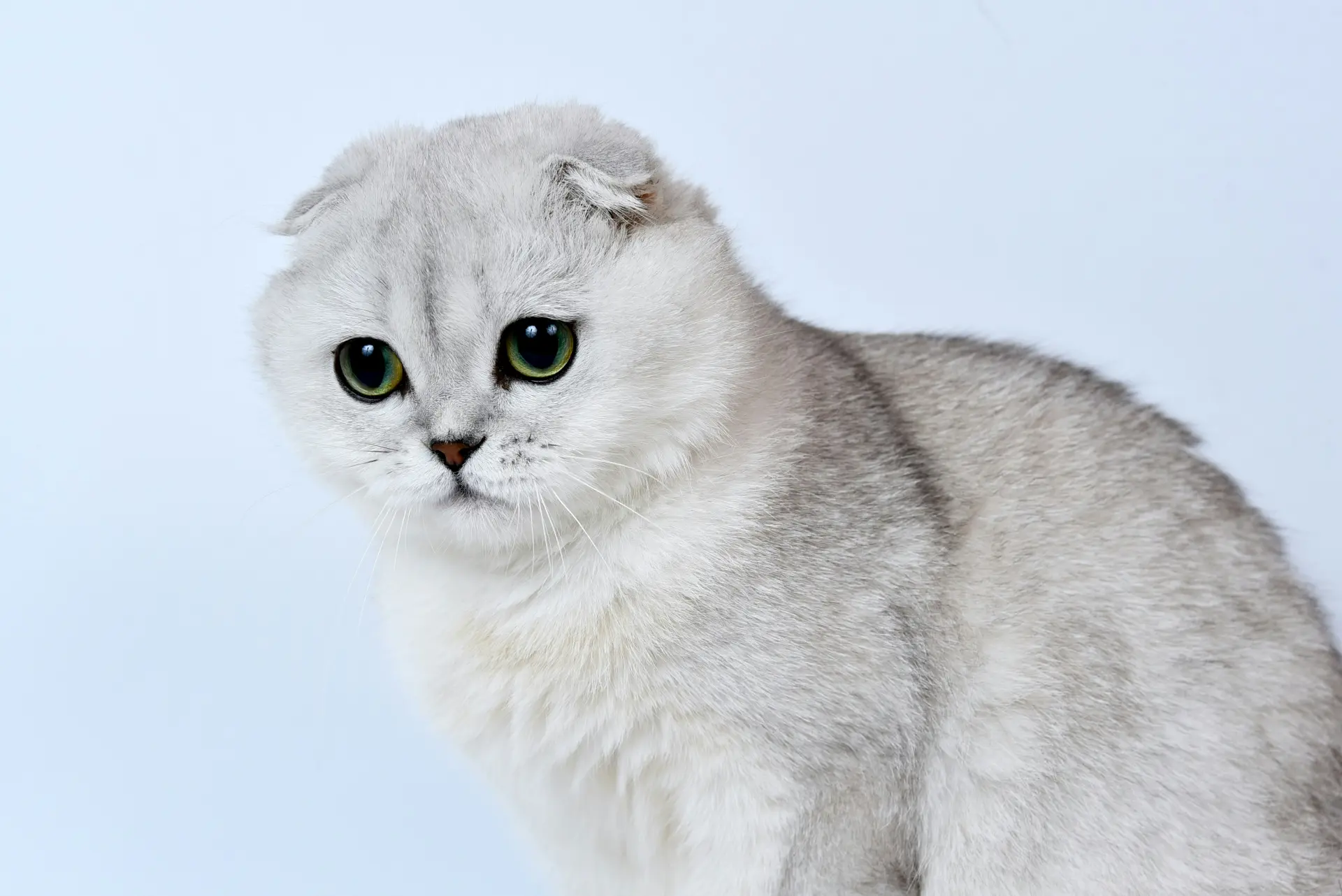 The breed traces back to a single white barn cat in 1960s Scotland — one genetic mutation that started a global conversation.
The story wasn’t without controversy, though. The UK’s Governing Council of the Cat Fancy (GCCFA) ultimately refused to recognize the breed due to concerns about ear infections and the structural implications of the cartilage gene. That debate never really ended — it evolved. Today, the Scottish Fold is recognized by the Cat Fanciers’ Association (CFA) and TICA in the US, but remains a subject of serious ethical discussion in the veterinary and breeding communities worldwide.
Understanding that history isn’t just trivia — it shapes everything about how you should approach owning one of these cats.
That Face, Those Ears, and Everything Else: The Scottish Fold’s Appearance Up Close
You could describe the Scottish Fold’s physical appearance in textbook terms — rounded head, medium build, large round eyes — but that description completely misses the point. What the Fold actually looks like is a cartoon cat that somehow became real.
The ears are obviously the headline feature. In kittens with the fold gene, ears begin to fold forward and downward around the third to fourth week of life. The tightest fold (a triple fold, where the ear lies almost completely flat against the skull) is considered the show standard, but cats with single or double folds exist too and are just as charming as companions. Not every kitten in a litter will develop folded ears — those born with straight ears (called “Straights”) are genetically important to the breeding program and make equally wonderful pets.
The rest of the face is built to maximize the owl effect. The eyes are round, wide-set, and large — they come in colors that correspond to coat color but frequently appear in striking shades of copper, gold, or blue in white or colorpoint cats. The nose is short and the overall skull shape is domed, which combined with the ears gives the face a perfectly circular silhouette.
The body is medium in size and surprisingly sturdy — you pick up a Scottish Fold and realize there’s more cat there than you expected. Their legs are medium-length, their paws are round, and their tail should be medium to long, flexible, and taper to a rounded tip.
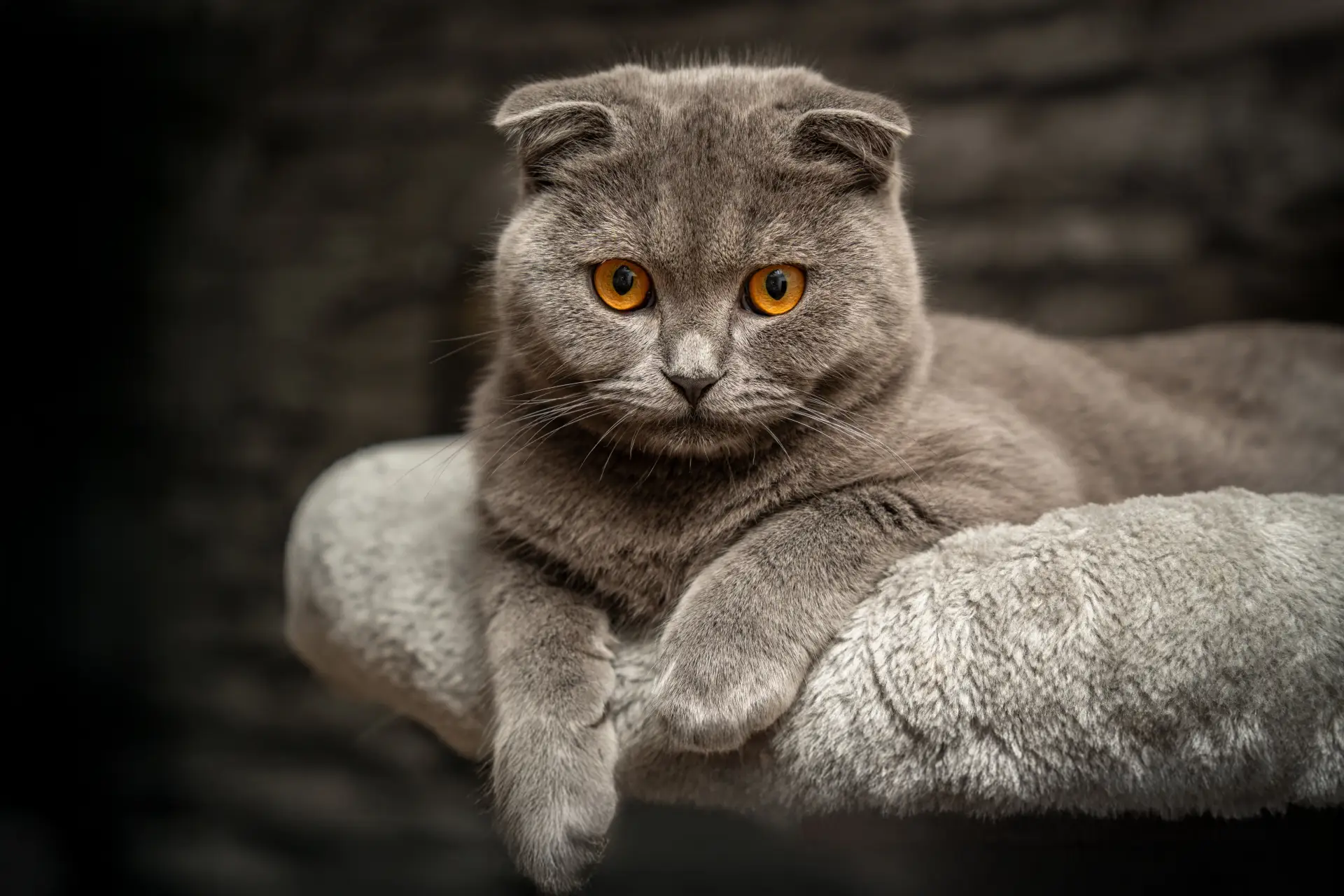 That perfectly circular face — wide eyes, folded ears, domed skull — is entirely natural and entirely irresistible.
One important thing to know: a Scottish Fold should never look uncomfortable or have a stiff tail. Those are signs of the more serious joint issues associated with poor breeding. A healthy Fold moves freely, holds its tail loosely, and sits comfortably in all kinds of positions — including the famous “Buddha sit,” where they lounge upright with their legs stretched out in front like a tiny meditating monk.
A Coat for Every Personality: Scottish Fold Colors, Patterns, and the Longhaired Secret
One of the more underappreciated things about Scottish Folds is how enormous the variety is once you get past the ears. These cats come in almost every color and pattern recognized in domestic cats — and two distinct coat lengths.
Shorthaired Scottish Fold: The coat is dense, plush, and slightly springy to the touch — breeders sometimes describe it as having a “padded” quality. It lays close to the body and has a satisfying texture that makes it exceptionally pettable.
Longhaired Scottish Fold (Highland Fold): This variant produces a longer, flowing coat with noticeable furnishings around the neck (a proper mane, basically), the ears, toes, and tail. The longhaired gene is recessive, so it requires both parents to carry it. Many people don’t realize longhaired Folds exist until they stumble across one and immediately reconsider every cat-related decision they’ve ever made.
Color and Pattern Breakdown:
- Solids: White, black, blue (a beautiful cool gray), red, and cream
- Tabby: Classic, mackerel, spotted, and ticked patterns in a range of base colors
- Tortoiseshell and Calico: Typically females due to the genetics of coat color expression
- Bicolor: Any solid or tabby pattern combined with white
- Colorpoint: Some registries accept colorpoint Folds, which carry a Siamese-type pattern with pale bodies and darker points on the face, ears, paws, and tail
- Silver and Golden: These shimmery coat types have become particularly sought-after in recent years, especially in the chinchilla silver pattern that gives the coat a frosted, fairytale appearance
From a genetics standpoint, the fold gene (Fd) is dominant — only one copy is needed to produce folded ears. But a cat that inherits two copies of the gene (Fd/Fd, sometimes called a “homozygous Fold”) has a dramatically increased risk of developing severe osteochondrodysplasia, a painful condition affecting bone and cartilage throughout the body. Responsible breeders always cross a Fold with a Straight (a non-folded cat, usually a British Shorthair or American Shorthair) to prevent this. This is exactly why the “Straight” offspring from these litters are valuable — they carry the genetic diversity that keeps the breed sustainable.
What Scottish Folds Are Actually Like to Live With
Let’s be honest about something: a lot of breed descriptions read like job interview answers. “Affectionate but independent. Playful but calm. Good with children and other pets.” They could be describing almost any cat. The Scottish Fold has a genuinely distinct personality, and it deserves a more specific description.
The Fold is, first and foremost, a companion cat. Not in a needy, velcro way — they won’t follow you into the bathroom and yowl until you acknowledge them. But if you sit down, there will eventually be a cat next to you, or more likely on you, exuding a calm, warm presence that’s almost therapeutic. They choose a person (or people) and invest in that relationship in a quiet, consistent way.
They’re curious without being destructive. A Scottish Fold encountering something new — a bag from the grocery store, a houseplant, a visitor — will approach it thoughtfully, sniff carefully, make some kind of internal judgment, and then decide whether it warrants further attention. They’re not the cats that knock things off counters for sport (though no guarantees). They’re more likely to sit and contemplate the thing, which is both adorable and slightly unnerving.
The famous “whisker fatigue pose” — sitting upright, front legs straight, belly out — is completely real and happens regularly. You’ll be in the middle of something completely ordinary and you’ll look over and there’s your Scottish Fold sitting like a loaf of bread with opinions, staring at the middle distance. It never gets old.
With kids and other animals, they tend to be genuinely tolerant and gentle, not just passively accepting. They’re not typically startled by noise or sudden movement the way more high-strung breeds are. That said, they have a quiet dignity that they’d prefer you respect — rough handling isn’t something they’ll put up with indefinitely, and unlike some cats, their signals are subtle. Watch the tail and ear position rather than waiting for a hiss.
One genuine quirk worth knowing: Scottish Folds can be surprisingly opinionated about their routine. They adapt well to change overall, but they notice when things are different and they have feelings about it. Move the litter box without warning? You might find an editorial comment on your bath mat. Keep the schedule consistent and they’re genuinely easy. Disrupt it repeatedly and you’ll learn that “calm” doesn’t mean “indifferent.”
Keeping a Scottish Fold Happy and Healthy: The Real Day-to-Day
Note: This section discusses health considerations. Please consult your veterinarian for personalized advice.
Grooming:
For shorthaired Folds, a weekly brush-through is genuinely sufficient most of the time — their coat doesn’t mat easily and they’re reasonably good self-groomers. During shedding season (spring and fall), you’ll want to increase that to a few times a week to stay ahead of the fur situation. A rubber grooming glove or a fine-toothed comb works beautifully on that dense, plush coat.
Longhaired Folds are a different commitment. That gorgeous mane and those tail furnishings tangle, and they tangle faster than you’d expect. A wide-toothed comb used several times a week is non-negotiable, and if you miss a week during shedding season, you’ll spend twice as long making up for it. Many longhaired Fold owners find a regular groomer worth every penny.
The ears deserve special attention — this is true for all Folds, folded or straight. The fold of the ear reduces natural airflow, which creates a slightly warmer, more enclosed environment that’s friendlier to wax buildup and, in worse cases, ear mites. Check the ears weekly. They should look clean and smell neutral. A cotton ball with a gentle ear cleaner once a month or so keeps things tidy. If you see dark debris, excessive scratching, or smell anything off, that’s a vet visit, not a home remedy situation.
Diet and Weight:
Scottish Folds have a moderate metabolism and a genuine fondness for food. Left to free-feed, many of them will happily become small, round ottomans. A measured diet — wet food, dry food, or a combination — with appropriate portions for their size and age keeps them trim. Weight matters extra for this breed because excess weight puts more stress on joints that are already more susceptible to issues than in other cats.
Exercise and Mental Stimulation:
They’re not the most athletic cats in the world, but they genuinely enjoy play. Wand toys, puzzle feeders, and interactive games hold their interest. About 15–20 minutes of active play daily is realistic and beneficial. They don’t need a cat gym setup, but they do appreciate a good window perch, a cat tree at a reasonable height, and the occasional cardboard box to assess for structural integrity.
Vet Schedule:
Beyond standard vaccinations and annual wellness exams, Scottish Folds benefit from regular skeletal assessments, particularly as they age. Any cat showing stiffness, reluctance to jump, changes in gait, or decreased tail flexibility should be seen promptly — these can be early signs of joint issues that are much more manageable when caught early.
⚠️ Health Disclaimer: This information is for educational purposes only and is not a substitute for professional veterinary advice. Always consult a licensed veterinarian for diagnosis, treatment, and health decisions regarding your cat.
The Health Reality Every Scottish Fold Owner Should Understand
This is the part of the guide where honesty matters more than enthusiasm, so here it is plainly.
The same gene that creates the Scottish Fold’s iconic ears affects cartilage throughout the body. In cats that inherit one copy of the gene (Fd/fd — one folded parent, one straight), the risk of joint disease is manageable with responsible breeding and regular monitoring. In cats that inherit two copies (Fd/Fd), severe osteochondrodysplasia is nearly inevitable, causing painful joint and bone abnormalities that significantly impact quality of life. This is why reputable breeders never cross two folded cats together. Ever. It’s not a corner to cut — it’s a fundamental rule.
Osteochondrodysplasia (OCD/HCM confusion note: OCD here refers to bone/cartilage dysplasia, not the cardiac condition): Signs to watch for include stiffness in the tail (which should remain flexible), reluctance to jump or climb, changes in the way your cat walks, and any signs of pain when touched along the spine or limbs. Regular X-rays from a vet familiar with the breed can catch early changes before they become serious.
Hypertrophic Cardiomyopathy (HCM): The most common heart disease in cats generally, and Scottish Folds have shown elevated incidence. Reputable breeders screen breeding cats with echocardiograms. Ask for documentation.
Polycystic Kidney Disease (PKD): Less common than in some other breeds but worth DNA testing for, which responsible breeders routinely do.
Ear Health: As mentioned above, the ear conformation creates more vulnerability to wax buildup and ear mites. Routine maintenance mostly handles this.
With a breeder who health-tests, a diet that maintains healthy weight, regular vet care, and a lifestyle that doesn’t demand extreme athleticism from their joints, Scottish Folds live comfortably into the 11–15 year range. Some live longer. But the health piece isn’t something to gloss over or treat as a technicality — it’s central to this breed.
Finding a Scottish Fold in the US: What to Expect on Rarity and Price
Scottish Folds are not a rare breed in the US in the way that, say, a Khao Manee or a Peterbald is. They have a substantial following here, partly thanks to celebrity ownership (Taylor Swift’s Scottish Folds have probably done more for breed awareness than any advertising campaign ever could) and partly because they photograph extraordinarily well. Social media was made for this breed’s face.
That popularity, however, doesn’t make finding a responsibly bred Scottish Fold easy. The demand is high enough that backyard breeders and kitten mills have entered the market, and they tend to cut exactly the corners that matter most — health testing, genetic pairing, and socialization. The difference between a kitten that costs $400 from a sketchy Craigslist post and one that costs $2,000 from a reputable breeder isn’t just the price tag. It’s the difference between a cat who might develop debilitating joint issues at age three and one who has a real shot at a long, comfortable life.
What to expect price-wise from reputable breeders:
- Pet-quality shorthaired Fold: $1,000–$2,000
- Pet-quality longhaired (Highland) Fold: $1,500–$2,500
- Show-quality or rare color/pattern: $2,500–$3,500+
- Breeding rights cats: Can go significantly higher
Finding responsible breeders:
The Cat Fanciers’ Association (CFA) and The International Cat Association (TICA) both maintain breeder directories. Look for breeders who:
- Can provide health testing documentation for both parents (HCM echo, PKD DNA test)
- Never breed two folded cats together
- Have socialized kittens with regular human contact
- Allow you to visit or video call before purchase
- Will take the cat back if circumstances change
Adoption:
Breed-specific rescues exist for Scottish Folds, though availability is inconsistent. Organizations like Petfinder and Adopt-a-Pet occasionally list Folds in need of homes. Given the health complexities, adult rescue Folds may come with known medical histories, which can actually make adoption planning more straightforward.
Frequently Asked Questions About Scottish Fold Cats
Are Scottish Fold cats in pain because of their folded ears?
Not necessarily — but this is a legitimate concern that deserves a real answer. Cats with one copy of the fold gene, bred from a Fold-to-Straight pairing, typically don’t experience pain specifically from the ear fold. The concern arises with cats bred from two folded parents (who inherit two copies of the gene), where osteochondrodysplasia is nearly certain and causes real, significant pain. The responsible answer is: buy from a breeder who never pairs two Folds together and who health-tests, and your cat has a genuinely good chance of living comfortably.
Do Scottish Fold cats get along with dogs?
Generally, yes — with appropriate introductions. The Scottish Fold’s calm, adaptable temperament means they’re less likely to panic or go into full defensive mode during the get-to-know-you phase with a dog. That said, a slow, controlled introduction (separate spaces first, scent swapping, supervised meetings) is always the right approach regardless of breed.
How much do Scottish Folds shed?
Shorthaired Folds shed moderately and somewhat seasonally. You’ll notice more fur in spring and fall. Weekly brushing handles most of it without much drama. Longhaired Folds shed more noticeably and require more frequent grooming to prevent mats and reduce loose hair in your home. Neither coat type is considered hypoallergenic.
Can Scottish Fold kittens be born with straight ears?
Yes, absolutely — and this is intentional in responsible breeding programs. When a Fold is paired with a Straight (straight-eared cat, usually a British Shorthair or American Shorthair), roughly half the litter may be born with straight ears. These “Scottish Straights” carry the same wonderful Fold temperament and body type, minus the ear fold. They make excellent pets and are genetically important to the breed’s health.
Why are Scottish Folds banned or restricted in some countries?
Several European countries, including Germany and the Netherlands, have restrictions or outright bans on breeding Scottish Folds due to concerns about the welfare implications of the cartilage gene. Scotland’s own governing cat body no longer recognizes the breed for registration. These policies reflect genuine concerns about osteochondrodysplasia risk, particularly in poorly bred cats. The US currently has no such restrictions.
How vocal are Scottish Fold cats?
Quiet is the word most owners use. Scottish Folds communicate more through body language — those expressive eyes, the tail position, their decision to lean against you or walk away — than through vocalization. When they do make sound, it tends to be soft chirps, small meows, or quiet trills. If you have a Scottish Fold who talks a lot, you probably just have a particularly opinionated individual, which happens.
Are Scottish Folds good for apartment living?
They’re one of the better breeds for apartment life. They don’t need outdoor access, they adapt well to smaller spaces as long as they have enrichment (window perches, toys, scratching posts, human interaction), and their calm temperament means they don’t tend to engage in the wall-climbing, 3am sprinting chaos that some more active breeds go in for. They’ll find the coziest spot in your apartment and make it their official headquarters.
What’s the difference between a Scottish Fold and a British Shorthair?
This trips people up, which makes sense because they look similar. Both have round faces, stocky builds, and plush coats. The defining difference is the ears — Scottish Folds have the signature folded ears, while British Shorthairs have small, upright ears. British Shorthairs are also generally larger and heavier. The breeds are frequently used in responsible Scottish Fold breeding programs because of their compatible size and temperament.
How long do Scottish Fold cats typically live?
With good care, responsible breeding, and regular veterinary monitoring, Scottish Folds typically live 11–15 years. Cats from well-tested breeding lines who maintain healthy weights and receive prompt medical attention when needed routinely hit the upper end of that range. The health risks associated with the breed are real but largely manageable when they’re taken seriously from the start.
Are Scottish Folds high-maintenance pets?
Honest answer: medium maintenance. The shorthaired variety is genuinely pretty easy — moderate grooming, calm temperament, standard diet, regular vet care. The longhaired variety adds a meaningful grooming commitment. The health monitoring piece — ear checks, annual vet visits with skeletal assessment, weight management — adds a layer that some other breeds don’t require to the same degree. If you’re looking for a totally hands-off cat, this probably isn’t the perfect match. If you’re willing to be attentive and engaged, they reward that care beautifully.
The Scottish Fold isn’t a breed for someone who wants an accessory. That rounded face and those folded ears come with real responsibilities — understanding the genetics, finding a reputable source, committing to ongoing health monitoring, and being genuinely present in the relationship. Do all of that, and what you get in return is one of the most genuinely companionable, quietly delightful cats you’ll ever share your home with.
That disapproving owl face will stare at you across the room, you’ll catch yourself explaining your decisions to it, and you’ll realize at some point that you don’t actually mind.