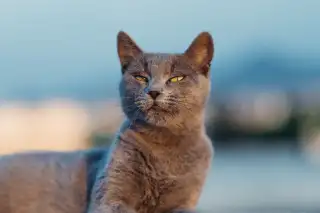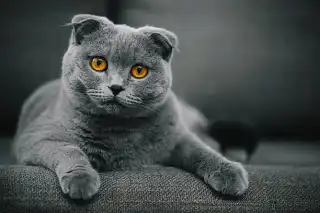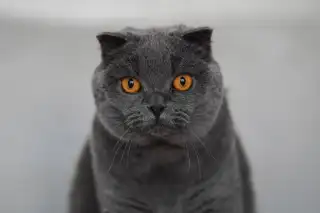
There’s something almost unfair about how good-looking the Russian Blue is. That plush double coat shimmering silver-blue under the light, those vivid green eyes that seem to glow, and that faint, permanent “smile” etched across the muzzle — it all adds up to a cat that could easily coast on looks alone. But spend a week with one, and you’ll realize the appearance is almost the least interesting thing about them.
The Russian Blue is one of those rare breeds that surprises you. Quietly devoted, intellectually curious, and surprisingly sensitive — these cats read a room better than most people do. They’re not lap cats in the traditional, velcro-to-you sense, but they are deeply bonded animals who will follow their chosen person from kitchen to bathroom to home office without making a sound. If you’ve ever wanted a cat who genuinely gets you without constantly demanding your attention, this might be it.
This guide covers everything — history, temperament, health, pricing, grooming — written from the perspective of someone who has spent real time with this breed, not just catalogued facts from a breed database.
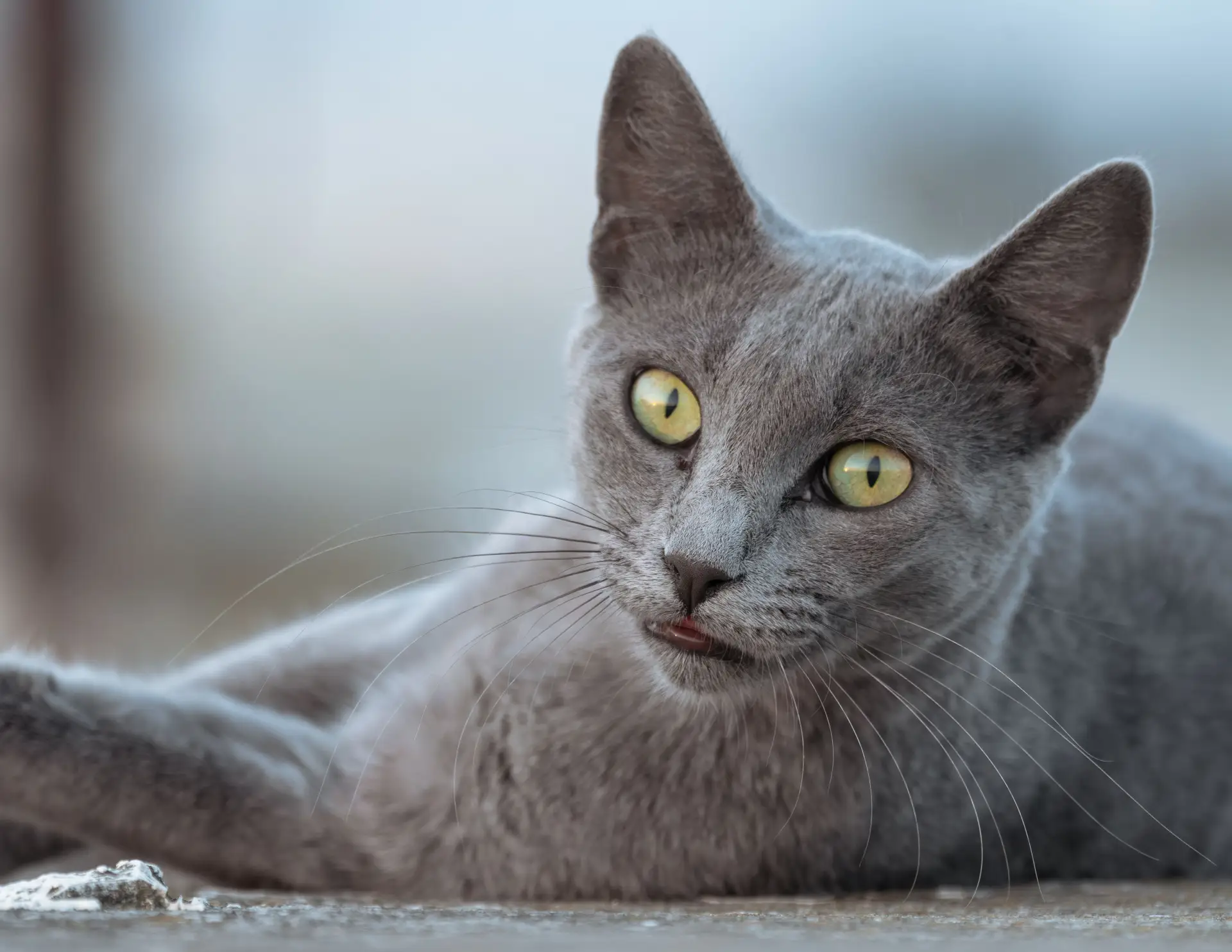
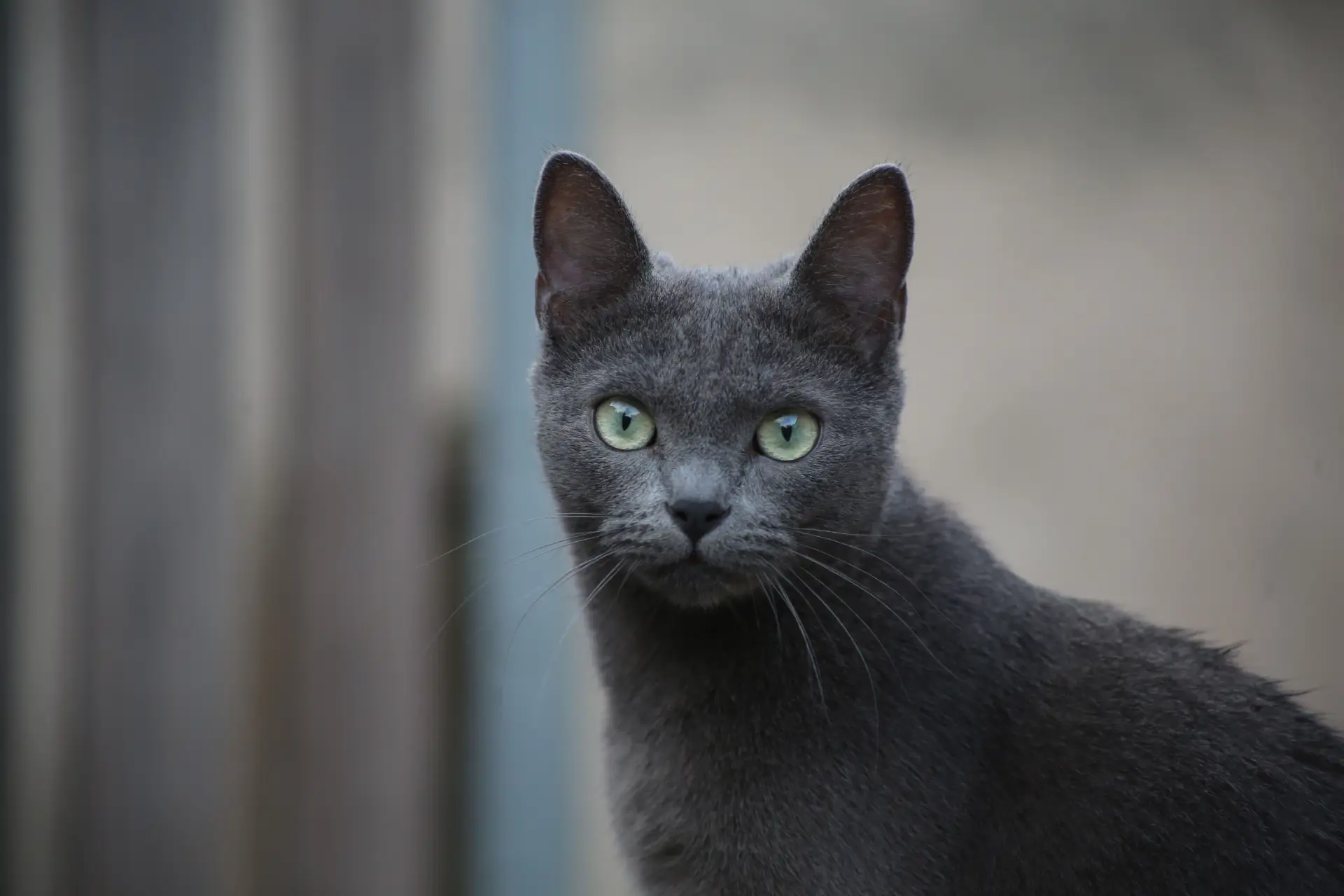 A classic Russian Blue showing off that signature plush double coat and intense emerald gaze.
Key Takeaways
- Hypoallergenic-friendly, but not 100% allergen-free. Russian Blues produce lower levels of the Fel d 1 protein than most breeds, making them a realistic option for mild allergy sufferers — but always spend time with the breed first before committing.
- They are creatures of routine. Change their feeding time by 30 minutes and you will hear about it. Rearrange the furniture without warning and expect suspicious side-eye for a week.
- Quiet, but not silent. Russian Blues are not big talkers — they communicate through slow blinks, gentle headbutts, and the occasional soft chirp. If your Russian Blue is meowing loudly and repeatedly, something is genuinely wrong.
- They bond deeply with one or two people. Don’t expect a party cat. Russian Blues are selective about their affection, which makes being chosen by one feel like a genuine privilege.
- Exceptionally long-lived for a cat. With proper care, 15–20 years is genuinely achievable. This is a long-term relationship.
- They have a memory like an elephant. They remember who startled them, who fed them late, and who their favorite person is — often for years.
Quick Overview
| Trait | Detail |
|---|---|
| Origin | Arkhangelsk (Archangel), Russia — believed to have arrived in Europe via sailors in the 1860s. |
| Size | Medium-sized cat with a lean, elegant build that’s more muscular than it looks under that thick coat. |
| Weight | Typically 7–15 lbs, with males running noticeably larger than females. |
| Lifespan | 15–20 years, with many individuals reaching the upper end of that range in good health. |
| Coat | Dense, plush double coat that stands out from the body — almost like a beaver’s pelt in texture. |
| Color | Exclusively blue (a blue-gray tone with silver tipping on each hair), with no officially recognized color variants in traditional standards. |
| Temperament | Gentle, loyal, intelligent, and reserved around strangers — deeply affectionate with trusted family members. |
| Grooming | Surprisingly low-maintenance for such a luxurious coat; weekly brushing is usually sufficient. |
| Price | $400–$3,000 USD depending on pedigree, breeder reputation, and lineage; show-quality cats sit at the higher end. |
Origins & History
The story of the Russian Blue reads a little like a folk legend, which feels appropriate. The most widely accepted narrative places the breed’s origins in the port city of Arkhangelsk — also called Archangel — a northern Russian city sitting above the Arctic Circle. Sailors working the trade routes between Arkhangelsk and Western Europe supposedly brought these cats aboard ships, both for companionship and for the deeply practical purpose of keeping rodents out of the cargo holds.
By the 1860s, these “Archangel cats” had made their way to England, where Victorian-era cat fanciers immediately recognized something distinctive about them. The coat, the coloring, the bearing — there was an aristocratic quality to them that made them stand out from the average dockside cat.
The first recorded cat show appearance was at Crystal Palace in London in 1875, where Russian Blues competed (somewhat controversially) in the same class as other blue-coated breeds like British Shorthairs. It wasn’t until the early 1900s that breeders began working to establish the Russian Blue as its own distinct breed.
World War II nearly ended the Russian Blue entirely. Breeding programs across Europe collapsed, and the population dwindled to critical levels. In the postwar period, breeders in Scandinavia and England worked to rebuild the breed — crossing surviving Russian Blues with Siamese cats to maintain numbers. This is actually visible in some older breed lines, where you occasionally see a slightly more elongated, angular build that hints at Siamese influence. Modern breeding programs have since worked to reestablish the original type, moving away from that angular look back toward the original robust elegance.
The Cat Fanciers’ Association (CFA) officially recognized the Russian Blue in the United States, and the breed has maintained a steady following among those who discover it — not a flashy mainstream breed, but one with a genuinely devoted fanbase.
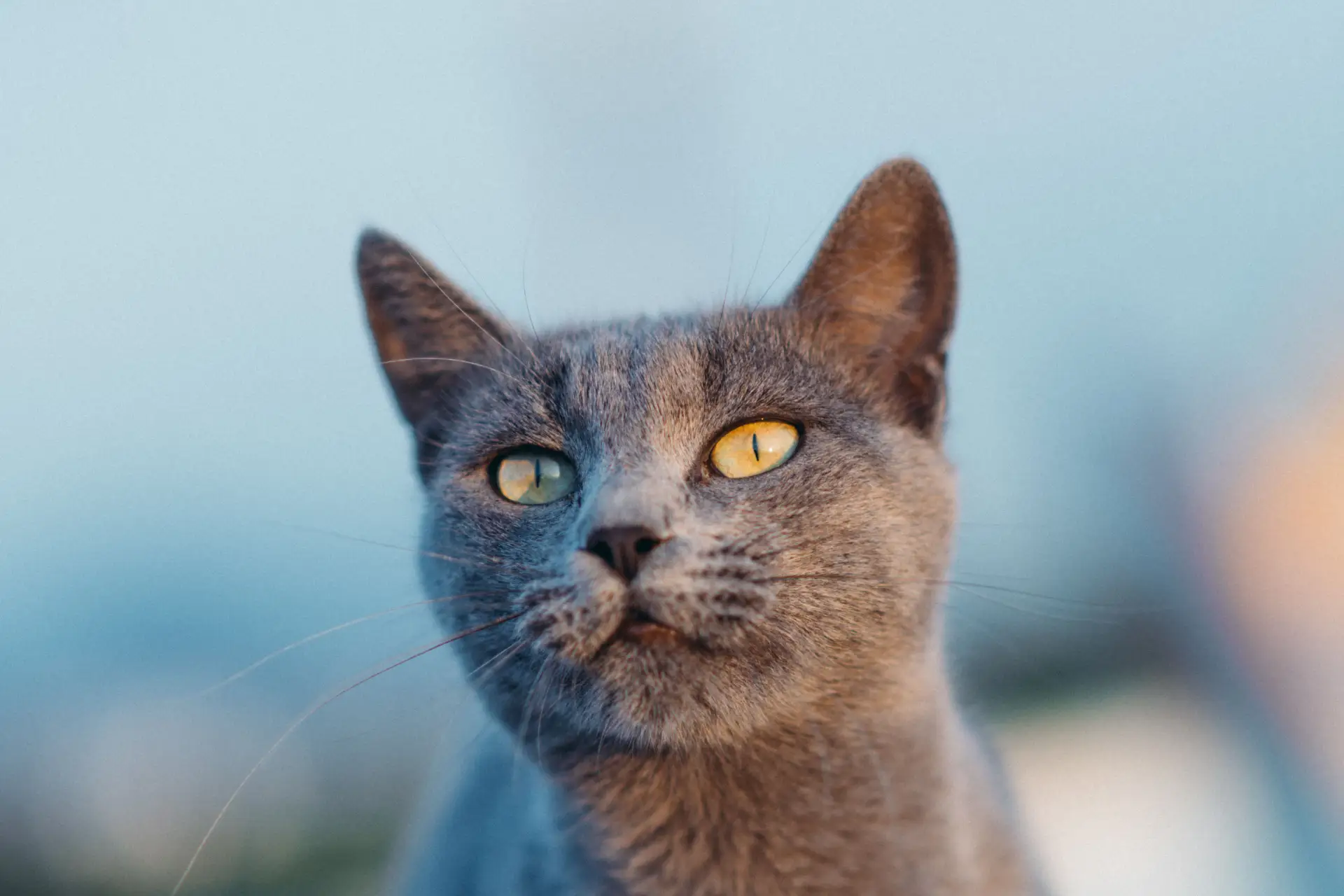
 Russian Blue kittens are born with yellow eyes — that striking emerald green develops gradually over the first year.
Appearance & Unique Physical Traits
The first thing people notice is the coat. Then the eyes. Then the smile.
The Russian Blue’s double coat is legitimately one of the most distinctive in the cat world. It’s thick enough that if you part it with your fingers, the parting holds — the coat is dense and plush rather than silky or flat. Run your hand against the grain and it stays put, almost like velvet pile. There’s a reason people compare it to a seal or beaver pelt; it’s that substantial.
Each individual hair on a Russian Blue is actually tipped with silver, which gives the entire coat a subtle luminous quality. In natural light, these cats seem to shimmer. Under certain lighting, the blue-gray coat almost looks lavender. It’s one of those things that photos never quite capture properly — you have to see it in person to understand why people fall for this breed so hard on first sight.
The eyes deserve their own paragraph. Russian Blue kittens are born with yellow eyes, and those eyes gradually shift — first to a yellow-green, then to a vivid, almost electric green by the time the cat is fully mature (usually around 12 months). The breed standard calls for a vivid green with no yellow remaining, and a good specimen has eyes that look almost artificially bright, like someone turned up the saturation.
The muzzle is where the “Mona Lisa smile” comes from. The whisker pads are quite prominent, and the way the muzzle is structured gives Russian Blues a faint, constant upward curve at the corners of the mouth. They look vaguely pleased about something, always. It’s an expression that matches their personality surprisingly well.
Structurally, the Russian Blue is a medium-sized cat — longer than they appear under all that coat, with a lean, muscular build. They’re not stocky or cobby like a British Shorthair, nor are they extreme and angular like a modern Siamese. They occupy an elegant middle ground: athletic, graceful, substantial without being heavy.
The ears are fairly large, set wide, and quite upright — they give the cat an alert, attentive expression that again mirrors the actual personality well. Russian Blues notice everything.
Coat Colors, Variations & Genetics
Here’s where things get a little technical, but stay with me — it’s genuinely interesting.
In traditional breed standards (CFA, TICA, GCCF), the Russian Blue is recognized exclusively in one color: blue. That’s the technical cat fancy term for what most people would call blue-gray, ranging from a medium blue-gray to a slightly lighter silvery tone. The silver tipping on each hair — caused by a specific pigmentation pattern — is what gives the coat that characteristic shimmer.
Genetically, the blue coat is produced by a combination of two factors: the dilute gene (which turns black pigment into blue-gray) and the pattern gene. Russian Blues are always solid-colored with no tabby striping — though in certain lighting, especially on kittens, you might think you see ghost tabby markings on the legs or forehead. These typically fade as the cat matures.
The controversial color variations:
Some breeders — particularly in Australia and parts of Europe — have developed Russian White and Russian Black variants, using the same body type and personality traits but in different coat colors. These aren’t recognized by the major American registries (CFA), but TICA does accept them in some regions, and they have their own dedicated following.
- Russian White: Pure white coat, green eyes. Visually striking, though some feel it lacks the signature look of the breed.
- Russian Black: Solid black coat, green eyes. Arguably the most underappreciated variant — a beautifully sleek cat with the same temperament as the blue.
If you’re in the US and specifically want a purebred Russian Blue for showing, stick to breeders working within CFA standards — the blue coat only. If you’re looking for a pet and the color variations interest you, they’re worth knowing about, but be aware the lineage documentation may be more variable.
One genetic trait worth mentioning: the Russian Blue is one of the breeds noted for naturally lower production of the Fel d 1 protein — the primary allergen in cat saliva that causes reactions in humans. This doesn’t make them a guaranteed safe choice for allergy sufferers, but it does make them one of the more realistic options for people with mild sensitivities.
True Temperament
Let’s address the biggest misconception first: Russian Blues are not cold or aloof. That reputation comes from how they behave around strangers, which is genuinely reserved — a Russian Blue at a party full of new people will disappear under a bed and not come out until the guests leave. This is not unfriendliness; it’s discernment.
With their people? Completely different story.
A Russian Blue who has decided you’re their person will follow you through the house like a quiet shadow. They won’t demand attention loudly or knock things off shelves for entertainment (usually). Instead, they’ll position themselves within a few feet of you — on the arm of the couch while you watch TV, on the bathmat while you shower, under your desk chair while you work. Present, but not pushy.
They are genuinely intelligent animals — the kind of cat that figures out how doors work and then stares at you waiting to see if you noticed. They learn routines quickly, and they hold you to those routines. Feeding time is sacred. If you’re five minutes late, expect to find your Russian Blue sitting directly in front of the food bowl, making deliberate eye contact. Not meowing — just staring. The pressure is immense.
That said, they’re not high-energy chaos machines. Russian Blues enjoy play, and they should have interactive sessions daily, but they’re equally happy spending an afternoon watching birds from a window or napping in a sunbeam. They hit a comfortable middle ground: engaged enough to be interesting, calm enough to be easy to live with.
The sensitivity is real and worth taking seriously. Russian Blues pick up on your emotional state — if you’re stressed or upset, they will often come and sit near you without being prompted. But this sensitivity also means they don’t thrive in loud, chaotic households. Frequent parties, unpredictable schedules, and constant new people coming through the door will stress a Russian Blue out, often manifesting as hiding or over-grooming.
They’re good with gentle children and can coexist peacefully with calm dogs, especially when introduced properly. The key word in both cases is calm. A toddler who screams and grabs, or a hyperactive dog who wants to chase — these will send a Russian Blue into a permanent state of defensive hiding. Match the energy of your household to the energy of the breed.
Daily Care & Grooming
For such an opulent-looking coat, the Russian Blue is genuinely one of the easier cats to maintain. That dense double coat doesn’t mat the way a longhair’s does — it sheds, yes, but in a controlled way, and weekly brushing with a good slicker brush or rubber grooming mitt is enough to keep things looking sharp.
Seasonal shedding is a real thing twice a year (spring and fall), and during those periods you’ll want to bump up to twice-weekly brushing to keep the loose undercoat from carpeting your furniture. Bathing is rarely necessary — like most cats, Russian Blues are meticulous self-groomers — but if you do need to bathe one (vet’s orders, or a truly spectacular mess), they handle it better than many breeds.
Diet is where Russian Blues require some thoughtful management. This breed has a tendency toward weight gain if free-fed on dry kibble. They’ll eat and eat and then look at you with those green eyes when the bowl is empty, because apparently the bowl being empty is your fault and also a personal attack. Measured meals twice a day — a high-quality protein-forward food, ideally wet food or a wet/dry mix — keeps them at a healthy weight. Obesity is a genuine health risk for this breed and contributes to joint issues and diabetes down the line.
Exercise and enrichment should not be overlooked. These are intelligent animals, and an under-stimulated Russian Blue is a cat who will find their own entertainment — and you probably won’t love their choices. Daily interactive play sessions (wand toys, feather toys, puzzle feeders) are important. Cat trees near windows are appreciated. If you’re away for long hours regularly, consider whether a second cat might be a good companion — though Russian Blues can be somewhat selective about feline roommates and do best with calm, compatible personalities.
Litter box: Keep it clean. This sounds obvious but Russian Blues are particularly fastidious and will absolutely refuse to use a dirty box. If you suddenly notice your cat is eliminating outside the box, clean the litter box first before assuming a health problem.
Dental care is one of the most commonly neglected aspects of cat ownership across all breeds. Start brushing teeth — or at minimum providing dental treats and toys — early. Dental disease is one of the leading causes of health problems in domestic cats.
Health Profile & Lifespan Data
Note: This section discusses health considerations. Please consult your veterinarian for personalized advice.
The Russian Blue is generally a robust, healthy breed without the extreme genetic health issues that affect some purpose-bred cats. Part of this is historical — the breed developed naturally over centuries rather than being engineered for exaggerated traits, so the structure is fundamentally sound.
Typical lifespan: 15–20 years. This is not marketing copy — it’s genuinely achievable. Many Russian Blue owners report their cats living healthy, active lives well into their late teens, with some reaching 20+. The key factors are diet, regular veterinary care, and keeping them indoors.
Known health considerations:
- Bladder stones and urinary issues: Russian Blues have some elevated genetic predisposition to urinary tract issues compared to the general cat population. A diet that keeps them well-hydrated (wet food helps significantly here) and maintaining a healthy weight reduces this risk considerably.
- Obesity: As mentioned above, this breed will overeat if given the opportunity. Obesity cascades into other problems — joint stress, diabetes, hepatic lipidosis — so weight management is genuinely important, not just cosmetic.
- Dental disease: Common across all cats, but worth noting since Russian Blues are long-lived and dental problems accumulate over time.
- Progressive Retinal Atrophy (PRA): Documented in some lines. A genetic test is available, and responsible breeders screen for this. Ask your breeder specifically about PRA testing.
Genetic testing is one of the best questions to ask any Russian Blue breeder. Reputable breeders test breeding pairs for known genetic conditions and can provide documentation. If a breeder waves off your health questions or can’t provide health records, walk away.
Annual vet check-ups, keeping vaccines current, and maintaining parasite prevention (even for indoor cats) covers the basics. Russian Blues are not high-maintenance from a health perspective, but their longevity means you’re signing up for decades of regular care — plan accordingly.
⚠️ Health Disclaimer: This information is for educational purposes only and is not a substitute for professional veterinary advice. Always consult a licensed veterinarian for diagnosis, treatment, and health decisions regarding your cat.
Rarity & Pricing in the US
The Russian Blue sits in an interesting spot in the American cat market: well-known enough that most people recognize the name, but rare enough that finding a truly reputable breeder requires genuine effort. They’re not as obscure as some breeds (Chartreux, LaPerm), but they’re also not remotely as mass-produced as Maine Coons or Bengals.
Pricing breakdown:
- Pet-quality kittens from reputable breeders: $400–$1,500. This range gets you a healthy, well-socialized kitten with proper health testing, vaccinations, and usually a spay/neuter agreement.
- Show or breeding quality: $1,500–$3,000+. These kittens have exceptional conformation, clear pedigrees, and are intended for the show ring or carefully managed breeding programs.
- Red flags in pricing: A “Russian Blue” listed for $150–$300 on Craigslist or Facebook Marketplace is almost certainly not a purebred Russian Blue. At that price point, you’re likely looking at a blue-coated mixed breed — which can be a wonderful cat, but it’s not what you think you’re buying. The risk isn’t just breed accuracy; backyard breeders and kitten mills skip the health testing that protects you from significant vet bills down the road.
Finding a reputable breeder:
The CFA and TICA both maintain breeder referral lists on their websites — this is your best starting point. The Russian Blue Breeder Directory maintained by the Russian Blue Breeders Association is also a useful resource. Expect a wait list; good breeders typically don’t have kittens available on demand, and a short wait (3–6 months) is completely normal and actually a positive sign that the breeder isn’t over-producing.
Adoption:
Adult Russian Blues do occasionally come up in breed-specific rescues and general shelters, usually when owners surrender due to life changes. Organizations like Petfinder allow you to filter by breed, and it’s worth checking periodically if adoption is your preference. Adult Russian Blues adapt to new homes more readily than their reputation for sensitivity might suggest — especially if the new home is calm and patient.
Frequently Asked Questions About Russian Blue Cat
Are Russian Blue cats good for people with allergies?
This is the most common question, and the answer requires some nuance. Russian Blues produce lower levels of the Fel d 1 protein — the primary allergen found in cat saliva — than most other breeds. This makes them genuinely more tolerable for mild to moderate allergy sufferers. However, they are not hypoallergenic in the strict sense; no cat is. If you have serious cat allergies, spend extended time with a Russian Blue before committing. Most allergy-sensitive owners who do well with this breed report minimal or manageable symptoms, but individual responses vary.
How long do Russian Blue cats live?
With proper care, indoor living, and regular veterinary attention, 15–20 years is a realistic expectation. Many Russian Blue owners report their cats living healthy, active lives well past 15. This is one of the longer-lived domestic cat breeds, which is wonderful — but it also means you’re making a significant long-term commitment when you bring one home.
Are Russian Blue cats friendly with strangers?
Not initially, no. Russian Blues are classically reserved around new people and will often disappear when guests arrive. This is breed-typical behavior and not a sign of a poorly socialized cat. Given time, they’ll typically emerge and observe from a cautious distance. Forcing interaction never helps — the best approach is to let the cat set the pace. Some Russian Blues warm up to regular visitors over months; others maintain a polite but distant relationship with anyone who isn’t their core family.
Do Russian Blue cats shed a lot?
Moderate shedding year-round with heavier shedding twice annually during seasonal coat changes. The double coat sheds, but the nature of the coat means it doesn’t cling to fabric as aggressively as some single-coated breeds. Weekly brushing manages the shedding well for most of the year; during spring and fall blow-outs, increase to twice weekly. A good rubber grooming mitt or slicker brush is your best tool.
Are Russian Blues good apartment cats?
Yes, genuinely well-suited to apartment living. They’re not overly vocal, they don’t require outdoor access to be happy, and their activity level is moderate. The key is enrichment — a window perch for bird-watching, a good cat tree, and daily interactive play sessions matter more than square footage. A stimulated Russian Blue in a small apartment is far happier than a bored one in a large house.
Can Russian Blue cats be left alone during the day?
They handle solitude better than some highly social breeds, but they are bonded animals and shouldn’t be left alone for excessive periods regularly. If you work standard office hours, a Russian Blue can manage — but they should have enrichment available (puzzle toys, window access, something to watch) and genuine interaction when you’re home. If you’re regularly away 10+ hours a day, consider whether a second compatible cat might prevent loneliness.
What’s the difference between a Russian Blue and a Chartreux or British Shorthair?
All three are blue-coated cats and are frequently confused. The Chartreux is French, has distinctive orange/copper eyes (not green), and a more muscular, cobby build. The British Shorthair is stockier, more rounded, and comes in many colors — blue is just one option. The Russian Blue is the leanest and most elegant of the three, has exclusively green eyes in adulthood, and has that distinctive silver-tipped coat shimmer. Up close, the differences are obvious; in photos, it takes a trained eye.
How much does a Russian Blue cat cost?
From a reputable breeder, expect to pay $400–$3,000 depending on lineage and whether you’re looking for a pet-quality or show-quality kitten. The wide range reflects real differences in breeder reputation, health testing rigor, and pedigree clarity. Adoption from rescues is also possible and typically costs $75–$200. Be very cautious about low-cost listings on casual marketplaces — the probability of getting an actual purebred with proper health documentation at those prices is very low.
Are Russian Blue cats vocal?
They are quiet cats. Not silent — they communicate with soft chirps, trills, and occasional gentle meows — but they are emphatically not in the same category as Siamese or Bengal cats in terms of vocalization. A Russian Blue who is suddenly meowing loudly and frequently is usually trying to tell you something specific: the water bowl is empty, they’re unwell, or their routine has been disrupted. Pay attention to changes in their baseline vocal behavior; it’s meaningful.
How do I find a reputable Russian Blue breeder?
Start with the CFA or TICA breeder referral directories — both organizations maintain lists of registered breeders who agree to ethical breeding standards. The Russian Blue Breeders Association is another resource. When you find a breeder, ask specifically about health testing protocols (PRA screening, general genetic panels), whether kittens are socialized with humans from early age, what vaccinations are included, and whether they offer a health guarantee. A reputable breeder will ask you questions too — about your living situation, experience with cats, and home environment. That screening is a good sign, not an annoyance.
The Russian Blue is not the right cat for everyone — and that’s actually part of what makes the breed so interesting. They’re not people-pleasers in the indiscriminate way some pets are. But if you have the right household (calm, consistent, genuinely present), and the patience to earn their trust, what you get in return is something genuinely special: a deeply loyal, quietly affectionate, and remarkably long-lived companion who will show up next to you every single day, without fanfare, for fifteen or twenty years. That’s a pretty extraordinary deal.