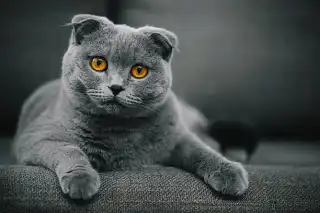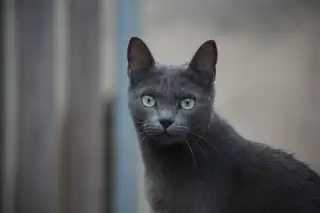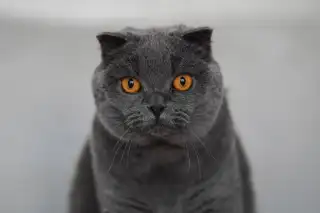
There’s something almost mythological about the first time you lock eyes with a Chartreux cat. That dense, blue-grey coat. Those luminous copper or gold eyes. The expression that seems to say, “I’ve been watching you for quite some time, and I’ve decided you’re acceptable.” Unlike breeds that demand your attention the moment you walk through the door, the Chartreux operates on its own quiet timeline — and somehow, that makes you want to earn their affection even more.
This is a breed that has been turning heads — and winning hearts — for centuries. Not through flashy markings or wild personality extremes, but through a rare combination of calm intelligence, deep loyalty, and a presence that feels almost ancient. If you’re researching the Chartreux cat because you want something between a dog-like companion and a perfectly self-sufficient feline, you might have just found your match.
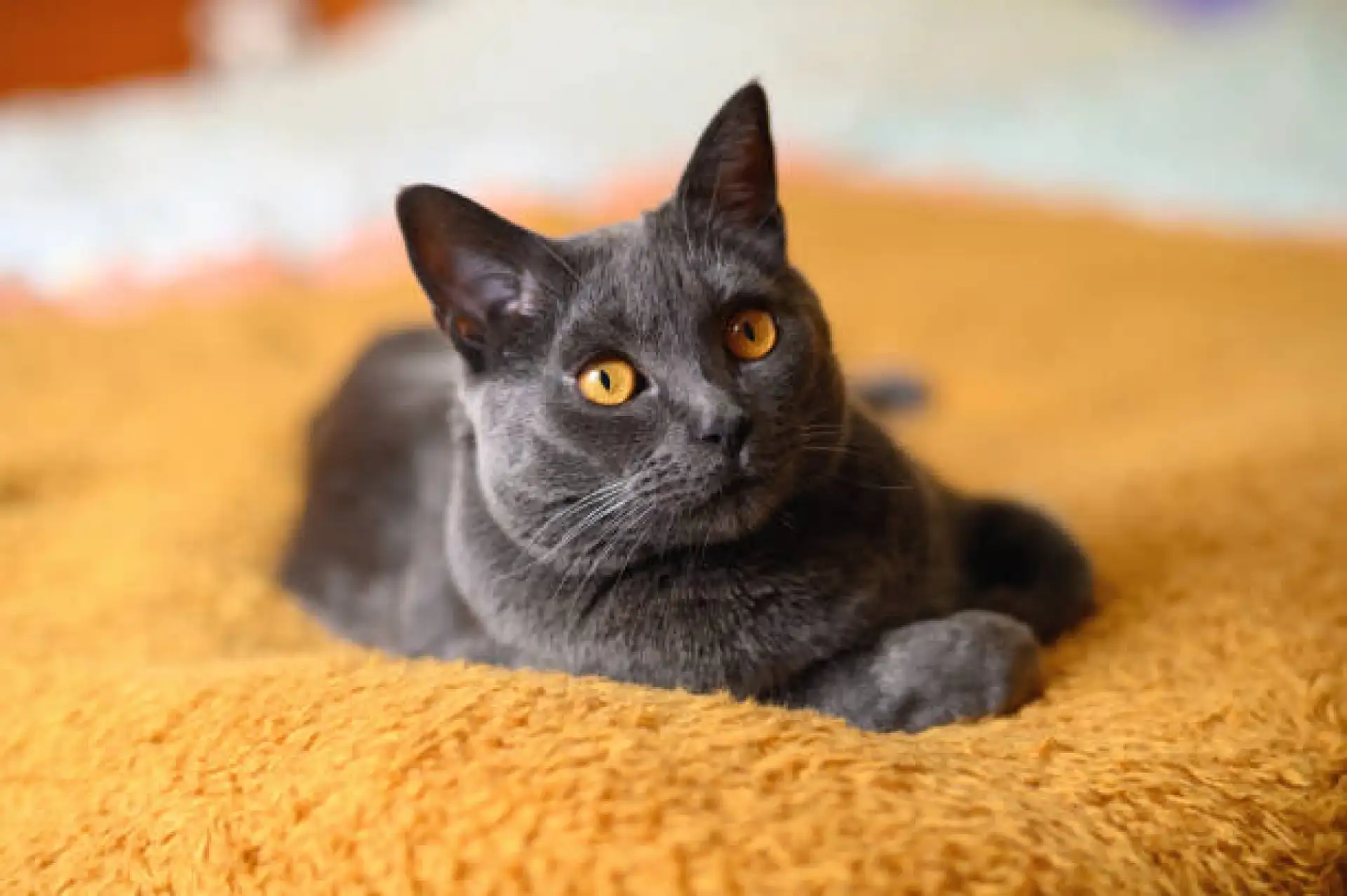
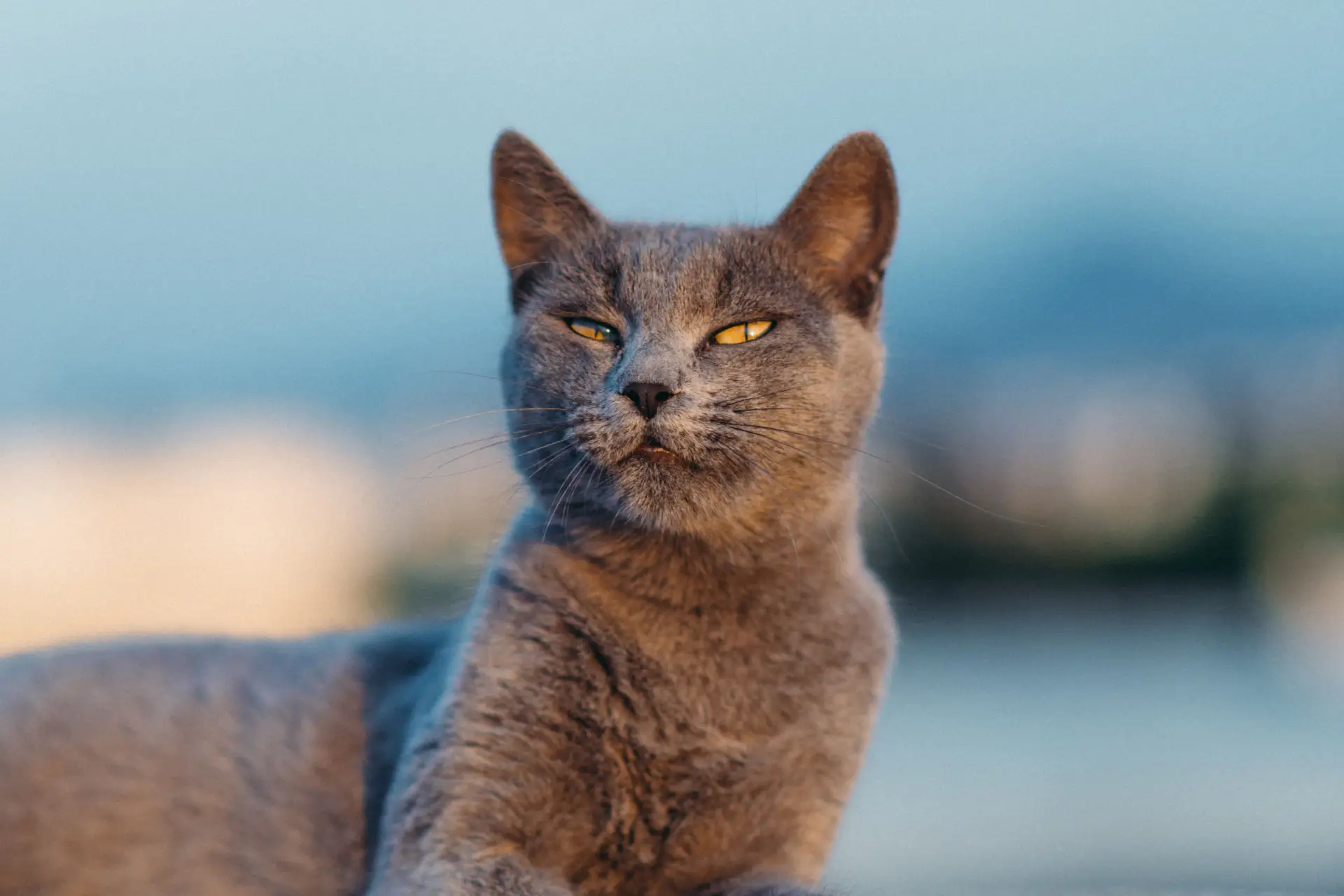 The Chartreux’s signature blue coat and amber eyes make it one of the most visually striking cat breeds in the world.
Key Takeaways
- The Chartreux is one of the oldest natural cat breeds in the world, with roots tracing back to medieval France — possibly even earlier.
- Their “smile” is real — the structure of their jaw and muzzle gives them a permanently cheerful expression that matches their gentle, good-humored nature.
- They’re quiet but not cold. The Chartreux rarely vocalizes, but they follow their favorite people from room to room like a loyal shadow.
- That coat is deceptively easy to maintain. Despite its thick, woolly appearance, the Chartreux doesn’t require as much grooming as you’d expect — though there is a shedding season that’ll test your vacuum cleaner.
- They’re genuinely rare in the United States. Finding a reputable Chartreux breeder takes patience, and kittens often come with waiting lists.
- Robust but not immune. The Chartreux is generally a healthy breed, but they have a known predisposition to a specific hereditary muscle condition that every prospective owner should know about.
Quick Overview
| Trait | Detail |
|---|---|
| Origin | France, with possible roots in ancient Middle Eastern or Syrian cats brought to Europe by Crusaders |
| Size | Medium to large, with a notably robust and muscular build |
| Weight | Males: 10–16 lbs; Females: 6–11 lbs |
| Lifespan | 12–15 years, with many reaching their mid-teens in good health |
| Coat | Dense, woolly double coat with a naturally water-resistant texture |
| Color | Exclusively blue-grey, ranging from ash to slate; no other colors are recognized in the breed standard |
| Temperament | Calm, observant, affectionate, quietly devoted, and surprisingly playful |
| Grooming | Weekly brushing is usually sufficient; avoid over-combing as it can damage the woolly texture |
| Price | $1,500–$2,500 USD from reputable breeders; rare in shelters but not impossible to find |
From Monastery Walls to Your Living Room: The Ancient History of the Chartreux Cat
The story of the Chartreux cat reads like a historical novel — part legend, part documented fact, and entirely fascinating.
The most enduring origin story connects the Chartreux to the Carthusian monks of the Grande Chartreuse monastery in the French Alps. According to this tale, the monks kept these blue cats to control rodents in their mountain retreat, and the breed’s calm, contemplative nature was supposedly shaped by centuries of quiet monastic life. Romantic as that sounds, historians have noted that documented evidence directly linking the monks to the breed is thin. What we do know is that 18th-century French naturalists, including the famous Buffon, described a type of blue domestic cat they called “le chat des Chartreux” — suggesting the name and the cat were already well established in French culture by then.
What’s more likely is that the ancestors of today’s Chartreux arrived in Europe via trade routes from the Middle East, possibly brought back by merchants or crusaders. Natural populations of these hardy blue cats reportedly lived in the port towns and wild areas of France, where their thick, water-resistant coats were perfectly suited to cold, damp climates.
The breed nearly disappeared after World War II. Populations were devastated, and French breeders had to work carefully — and controversially — with British Blue and Persian bloodlines to rebuild numbers. This is why early breed standards in different countries occasionally blurred the lines between the Chartreux and the British Shorthair. The Cat Fanciers’ Association (CFA) began recognizing the Chartreux as a distinct breed in 1987, cementing its separate identity once and for all.
Today, the Chartreux remains the unofficial feline ambassador of France. French President Charles de Gaulle famously kept one, and the breed has appeared in the works of authors like Colette and Michel Houellebecq. There’s a reason the French are protective of this breed — it feels woven into the cultural fabric of the country.
Even as kittens, Chartreux cats display that characteristic quiet curiosity — always watching, always processing.
Built Like a Brick House, Moves Like a Dancer: The Chartreux’s Distinctive Look
The Chartreux has a physical presence that’s genuinely hard to describe until you’ve seen one in person. The official breed standard calls them “primitive” in build — meaning they’re stocky, broad-shouldered, and deeply muscular in a way that feels more ancient and utilitarian than refined. And yet, they’re placed on surprisingly fine-boned, elegant legs. Breeders sometimes joke that the Chartreux looks like a potato balanced on toothpicks — which sounds unflattering until you see how gracefully they actually move.
Let’s break down what makes a Chartreux look like a Chartreux:
The Head: Broad and rounded, with full cheeks and a narrowing toward the muzzle that creates that signature “smiling” expression. The nose is straight and relatively short, and the overall face has a sweet, open quality that’s instantly recognizable.
The Eyes: This is where the Chartreux stops you cold. Large, rounded, and set slightly apart, the eyes range from gold to deep copper — the richer and more vivid the color, the better from a show standard perspective. Kittens are born with grey-blue eyes that slowly warm into amber as they mature, which is one of the more magical things to watch happen over the first year of life.
The Coat: Medium-short, incredibly dense, and woolly in texture — think of it less like a typical cat’s coat and more like a sheep’s fleece that happens to be on a cat. It has a natural break or “loft” that occurs when the cat moves, which is a defining characteristic in show judging. This coat developed for harsh outdoor conditions, which is why it has that slight water resistance.
The Body: Males are substantially larger than females and can take up to four or five years to fully mature physically. An adult male Chartreux in peak condition is an impressive animal — broad-chested, powerful, and solid without looking overweight.
Color: Exclusively blue-grey. No exceptions. No tabby markings, no patches, no white. The shade can range from pale ash to deep slate, but it’s always that cool, silvery-blue tone that gives the breed its mysterious, almost ethereal quality.
The Only Color That Matters: Chartreux Cat Coat Color, Genetics, and That Signature Blue
Here’s a fun genetic rabbit hole for you: the Chartreux’s iconic blue coat comes from a dilution gene. The “blue” color in cats is actually a diluted version of black — a dense black pigmentation that, when affected by the dilution gene (dd), spreads the pigment granules unevenly through each hair shaft, creating that characteristic grey-blue appearance.
Every single Chartreux cat carries two copies of this dilution gene (they’re homozygous for it), which is why blue is the only accepted color in the breed standard. There’s no “surprise tabby” or “rare white Chartreux” — if you see one advertised that way, something is off with the breeding.
Within that blue-grey spectrum, there’s actually quite a bit of visual variation:
- Ash blue — a very pale, almost silvery tone, often seen in younger cats and those with lighter pigmentation
- Mid-blue — the “classic” Chartreux look that most people picture; a clear, medium grey-blue
- Slate blue — deeper and darker, sometimes with a slightly warmer undertone; more common in males with heavy musculature
The coat tips often have a slight silver sheen, which is what gives a healthy Chartreux that almost iridescent quality in natural light. When you run your hand against the grain of the coat, the woolly texture becomes immediately obvious — it springs back rather than lying flat the way a typical shorthair coat does.
One thing worth noting for prospective owners: Chartreux kittens are sometimes born with faint ghost tabby markings that are completely normal and disappear as the coat matures. If you’re buying a kitten and notice some subtle striping, don’t panic — it’s not a breed fault, just developmental pigmentation that fades with age.
The Chartreux Personality: Not Aloof, Just Thoughtful
There’s a persistent myth about the Chartreux that I want to address head-on: they are not cold, standoffish, or “low-affection” cats. That characterization comes from comparing them to breeds that are loud and demonstrative. The Chartreux expresses love differently — and once you understand their language, you’ll realize how deeply bonded they actually become.
The “velcro shadow” phenomenon. Chartreux cats pick a person — sometimes a family, but often one specific human — and they follow that person everywhere. Not in an anxious way, but with the quiet dedication of someone who genuinely enjoys your company and wants to be near you. You’ll find them in the bathroom doorway, at the edge of your desk while you work, tucked against your legs on the couch. They’re not demanding attention; they just prefer to be in the same room as you.
The voice (or lack thereof). The Chartreux is famously quiet. Some individuals barely vocalize at all, while others have a tiny, soft voice that seems almost comically small for their sturdy body. If your Chartreux is “talking” to you, pay attention — they’re not casual conversationalists, so when they do speak up, it usually means something.
Intelligence that borders on mischievous. Don’t let the calm exterior fool you. Chartreux cats are sharp, observant problem-solvers who notice everything. They’ll figure out how to open cabinet doors, where you hide the treat bag, and exactly which household routines can be gently disrupted for entertainment. They play with genuine focus — watching a Chartreux hunt a feather wand is like watching a small, very intense athlete.
Adaptability and sensitivity. One of the Chartreux’s genuinely underrated qualities is how well they adapt to different living situations. They’re fine in apartments as long as they have enrichment and human interaction. They’re generally good with other pets and respectful children. And they have an emotional perceptiveness that longtime owners often describe as “reading the room” — if you’re stressed or sad, don’t be surprised if your Chartreux quietly appears and settles next to you without being asked.
The honest caveat. They don’t love being picked up and carried around. They’ll tolerate it from their person, but they’re not lap cats in the traditional sense — they prefer to sit next to you rather than on you. And they can be reserved with strangers initially, requiring a few minutes to assess before they’ll approach. If a guest tries to force interaction, the Chartreux will simply… leave. They have excellent boundaries.
Living With a Chartreux: Real-World Care That Actually Works
Grooming: The Woolly Coat Situation
The Chartreux coat looks high-maintenance but is actually quite manageable — with one important caveat about how you groom it.
Because the texture is woolly and dense rather than silky, it mats differently than most cat coats. The good news is it doesn’t tangle easily. The tricky part is that aggressive combing or brushing can break the natural “loft” of the coat and flatten it, which looks wrong and takes time to recover. The correct approach is gentle, infrequent brushing — a wide-toothed comb or a soft slicker brush once a week works well for most of the year.
The exception is shedding season, which typically hits twice a year (spring and fall) and is… enthusiastic. During peak shedding, you’ll want to brush two to three times a week and resign yourself to finding blue-grey fur on literally everything you own. A good deshedding glove works wonderfully during these periods because it removes loose undercoat without disrupting the outer coat’s structure.
Bathing is rarely necessary — that natural water resistance means the coat stays relatively clean on its own. Nails should be trimmed every two to three weeks, and ears checked monthly for wax buildup.
Diet: Feed the Muscle
The Chartreux’s muscular build isn’t accidental — it requires proper nutrition to maintain. A high-quality diet with animal protein as the primary ingredient is non-negotiable. Because they’re prone to a muscle condition (more on that in the health section), keeping them at a healthy weight and well-muscled is especially important.
Most Chartreux do well on a combination of wet and dry food. Wet food supports hydration, which benefits kidney health as they age. Free-feeding dry food all day long is tempting due to their calm, non-destructive nature, but it’s a fast track to an overweight cat — portion control matters.
Exercise and Enrichment
For a breed that comes across as philosophical and unhurried, the Chartreux has genuine bursts of athletic energy. Twice-daily play sessions of 10–15 minutes will keep them mentally and physically sharp. They love puzzle feeders, interactive wands, and toys that require them to strategize — anything that engages that sharp mind alongside the body.
One thing that Chartreux cats respond to particularly well is vertical space. Cat trees, shelves, and window perches give them vantage points to observe their environment, which directly feeds their naturally watchful nature.
The Health Realities of Owning a Chartreux Cat
Note: This section discusses health considerations. Please consult your veterinarian for personalized advice.
The Chartreux is generally considered a robust, naturally healthy breed — and that reputation is largely deserved. But there are specific health considerations every owner should understand before bringing one home.
Hypertrophic Cardiomyopathy (HCM): The most common heart disease in cats overall, HCM affects Chartreux at roughly the same rate as the general cat population. Regular cardiac screenings from a veterinary cardiologist (recommended every one to two years for adults) are wise, especially as they age.
Luxating Patella: This is the hereditary condition most specifically associated with the Chartreux. The kneecap (patella) can slip out of position, causing anything from mild intermittent lameness to significant mobility issues depending on severity. Reputable breeders screen for this condition in their breeding cats, and you should always ask for documentation of patella evaluations before purchasing a kitten. Mild cases often require no intervention; severe cases may need surgical correction.
Polycystic Kidney Disease (PKD): Less common in Chartreux than in some other breeds (notably Persians), but worth asking breeders about genetic testing status.
Dental Health: Like most cats, Chartreux are prone to periodontal disease. Regular tooth brushing — or at minimum, dental treats and annual professional cleanings — goes a long way.
Lifespan Expectations: A healthy, well-cared-for Chartreux typically lives between 12 and 15 years. Many make it into their mid-to-late teens. Their sturdy constitution means they often age gracefully, remaining active and engaged well into their senior years.
The most important health step you can take is choosing a breeder who performs health testing. Any responsible Chartreux breeder should be able to provide patella and cardiac screening results for the parent cats. Walk away from anyone who can’t.
⚠️ Health Disclaimer: This information is for educational purposes only and is not a substitute for professional veterinary advice. Always consult a licensed veterinarian for diagnosis, treatment, and health decisions regarding your cat.
How Rare Is the Chartreux in the US — And What Does One Actually Cost?
Let’s be honest: if you’ve decided you want a Chartreux, prepare yourself for patience. This is genuinely one of the rarer cat breeds in the United States. The number of dedicated Chartreux breeders in the country is small — estimates typically put it in the range of a few dozen active, CFA-registered breeding programs nationally — and most operate with waiting lists that can run six months to over a year.
Price Range: From a reputable, health-tested breeder, you’re typically looking at $1,500–$2,500 for a pet-quality kitten. Show-quality kittens (those bred and evaluated for competition) can run higher, sometimes reaching $3,000 or more. Be immediately suspicious of anyone offering Chartreux kittens at significantly lower prices — the economics of ethical breeding don’t allow for deep discounts, and “bargain Chartreux” often come from mills or irresponsible breeding situations.
Finding a Reputable Breeder: The Cat Fanciers’ Association (CFA) and The International Cat Association (TICA) both maintain breeder referral lists that are your best starting point. The Chartreux Club of America is another excellent resource — reaching out to established breeders, even if they have no current availability, can often lead you to referrals within the community.
Adoption and Rescue: Finding a Chartreux in a standard shelter is uncommon but not impossible. Breed-specific rescue networks exist, and occasionally purebred cats end up in general rescues due to owner circumstances. Sites like Petfinder allow you to search by breed. The wait might be long, but the cost (typically $50–$200) and the reward of giving a cat a second chance are both significant.
What to Watch For in Listings: Legitimate breeders will want to interview you as much as you’re interviewing them. They’ll ask about your living situation, experience with cats, and have a return policy. They’ll show you health certifications, allow virtual or in-person visits to see the kitten’s environment, and won’t pressure you to buy immediately. If a breeder seems purely transactional and has multiple breeds always available, keep looking.
Frequently Asked Questions About Chartreux Cats
Are Chartreux cats good for apartments?
Yes, genuinely. Their calm, adaptable temperament makes them well-suited to apartment living, as long as they have enough mental enrichment, interactive playtime, and human companionship. They’re not destructive or excessively vocal, which makes them considerate neighbors in multi-unit buildings. Vertical space (cat trees, shelves) helps a lot in smaller homes.
Do Chartreux cats get along with dogs?
More often than you’d expect. The Chartreux’s composed, unflappable nature means they’re less likely to panic in the presence of a dog than more anxious or reactive breeds. A proper, gradual introduction is still essential — but many Chartreux end up forming genuine friendships with calm, cat-respectful dogs.
Are Chartreux cats hypoallergenic?
No cat is truly hypoallergenic, and the Chartreux is no exception. They produce the Fel d 1 protein that triggers most cat allergies. However, some allergy sufferers report fewer reactions with certain breeds — results vary significantly by individual. If allergies are a concern, spend time with a Chartreux before committing.
How much do Chartreux cats shed?
Their dense woolly coat does shed, particularly during spring and fall seasonal changes. During these periods, shedding can be surprisingly heavy given the coat’s thickness. Weekly brushing year-round and more frequent grooming during shedding seasons keeps it manageable. Investing in a quality lint roller and a good vacuum is part of the Chartreux ownership experience.
Are Chartreux cats vocal?
They’re among the quieter cat breeds. Many Chartreux rarely vocalize at all, while others have a soft, small voice they use selectively. They communicate more through presence and body language than through meowing. If your Chartreux is suddenly vocalizing more than usual, it’s worth a vet check — it can signal discomfort or a health change.
How long does it take for a Chartreux to bond with a new owner?
It varies, but typically a few weeks to a couple of months for the full relationship to develop. They’re not the type to instantly leap into your lap the first day — they observe and assess first. But once they’ve decided you’re their person, the bond is remarkably deep and lasting. Patience early on pays off enormously.
Can Chartreux cats be left alone during the day?
They handle solitude better than many breeds, but they’re still social animals who need connection. If you work full-time, providing a second cat for companionship, enrichment toys, and interactive play before and after work makes a real difference. Chartreux cats left without any stimulation or company for long stretches can become bored and slightly withdrawn over time.
Are Chartreux cats good with children?
Yes, particularly with children who are taught to interact respectfully with animals. The Chartreux’s patient, non-reactive nature makes them tolerant of the unpredictability of kids. They won’t usually scratch or bite at the first provocation — they’ll simply move away. That said, very young children should always be supervised with any cat to protect both parties.
What’s the difference between a Chartreux and a British Shorthair?
This is one of the most common points of confusion, and it’s understandable — both are blue-grey, stocky cats with rounded faces. The key differences: Chartreux have longer, more fine-boned legs relative to their body; their muzzle is narrower, creating that distinctive “smile”; their eyes are rounder and more vivid in color; and their coat is woolly rather than plush. British Shorthairs also come in many colors beyond blue, while Chartreux are exclusively blue-grey.
Is the Chartreux a good first cat for someone who has never owned a cat before?
Honestly? Yes — with some research. Their forgiving, adaptable temperament and relatively straightforward care needs make them accessible for first-time owners. The main challenges are the specific grooming technique needed for that woolly coat and the importance of understanding their quiet communication style. New owners who take the time to learn those nuances tend to find the Chartreux an incredibly rewarding first experience with cats.
The Chartreux isn’t for everyone — no breed is. They’re not going to perform acrobatics for your Instagram or greet every visitor with theatrical enthusiasm. What they offer instead is something quieter and more durable: steady companionship, genuine intelligence, and a loyalty that deepens over years rather than days.
If that sounds like exactly what you’ve been looking for in a cat, you might want to get on a waiting list sooner rather than later.