There’s a reason the Persian cat has graced royal laps, appeared in James Bond films as a villain’s beloved companion, and consistently topped “most popular cat breeds” lists for over a century. One look at that impossibly flat face, those deep copper or sapphire eyes, and that cloud-like coat, and you understand. But here’s the thing nobody warns you about before you fall in love: Persians are absolutely nothing like the low-maintenance, aloof stereotype of “fancy cats.” They are velvet-soft roommates with opinions, routines, and a particular fondness for being adored.
If you’re thinking about welcoming one of these gorgeous creatures into your home, this guide covers everything — the real stuff, not just the glossy highlights.
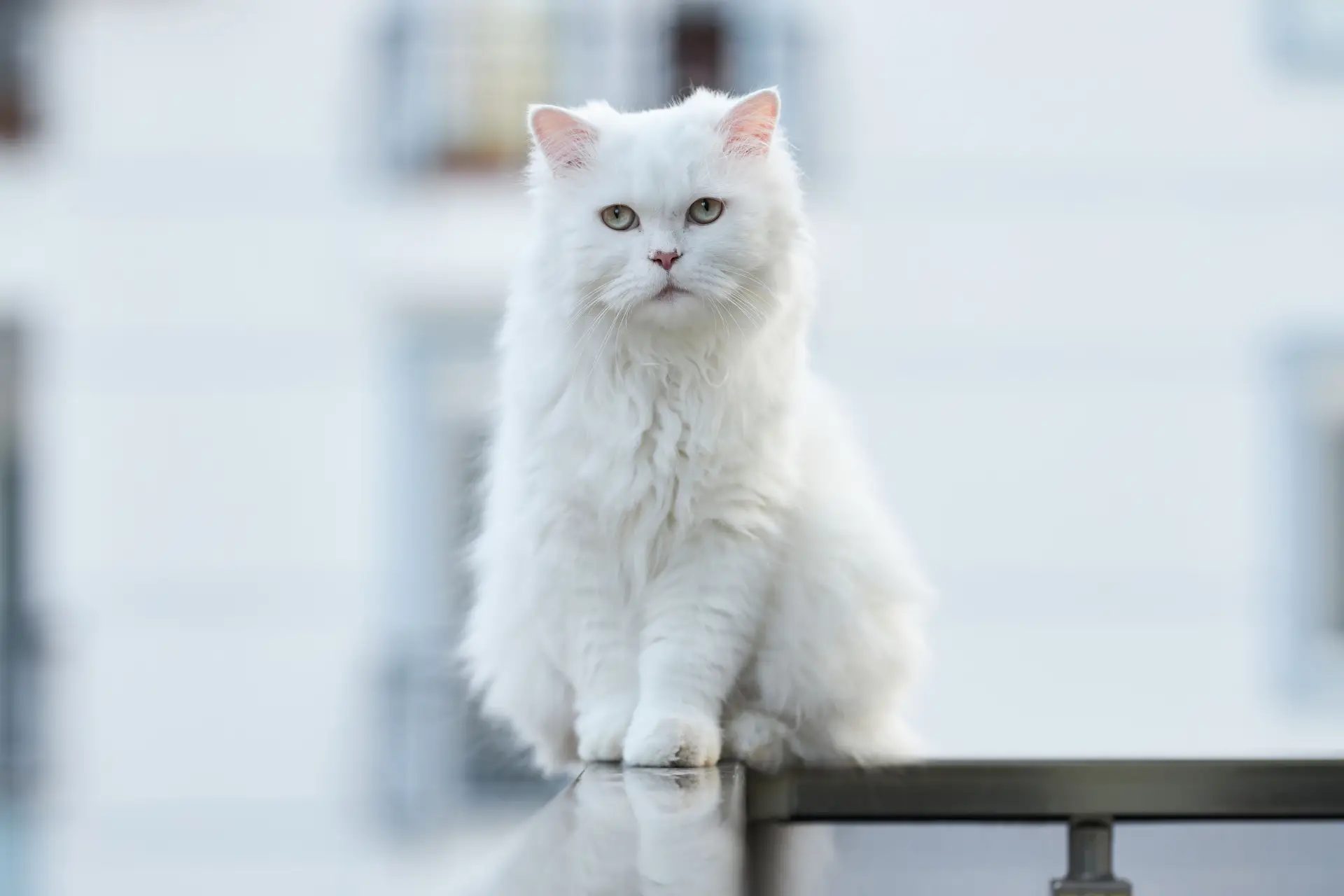 A classic white Persian cat — the living definition of feline elegance.
Key Takeaways
- Persians are indoor-only cats by nature — their flat faces (brachycephalic structure) make outdoor life genuinely risky for them, from breathing difficulties to eye vulnerability.
- Daily grooming is non-negotiable. That legendary coat mats within days if left unattended. If you’re not ready to commit 15–20 minutes daily with a comb, a Persian will be miserable — and so will you during the dematting session.
- They’re gentle and quiet, but not emotionally vacant. Persians form deep bonds with their people. They don’t demand attention loudly — they simply appear beside you and stare until you acknowledge them.
- Health screening matters enormously. Polycystic kidney disease (PKD) and hypertrophic cardiomyopathy (HCM) are real concerns in this breed. Always ask breeders for genetic testing documentation.
- They thrive in calm, predictable households. Busy homes with loud children or constantly-traveling owners aren’t ideal. Persians genuinely prefer stability.
- The price tag reflects the care behind breeding. A well-bred Persian kitten from a reputable breeder in the US typically runs $1,500–$3,500+, and that’s before food, grooming tools, and vet costs.
Quick Overview
| Trait | Detail |
|---|---|
| Origin | Persia (modern-day Iran), popularized through Europe in the 17th century |
| Size | Medium to large |
| Weight | 7–12 lbs (females typically 7–9 lbs, males 9–12 lbs) |
| Lifespan | 12–17 years with proper care |
| Coat | Long, dense, double-layered coat with a silky texture and thick undercoat |
| Color | Nearly every color and pattern exists, including solid, tabby, bicolor, and colorpoint (Himalayan) |
| Temperament | Calm, affectionate, gentle, quiet, and moderately playful |
| Grooming | High maintenance — daily combing required, professional grooming every 4–6 weeks recommended |
| Price | $1,500–$3,500+ from reputable US breeders; rescue adoption fees typically $75–$200 |
Origins & History
The Persian cat’s story is one of myth wrapped in merchant routes and aristocratic obsession.
The earliest documented records trace these long-haired cats to Persia — present-day Iran — in the 1600s, when Italian explorer Pietro della Valle is credited with bringing them to Europe around 1620. The cats he encountered in Khorasan province had flowing, silky coats unlike anything Europeans had seen in domestic cats at the time. They caused an immediate sensation.
By the time Queen Victoria of England became openly devoted to her blue Persians in the 19th century, the breed had cemented itself as the ultimate status symbol in Western households. Early cat shows in the UK — the Crystal Palace show of 1871 being the most famous — featured Persians prominently, and breeders began the long process of selectively developing the traits we associate with the breed today: rounder heads, flatter faces, more compact bodies.
Here’s where history gets interesting — and slightly complicated. The “extreme” flat-faced Persian we see most commonly today is largely a 20th-century American development. Breeders in the US pushed the brachycephalic traits further through selective breeding, creating what’s sometimes called the “peke-face” or “ultra-type” Persian. Meanwhile, the original, slightly longer-nosed version became known as the “traditional” or “doll-face” Persian, and it quietly remained more popular in Europe.
This distinction still matters enormously when you’re choosing a kitten — more on that in the health section.
The Himalayan, which looks like a Persian wearing a Siamese’s color scheme, was developed by crossing the two breeds in the 1930s and is now recognized by most cat associations as either a separate breed or a Persian color division, depending on the registry.
Appearance & Unique Physical Traits
You can describe a Persian in five seconds to anyone who’s never seen one: imagine someone took a regular cat and gently pressed its face against a glass window, then gave it the fluffiest coat imaginable. That’s roughly it.
But the reality of a Persian’s physical presence is more nuanced and — honestly — more impressive than photos capture.
The face is the breed’s most defining feature. The skull is broad and round, with a short, snub nose set high between large, widely-spaced eyes. The “stop” (the indentation between forehead and nose) on an extreme Persian is so pronounced that, in profile, the nose appears to sit level with or even above the lower eyelid. Traditional doll-face Persians have a more moderate stop and a slightly longer muzzle — a difference that has significant breathing implications.
The eyes deserve special mention. Round, large, and set wide apart, Persian eyes come in copper, blue, green, blue-green, odd-eyed (one of each), or hazel depending on coat color. White Persians with blue eyes can carry the gene for congenital deafness — something responsible breeders test for and disclose.
The body is cobby — which is the cat fancy term for short, stocky, and broad. Persians have short, thick necks, wide chests, and short, sturdy legs. They look like they were designed for maximum comfort, not athleticism, which is also pretty accurate to their personality.
The coat is the full spectacle. It’s long — sometimes 4–6 inches on a fully mature cat — with a dense undercoat and a finer, silkier outer layer. Around the neck, it forms a dramatic ruff. The tail is plumed. The paws are tufted. When a Persian walks across the room, there’s a certain theatrical gravity to it.
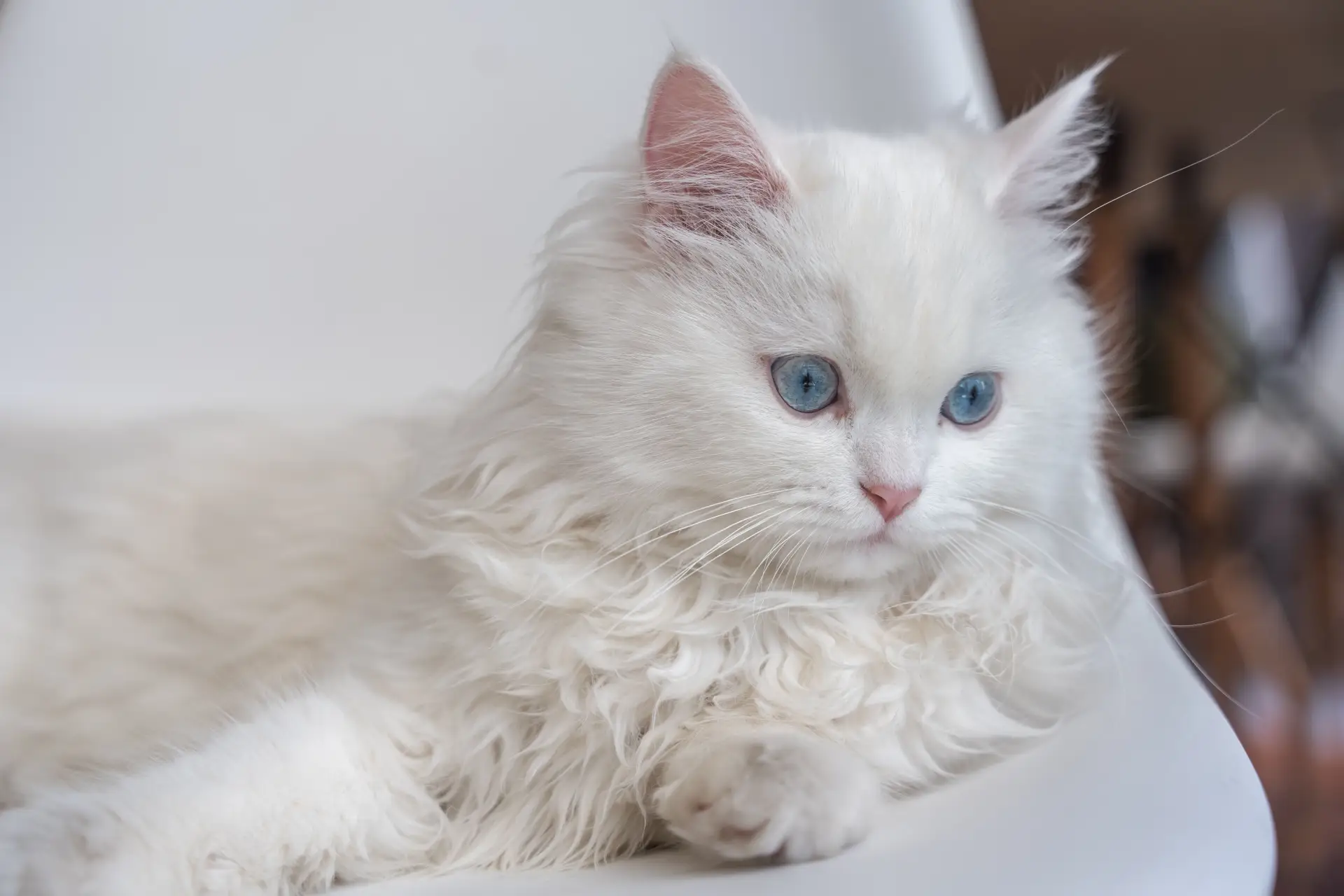 That flat face and those enormous round eyes are distinctly Persian — no other breed looks quite like this.
Coat Colors, Variations & Genetics
This is where Persian breeding becomes almost overwhelming in its variety. The Cat Fanciers’ Association (CFA) recognizes more color divisions for Persians than virtually any other breed. The unofficial count of accepted color combinations runs well over 80.
The main color divisions recognized by CFA:
- Solid: White, black, blue, red, cream, chocolate, lilac
- Silver & Golden: Chinchilla silver, shaded silver, chinchilla golden, shaded golden
- Shaded & Smoke: Shell cameo, shaded cameo, black smoke, blue smoke, and more
- Tabby: Classic tabby pattern in silver, red, brown, blue, cream, cameo, patched
- Parti-Color: Tortoiseshell, calico, blue-cream, lilac-cream
- Bi-Color: Any solid color with white
- Himalayan (Colorpoint): Seal, blue, flame, cream, tortie, and lynx points — these are Persians with Siamese-style coloring
The genetics behind Persian coat color follow standard feline color inheritance, but a few patterns are worth knowing:
White Persians carry the dominant white (W) gene, which can mask any underlying color — meaning a “white” Persian could genetically be any color. This gene is also linked to congenital deafness in cats with blue eyes. Odd-eyed white Persians (one blue, one copper eye) may be deaf on the blue-eye side.
Chinchilla silver Persians — the lightest of the silvers, with just tipping on the coat — carry the inhibitor gene (I) that blocks pigment development in most of the hair shaft. The result is that ethereal, almost glowing coat with dark tipping.
Colorpoint Persians (Himalayans) carry the cs allele for point restriction, the same gene responsible for Siamese coloring. The points develop in cooler parts of the body — face, ears, paws, and tail.
For most pet owners, coat color is purely aesthetic. But if you’re considering showing your Persian, understanding color genetics becomes critical for predicting what a litter will produce.
True Temperament
Let’s retire the image of the Persian as an aloof, decorative cat that tolerates humans from a distance. That reputation is, at best, half-accurate.
Persians are quiet — that part is true. They’re not vocal like Siamese or Bengals. They won’t yowl for breakfast or narrate their day. But they communicate. They will place one deliberate paw on your keyboard, look directly into your eyes, and wait. They will follow you from room to room without making a sound. They will choose one person as their person and exhibit a kind of quiet, devoted loyalty that’s genuinely touching.
They’re not lap cats in the pushy, demanding way of a Ragdoll. They’re more like thoughtful companions who prefer to be near you rather than necessarily on you — though many Persians do love a good lap session once they’ve decided you’ve earned it.
What surprises most new Persian owners:
Persians have a playful streak that emerges in bursts. Don’t let the regal posture fool you — a Persian kitten is perfectly capable of losing its mind over a crinkle ball for fifteen minutes before resuming its dignified composure. Even adults will engage with wand toys and puzzle feeders, though they’ll do it at their own pace and on their own terms.
They’re genuinely sensitive animals. Raised voices, household chaos, frequent schedule changes — these things stress Persians out in ways that manifest as hiding, reduced appetite, or sometimes over-grooming. This isn’t high maintenance neurosis; it’s just who they are. They’re built for serenity.
They can be surprisingly funny. The contrast between their utterly majestic appearance and their occasional goofy behavior — a Persian sprawled flat on the floor like a deflated stuffed animal, or getting its face puffed after eating — creates an endless source of comedy.
Households with calm older children or other gentle cats tend to work well. The Persian isn’t standoffish toward kids, but it won’t appreciate tail-pulling or being carried around like a stuffed animal. Households with large, boisterous dogs require careful introductions and should ideally have retreat spaces where the Persian can decompress.
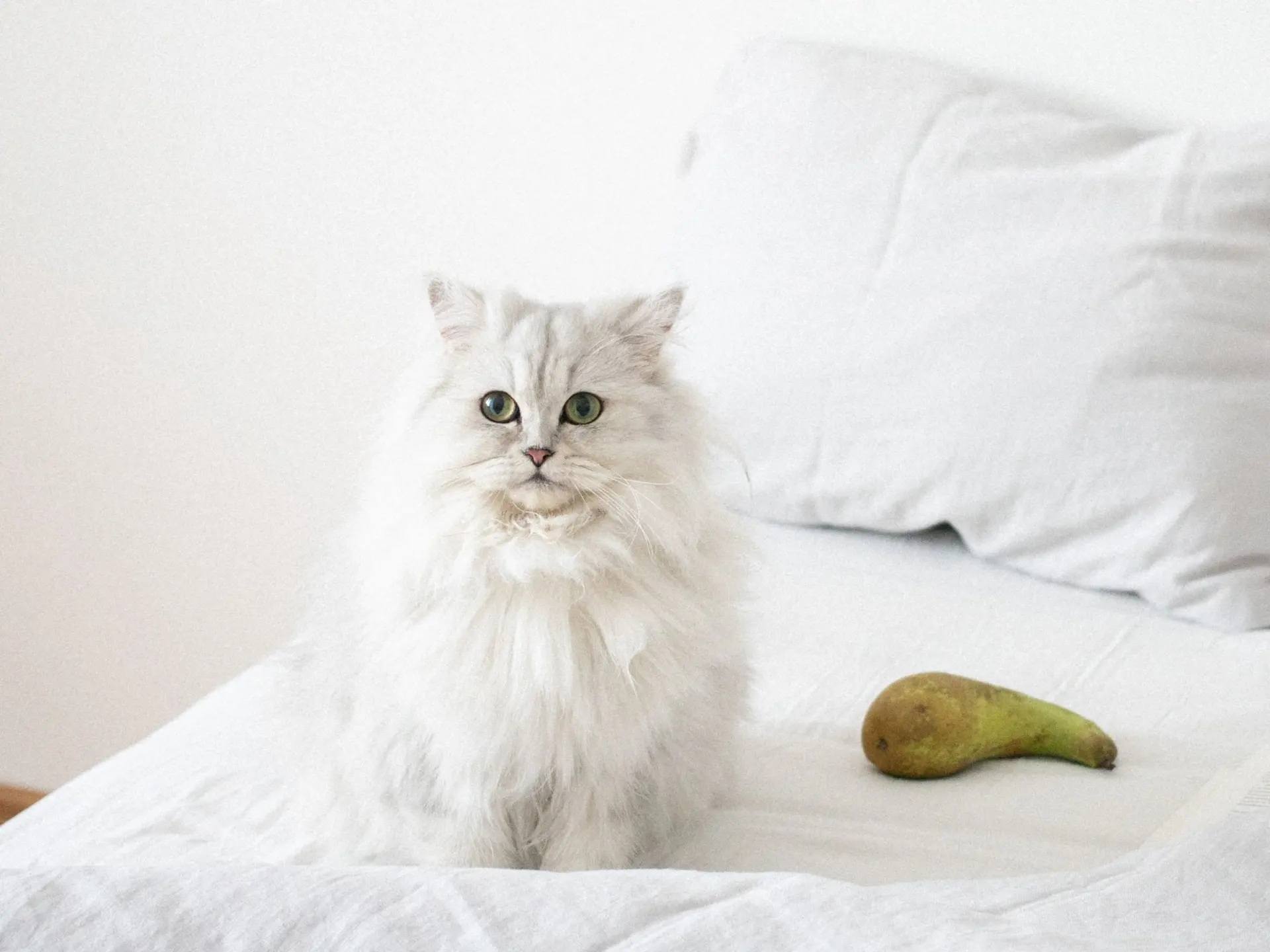 The Persian’s idea of a perfect afternoon — close to you, warm, and unhurried.
Daily Care & Grooming
If you take nothing else from this guide, take this: Persian cat ownership is a grooming commitment first, everything else second.
The Coat
That glorious coat tangles. Fast. Especially behind the ears, under the armpits (yes, cats have armpits), along the belly, and around the collar area. Left unattended for even a few days, the undercoat begins to mat, and mats pull at the skin uncomfortably. Severely matted cats sometimes need to be professionally shaved down — not painful, but deeply undignified for a breed with this level of coat pride.
Daily combing with a quality wide-toothed metal comb is the baseline. Stainless steel combs with rotating teeth (like the Chris Christensen or Andis brands) are worth every penny. Work through sections gently, checking for the early stages of tangles before they lock up. Once a week, a slicker brush helps manage loose fur. During shedding seasons (spring and fall), you’ll pull out alarming amounts of undercoat — this is normal.
Most Persian owners schedule professional grooming every 4–6 weeks for a bath, blowout, and trim. You can absolutely learn to bathe your Persian at home — many owners do — but it requires a calm, methodical approach and a cat that’s been conditioned to it from kittenhood. Persian coats don’t air-dry; they need to be blow-dried on a low heat setting while being combed through to prevent matting as they dry.
Face Cleaning
This is the part nobody’s Instagram posts show. Persians have very little drainage space between their nasal folds and their eyes, which means tear staining is a near-universal feature of the breed. That reddish-brown staining under the eyes (caused by porphyrins in the tears) isn’t a health problem by itself, but it requires daily attention. A soft, damp cloth or specific pet eye wipes wiped gently across the face folds every morning keeps buildup from accumulating and prevents skin fold infections.
Extreme Persians with very deep facial folds may need their folds cleaned twice daily in warm weather. Check with your vet to make sure there’s no skin irritation developing under the folds.
Diet
Persians don’t have unusual dietary requirements beyond any other domestic cat — high-quality protein sources, appropriate fat levels, and minimal fillers. What’s worth knowing is that their flat faces make it difficult for some individuals to eat from deep bowls or pick up dry kibble easily. Flat, wide dishes (often called “whisker-friendly” bowls) make mealtimes less frustrating.
Some Persians are prone to obesity — partially because their exercise habits are more “leisurely walk to the food bowl” than “parkour through the house.” Monitor portions carefully and don’t free-feed indefinitely.
Exercise & Enrichment
Don’t let their laid-back demeanor make you think Persians don’t need stimulation. They do — just at a lower intensity than most breeds. Interactive wand toy sessions twice a day, puzzle feeders, and window perches with bird/squirrel views keep a Persian mentally engaged. They’re not climbers by nature, but they’ll appreciate a comfortable cat tree with wide, padded platforms at lower heights.
Health Profile & Lifespan Data
Note: This section discusses health considerations. Please consult your veterinarian for personalized advice.
Persians are genuinely beautiful cats who carry some genuinely significant genetic health risks. Understanding these isn’t meant to scare you off — it’s meant to help you choose responsibly and plan for the care your cat may need.
Polycystic Kidney Disease (PKD)
This is the big one. PKD is an autosomal dominant genetic condition where fluid-filled cysts develop on the kidneys, gradually impairing function. It was historically extremely common in Persians — estimates suggested up to 36–49% of Persians carried the gene before testing became widespread. Today, responsible breeders DNA test their breeding cats and only breed PKD-negative cats. Always ask for PKD test documentation. A negative result from both parents means kittens cannot develop PKD.
Hypertrophic Cardiomyopathy (HCM)
HCM is the most common heart disease in cats generally, and Persians have elevated prevalence. It causes thickening of the heart muscle walls, which can progress to heart failure. Unlike PKD, there’s no simple DNA test to clear a breeding line — echocardiograms (cardiac ultrasounds) are used to screen breeding cats. Annual echos for your own Persian are worth discussing with your vet, especially as they age.
Brachycephalic Obstructive Airway Syndrome (BOAS)
This affects extreme-type Persians more than traditional doll-face ones. Narrowed nostrils, elongated soft palate, and sometimes tracheal issues can make breathing labored — you’ll often hear snoring, snuffling, or open-mouth breathing during exertion. In severe cases, surgical correction is possible and genuinely life-improving for the cat.
Progressive Retinal Atrophy (PRA)
A genetic eye condition causing gradual vision loss. DNA testing is available.
Other considerations: Dental crowding (the flat face affects tooth alignment), heat sensitivity, and sensitivity to anesthesia are all real factors to discuss with a vet experienced with brachycephalic breeds.
With proper care, regular vet checks, and a well-bred cat from health-tested parents, a Persian can comfortably live 12–17 years. Many reach their mid-teens in good condition.
⚠️ Health Disclaimer: This information is for educational purposes only and is not a substitute for professional veterinary advice. Always consult a licensed veterinarian for diagnosis, treatment, and health decisions regarding your cat.
Rarity & Pricing in the US
Persians have been consistently among the top 5 most popular cat breeds in the United States for decades, according to CFA registration data. They are not rare — but a well-bred, health-tested Persian kitten from a reputable breeder absolutely commands a premium.
Breeder pricing:
- Pet-quality kittens (not intended for showing or breeding): $1,500–$2,500
- Show-quality kittens: $2,500–$5,000+
- Rare color variations (true chinchilla silver, chocolate or lilac, specific Himalayan points): Can push toward $3,500–$6,000 from top catteries
These prices reflect the significant investment reputable breeders make in health testing (PKD DNA, HCM echos, PRA testing), proper socialization, high-quality nutrition for queens and kittens, and veterinary care for each litter.
Warning signs of a bad deal: If someone is offering Persian kittens for $300–$600 on Craigslist or Facebook Marketplace, ask hard questions. Kittens at that price point almost always come without health testing documentation, from conditions where proper socialization hasn’t happened, and sometimes with early health issues already present.
Rescue and adoption: Persian-specific rescues do exist in the US, and they’re genuinely worth checking. Groups like Specialty Purebred Cat Rescue and Persian & Himalayan Cat Rescue regularly have adult Persians in need of homes — often from situations where the previous owner didn’t understand the grooming commitment. Adoption fees typically run $75–$200 and usually include spay/neuter, vaccinations, and a health check.
Adult rescues can be a wonderful option. You skip the hurricane-kitten phase, often get a cat whose personality is fully formed and known, and many adult Persians adapt beautifully to new loving homes.
Frequently Asked Questions About Persian Cat
Are Persian cats high maintenance?
Honestly? Yes — in terms of grooming, they’re one of the highest-maintenance cat breeds you can own. Daily coat combing and regular face cleaning are genuinely required, not optional. If you’re looking for a low-effort cat, a short-haired breed will serve you better. But if you’re someone who finds the grooming ritual meditative and doesn’t mind building it into your routine, that “maintenance” quickly becomes bonding time.
Do Persian cats shed a lot?
They shed consistently throughout the year, with heavier shedding in spring and fall. The good news is that regular grooming significantly reduces the amount of fur that ends up on your furniture — because you’re removing it with a comb before it falls off. Still, expect some fur on dark clothing. It just becomes part of life.
Are Persian cats good with children?
They can be, with the right children. Persians do well with calm, gentle kids who understand boundaries. They’re patient and non-aggressive by nature, but they’re also sensitive to rough handling. Teach children to approach quietly, not grab, and always give the cat an escape route. With toddlers or very young children who don’t yet understand how to be gentle, supervision is important.
Can Persian cats live in apartments?
Absolutely — they might actually be one of the best apartment cats you could choose. They’re not climbers, not vocalists, not high-energy zoomers. As long as they have comfortable lounging spots, daily enrichment, and your company, apartment living suits them just fine. Persians should be indoor-only cats regardless, so square footage matters much less than quality of environment.
Do Persian cats get along with dogs?
It depends significantly on the dog. A calm, cat-savvy dog that respects feline space — absolutely. A high-energy retriever or prey-driven terrier that charges at the cat — that’s going to be stressful for a Persian. Always introduce gradually, with the Persian having full control over access to dog-free zones. Most Persians, if introduced properly, will eventually settle into a peaceful coexistence with the right canine housemate.
What’s the difference between a traditional (doll-face) and extreme-face Persian?
The traditional or doll-face Persian has a moderate face structure — a longer muzzle, more visible nose, and less exaggerated flat profile. The extreme or show-type Persian has the very flat face, high nose placement, and pronounced stop. Traditional Persians typically have fewer breathing issues and easier facial fold maintenance. Both have the same gorgeous coat and temperament. If health is your primary concern, many vets recommend the traditional type for fewer brachycephalic complications.
How often do Persian cats need to be bathed?
Most Persian owners bathe their cats every 4–6 weeks. Their coat can trap oil, dander, and environmental debris that combing alone can’t fully address. Some cats — particularly those with very oily coats — may need bathing every 3 weeks. Starting bath conditioning early in kittenhood makes a huge difference in how cooperative an adult Persian is during bath time.
Are Persian cats prone to health problems?
More so than many other breeds, yes — and it’s worth going in with clear eyes about that. PKD and HCM are the most significant concerns, along with brachycephalic airway issues in extreme-type Persians. Working with a breeder who does thorough health testing, and maintaining regular annual vet visits (twice yearly for cats over 8), dramatically improves the odds of catching and managing issues early.
How much does it cost to own a Persian cat per year?
Beyond the initial purchase price, annual costs for a Persian are higher than for many other breeds. Factor in professional grooming every 4–6 weeks ($60–$120 per session), high-quality food ($600–$1,200/year), regular vet visits including possible cardiac monitoring ($300–$700/year), and grooming tools and supplies. Realistically, budget $2,000–$4,000+ per year for a well-cared-for Persian, and maintain a pet emergency fund of at least $2,000–$3,000 for unexpected health events.
Where can I find a reputable Persian cat breeder in the US?
The Cat Fanciers’ Association (CFA) breeder referral list at cfa.org is the most reliable starting point. The International Cat Association (TICA) also maintains breeder listings. Look for breeders who willingly provide PKD DNA test results and HCM echo documentation, allow you to visit their cattery, raise kittens in a home environment, and don’t have kittens available 24/7 year-round (reputable breeders have waiting lists). Red flags include breeders who ship kittens without any in-person meet option, won’t provide health documentation, or push for quick payment without vetting you as a buyer.
A Persian cat isn’t a casual decision — it’s a genuine lifestyle commitment wrapped in the most extravagant fur coat nature ever produced. But for the right person or family, the rewards are extraordinary. That quiet presence on the couch, those searching round eyes, the ridiculous puff of satisfaction when they find the perfect sunbeam — it’s a relationship unlike any other in the pet world.
Do your research, find a responsible breeder or rescue, invest in the right tools, and you’ll have a companion who’ll share your home with grace and devotion for fifteen years or more. That’s a pretty spectacular deal.